

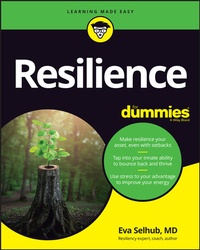
Resilience For Dummies
1st Edition
Published on 1. February 2021
384 pages
978-1-119-77356-6 (ISBN)
Description

What doesn't kill you makes you stronger! Activate your natural ability to thrive with Resilience For Dummies
Stress, anxiety, and exhaustion are all-too-common features of our crazy-paced, curveball-throwing contemporary existence, and it's sometimes hard to see how we can make it from one week to the next intact. But there's a solution to the struggle: resilience! In Resilience For Dummies, Dr. Eva Selhub--former Harvard Medical School instructor and director of the Benson Henry Institute for Mind Body Medicine at the Massachusetts General Hospital for six years--outlines the proven steps we can all take toward optimal resilience to build healthier, more purposeful, and increasingly joyful lives.
The six pillars of resilience are: physical vitality, emotional equilibrium, mental toughness and clarity, spiritual purpose, healthy personal relationships, and being an inspiring leader and part of a wider community or team. Dr. Selhub explains why each of these foundations is crucial to flourishing, how fortifying them gives us a base for attacking stress, hardship, and failure head-on, and how this confrontation then develops the strength we need for transformative change within our personal and professional lives.
* Know how genetics, education, and culture contribute to resilience
* Avoid learned helplessness and the victim mindset
* Harmonize stress and make it work for you
* Clear negative emotions and find your bliss
* Build up your physical, mental, and spiritual muscles
Dr. Selhub's six pillars of resilience show you how to channel your inner strength, face down whatever trouble comes your way, and come out thriving on the other side.
Stress, anxiety, and exhaustion are all-too-common features of our crazy-paced, curveball-throwing contemporary existence, and it's sometimes hard to see how we can make it from one week to the next intact. But there's a solution to the struggle: resilience! In Resilience For Dummies, Dr. Eva Selhub--former Harvard Medical School instructor and director of the Benson Henry Institute for Mind Body Medicine at the Massachusetts General Hospital for six years--outlines the proven steps we can all take toward optimal resilience to build healthier, more purposeful, and increasingly joyful lives.
The six pillars of resilience are: physical vitality, emotional equilibrium, mental toughness and clarity, spiritual purpose, healthy personal relationships, and being an inspiring leader and part of a wider community or team. Dr. Selhub explains why each of these foundations is crucial to flourishing, how fortifying them gives us a base for attacking stress, hardship, and failure head-on, and how this confrontation then develops the strength we need for transformative change within our personal and professional lives.
* Know how genetics, education, and culture contribute to resilience
* Avoid learned helplessness and the victim mindset
* Harmonize stress and make it work for you
* Clear negative emotions and find your bliss
* Build up your physical, mental, and spiritual muscles
Dr. Selhub's six pillars of resilience show you how to channel your inner strength, face down whatever trouble comes your way, and come out thriving on the other side.
More details
Other editions
Additional editions
Person
Eva Selhub, MD is a physician and resilience expert. She taught for 20 years as an instructor of Medicine at Harvard Medical School, and served as the medical director of the Benson Henry Institute for Mind Body Medicine at the Massachusetts General Hospital for six years.
Content
- Intro
- Title Page
- Copyright Page
- Table of Contents
- Introduction
- About This Book
- Foolish Assumptions
- Icons Used in This Book
- Beyond the Book
- Where to Go from Here
- Part 1 Getting Started with Resilience
- Chapter 1 Embarking on the Journey to Resilience
- Resilience Is for Everyone
- What Determines Resilience?
- Your genes
- Childhood development
- Culture
- Psychological outlook
- Coping habits
- Social support
- Humor
- Spirituality
- What Resilience Is Not
- The victim mindset
- Learned helplessness
- Hopelessness
- Breaking the Victim Cycle
- Cultivating the Six Pillars of Resilience
- Developing physical hardiness
- Achieving emotional equilibrium
- Boosting mental clarity and toughness
- Enriching spiritual connection
- Establishing healthy relationships
- Belonging to a community and becoming a leader
- Chapter 2 The Basis of Resilience: Harmony Versus Stress
- Without Stress, You Would Be Dead
- The Perpetual Quest for Harmony
- Examining the Stress Response Feedback Loop
- Fight-or-flight
- The feedback loop
- Living in Disharmony: The Real Stress
- Expecting a Good Outcome Is the Key
- Believing in Possible
- Coping to Adapt, or Not
- Maladaptive coping
- Adaptive coping
- Harmonizing Stress and Becoming Resilient
- Quieting the stress response
- Being open to learn and understand
- Building and restoring
- Chapter 3 The First Pillar: Physical Vitality and Flexibility
- What Fitness Has to Do with Resilience
- What Good Is Success If You're Sick or Dead?
- Taking Survival of the Fittest for What It's Worth
- Using It or Losing It
- Fueling Your Immune System
- Assembling the Components for Physical Hardiness
- Sleeping restfully
- Eating a nutrient-rich diet
- Engaging in physical activity
- Relaxing and meditating
- Aligning with nature
- Chapter 4 The Second Pillar: Developing Mental Toughness and Clarity
- What Kind of Mindset Do Resilient People Have?
- Fixed Versus Growth Mindsets When It Comes to Resilience
- Developing Mental Toughness
- Getting in control
- Making a commitment
- Embracing challenges
- Being confident
- Accessing Mental Clarity
- Chapter 5 The Third Pillar: Achieving Emotional Equilibrium
- Emotions Exist for a Very Good Reason
- How Emotions Influence Perception and Coping
- Evaluating Your Feelings
- Choosing to Manage Your Emotions
- Calming Your Emotions By Calming the Stress Response
- Shifting to Positive Detachment and Reappraisal
- Enhancing Your Self-Awareness and Willingness to Grow
- Always Choosing Love
- Chapter 6 The Fourth Pillar: Cultivating Spirituality
- What Is Spirituality Beyond Religion?
- Why Spirituality Supports Resilience
- Recognizing the Power of Awe
- Searching for Purpose
- Accepting the Mystery and Process of Life
- Becoming Peaceful through Humility
- Expressing Loving Kindness
- Finding Stillness
- Feeling Lucky
- Showing Compassion
- Chapter 7 The Fifth Pillar: Striving for Quality Relationships
- Enjoying the Journey, Even When It Hurts
- Recognizing That It All Starts with a Relationship with Yourself
- Choosing to Commit
- Building Trust
- Showing Respect
- Establishing Healthy Boundaries
- Improving Conscious Communication
- Expressing Empathy
- Giving and Receiving
- Chapter 8 The Sixth Pillar: Belonging to a Community or Team
- Recognizing How Community Fosters Individual Resilience
- Becoming Stronger and Better Together
- Stepping into Leadership
- Sharing Values
- Showing Respect
- Building Trust
- Being Able to Improvise
- Finding Motivation
- Having Fun
- Part 2 Laying the Foundation
- Chapter 9 The Practice of Listening: Quieting and Sharpening Your Senses
- Deciding to Tune In to the Senses
- Engaging in the Art of Listening
- Being Aware of Stress Signals
- Establishing Calm
- The quieting breath
- Experimenting with your breath
- Practicing mindfulness as a calming tool
- Listening to Your Body
- Scanning the body
- Mindfully tuning into empathy
- Listening with Compassion
- Developing self-compassion
- Practicing compassion meditation
- Chapter 10 The Practice of Gaining Deeper Insight
- What Is Insight?
- Seeking Truth: The Journey to Insight
- Quieting the Mind
- Tapping into Intuition
- Clearing the static
- Mindfully tuning in
- Enlivening Curiosity
- Ask questions
- Switch up the questions and give them direction
- Relax into not knowing
- Improve reception by being more receptive
- Digging In to Emotions
- Analyzing Insights to Make Decisions
- Articulate the problem
- Clarify objectives
- Do some research
- Activate your whole brain
- Take a break
- Make connections
- Gaining Wisdom to Ask More Questions
- Chapter 11 The Practice of Shifting Your Mindset
- Co-Creating Your Life
- Becoming Aware of Limiting Beliefs
- Watching Your Words
- "I can't"
- "Always" and "never"
- "Should"
- "I can do that, but____"
- "This is who I am"
- Introducing Stories
- Scenario 1: Feeling insulted vs. eager to learn
- Scenario 2: Feeling shame vs. accountable
- Awareness exercise: Using emotions to tell a story
- Challenging Assumptions
- Toughening Up Mentally
- Milking Meaning from Hardship
- Step 1: Find lessons and inspiration
- Step 2: Reappraise your story
- Step 3: Count your blessings
- Step 4: Ask for help
- Step 5: Remember victories
- Step 6: Take care
- Step 7: Connect with love and awe
- Changing Attitude to Optimism
- Step 1: Practice mindfulness
- Step 2: Change your words
- Step 3: Deepen your connection with a force larger than yourself
- Step 4: Shift your attitude to gratitude
- Step 5: Be your own coach
- Step 6: Enjoy the adventure
- Part 3 Evaluating and Strengthening Relationships
- Chapter 12 Improving Your Relationship with Yourself
- Connecting Resilience with Self-Worth
- Believing in Your Worth
- Noting Self-Criticism
- Evaluating Your Self-Value
- Starting to Take Action
- Practicing self-awareness
- Making a conscious choice
- Celebrating yourself
- Keeping an inventory
- Accepting and being your unique self
- Holding on to your vision
- Being loving toward yourself
- Taking Care of YOU
- Nourish yourself with nutrient-rich food
- Exercise and stay active
- Connect with support
- Quiet your mind
- Heal through your negative emotions
- Have fun!
- Appreciate all that you have and all that you are
- It's okay to rest
- Allowing Love In
- Chapter 13 Creating Quality Relationships
- What Constitutes a Quality Relationship?
- Evaluating Your Relationships
- Making a list
- Determining your level of commitment
- Examining respect and healthy boundaries
- Assessing trust and reliance
- Evaluating communication and empathy
- Taking a good look at reciprocity
- Building Lasting Social Bonds
- Communicating with presence and curiosity
- Building trust and reliance
- Supporting and being supported
- Accepting and acknowledging
- Settling differences
- Investing time in and time out
- Strengthening Bonds by Sharing
- Sharing news and gratitude
- Sharing goals and dreams
- Sharing worries and fears
- Sharing adventures
- Sharing the mundane
- Sharing physical contact
- Sharing hearts
- Chapter 14 Building a Resilient Community
- Determining Who Your People Are
- Evaluating Your Communities
- Making a list
- Sharing values
- Committing to shared goals
- Combining resources
- Contributing and cooperating equally
- Communicating effectively
- Displaying sensitivity and empathy
- Encouraging and celebrating
- Exemplifying fairness and inclusivity
- Having trusted leaders
- Creating the Foundation for Your Community
- Getting everyone to buy in on the goals
- Aligning core values
- Putting the right people in the right roles
- Improving communication
- Establishing guidelines for fairness and inclusivity
- Chapter 15 Becoming a Resilient Leader
- The Making of a Resilient Leader
- What Is Your Style of Leadership?
- Questions regarding leadership to ask yourself
- Appraising your sphere of influence
- Evaluating your resilience as a leader
- Embracing Challenges and Change
- Becoming comfortable being uncomfortable
- Facing the fear of doing something risky
- Find your way home after getting lost
- Starting with a clean slate
- Heading the other way
- Going with the flow
- Creating Your Vision
- Clearing and opening the mind
- Visualizing the future
- Writing out the story of success
- Defining goals and objectives
- Creating the strategic plan
- Communicating the vision
- Being a Trusted Leader
- Taking Care and Being Self-Aware
- The 5-minute morning meditation
- Practicing gratitude
- Part 4 Putting Resilience into Action
- Chapter 16 Fueling the Mind and Body
- Making Fitness a Priority
- Taking care of your body's whispers before it screams
- Evaluating your vitality
- Improving Your Metabolism
- Understanding metabolic flexibility
- Taking charge of your metabolism
- Cutting down on sugar
- Boosting your metabolism with antioxidants
- Trying intermittent fasting
- Keeping the microbiome happy
- Challenging your body with a variety of physical exercises
- Getting Functional with Your Movement
- Integrating five key functional movements
- Playing isn't just for kids
- Taking Time Out for Recovery
- Losing guilt and embracing love
- Quieting the mind
- Getting restful, quality sleep
- Chapter 17 Organizing Your Environment
- Benefitting from Being More Organized
- Taking Stock of the Obstacles to Organization
- Freeing Up
- Freeing up your mind
- Managing your time
- Decluttering Your Physical Space
- Harmonizing Your Environment
- Clearing and creating an open space
- Placing furniture or key items facing the door
- Letting the light in
- Shutting the lid where water drains
- Bringing in green
- Balancing with nature's elements
- Chapter 18 Resilience in Action at Work
- Fostering Optimism
- Seeing challenges as opportunities
- Seeing value everywhere and in everyone
- Embracing failure and setbacks
- Choosing Balance
- Bringing meditation into your work life
- Getting unplugged
- Establishing an organized approach to managing tasks
- Getting a life
- Strengthening Networks of Support
- Chapter 19 Resilience in the Family
- Developing the Core Framework
- Sharing beliefs
- Being organized
- Effectively communicating
- Setting an Example
- Adopting Shared Beliefs
- Enhancing optimism
- Finding meaning together
- Making spirituality a family affair
- Establishing Organization and Structure
- Strengthening connectedness
- Creating structure with flexibility
- Forming networks of support
- Enhancing Communication
- Being clear and direct
- Regulating and expressing emotions
- Solving problems together
- Part 5 The Part of Tens
- Chapter 20 Ten Tips to Help Your Kids Cope with Stress and Change
- Taking a Pause and Calming the Worry
- Being a Role Model
- Maintaining Open Channels of Communication
- Teaching Others How to Self-Calm
- Facing Fears Together
- Getting Organized
- Unplugging and Descheduling
- Learning to Embrace Change
- Solving Problems Together
- Finding Support
- Chapter 21 Ten Tips for Using Nature to Become Resilient
- Using Green for Therapy
- Enhancing Spirituality
- Clearing Your Head
- Exercising Green
- Practicing Mindfulness
- Cultivating a Garden
- Eating with the Seasons
- Bringing Nature into Your Home
- Using Nature to Relax and Play
- Enjoying a Getaway
- Index
- EULA
