

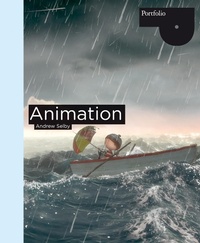
Animation
Published on 6. May 2013
216 pages
978-1-78067-493-3 (ISBN)
Description

From scriptwriting through to production, this introduction to animation for students surveys key technical processes and examines a variety of stylistic approaches. The book includes visual examples from key animators and illustrated features on how to create exciting animation for a variety of audiences.
It begins with history and context, and quickly moves on to more practical aspects of the craft. Box features outline practical information and visual examples of different animators' work and working processes teach how to create exciting animation for any audience. A final chapter on job roles shows how students can get on in animation.
This book is a vital resource for anyone who intends to make animation a part of their career.
It begins with history and context, and quickly moves on to more practical aspects of the craft. Box features outline practical information and visual examples of different animators' work and working processes teach how to create exciting animation for any audience. A final chapter on job roles shows how students can get on in animation.
This book is a vital resource for anyone who intends to make animation a part of their career.
More details
Person
Andrew Selby is Head of Department for the School of the Arts at Loughborough University. An internationally recognized illustrator, his work has appeared in newspapers and on billboards for the past 20 years. He writes extensively in the field of visual communication, and is the author of Animation in Process.
Content
- Intro
- Title Page
- Copyright
- Contents
- Introduction
- The significance of animation
- Uses of animation
- A model for future communication
- The defining principles of animation
- Twelve principles of animation
- The animation pipeline
- Preproduction
- Production
- Postproduction
- About this book
- An animation timeline
- 1. Preproduction-Planning and Scriptwriting
- The animation pipeline in preproduction
- Scheduling a production
- Animation job roles
- Scriptwriting
- What is a script?
- The vocabulary and language of animation
- Animated language
- Approaches to scriptwriting
- Premise
- Story ladders and friezes
- Plot
- Animation plot themes
- Genre in animation
- Categories of animated genres
- Script development
- Prose brief
- Step outline
- Event analysis
- Synopsis
- Treatment
- Analyzing a script
- Conclusion
- 2. Preproduction-Concepts, Ideas, and Research
- Concepts and ideas
- The significance of ideas
- Investing in ideas
- Starting points
- Developing a conceptual framework
- The studio environment
- Capturing ideas
- Drawing and visualizing tools
- The animator's toolkit
- Idea development
- Flipbooks to test ideas
- Evaluating ideas
- Pitching concepts
- Research
- What is research?
- Collecting accurate reference material
- Identifying and formulating a research methodology
- A sample research methodology
- Collecting and appropriating research
- Reviewing the research
- Conclusion
- 3. Preproduction-Development
- Animation pipeline
- Storyboarding
- Storyboarding: from single to serial imagery
- The art of storyboarding
- Masters of their art
- The development of visual narrative in animation
- Creating a storyboard with a visual narrative
- Style guides
- Layouts and scenes
- Planning and formulation
- Types of camera shots
- Development drawings
- Imagination and observation
- Fundamental aspects of composition, placement, and emphasis
- Character design
- The bones of character design
- The art of character design
- The role and function of character
- Developing characteristics
- Narrative construction
- Conclusion
- 4. Preproduction-Sound
- Animation pipeline
- Understanding sound
- The anatomy of sound
- The principles of sound
- The importance and use of sound
- Audience perception of sound
- Sonic interpretations of space and time
- The grammar of sound
- Stems of sound
- Dialogue and narration
- Troubleshooting voice recordings
- Music
- Sound effects
- The working sound studio
- Collecting and processing data
- Mixing desks
- Conclusion
- 5. Production
- The animation pipeline in production
- Introduction to basic techniques
- Simple motion devices
- Cel animation and traditional 2D processes
- Drawn cel animation
- Rotoscoping
- 2D computer-generated images
- Stop-motion animation
- 2D stop motion
- 3D stop motion
- Sets and lighting
- Checking the filming of stop-motion animation
- 3D computer-generated Images
- Designing and modeling
- Rigs and texturing
- Animating and lighting
- Visual special effects, rendering, and compositing
- Unorthodox animation
- Pixilation
- Brick animation
- Auteur or artistic processes
- Performance animation and live-action hybrids
- Installations
- Machinema
- Augmented reality
- Sound in production
- Conclusion
- 6. Postproduction
- The animation pipeline in postproduction
- Preparing the production
- Managing postproduction
- Visuals
- Non-linear editing
- Synchronicity
- Color correction
- Understanding color
- Titling and credits
- Sound in postproduction
- Producing a soundtrack
- Digital mastering
- Formatting
- Release and distribution
- Video and digital video formats
- Marketing and publicity
- Film festivals
- Conclusion
- 7. Animated Futures
- Education, knowledge, and understanding
- Skills for future employment
- Skills and attributes
- Understanding and evaluating yourself
- Answering your critics
- What are employers looking for?
- Skills
- Promotion
- The portfolio
- The showreel
- Print-based promotion
- Websites
- Website checklist
- Social media platforms
- Gaining experience
- Opportunities, applications, and interviews
- Job advertisements and opportunities
- The application form
- The cover letter
- The résumé
- The interview
- Representation
- Making it!
- Conclusion
- Glossary
- Further reading
- Resources
- Index
- Picture credits
- Acknowledgments
