

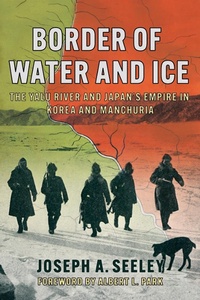
Border of Water and Ice
Description

Border of Water and Ice explores the significance of the Yalu River as a strategic border between Korea and Manchuria (Northeast China) during a period of Japanese imperial expansion into the region. The Yalu's seasonal patterns of freezing, thawing, and flooding shaped colonial efforts to control who and what could cross the border. Joseph A. Seeley shows how the unpredictable movements of water, ice, timber-cutters, anti-Japanese guerrillas, smugglers, and other borderland actors also spilled outside the bounds set by Japanese colonizers, even as imperial border-making reinforced Japan's wider political and economic power.
Drawing on archival sources in Japanese, Korean, Chinese, and English, Seeley tells the story of the river and the imperial border haphazardly imposed on its surface from 1905 to 1945 to show how rivers and other nonhuman actors play an active role in border creation and maintenance. Emphasizing the tenuous, environmentally contingent nature of imperial border governance, Border of Water and Ice argues for the importance of understanding history across the different seasons.
More details
Other editions
Additional editions

Person
Joseph A. Seeley is Assistant Professor in the Corcoran Department of History, University of Virginia. He specializes in the histories of Korea, the Japanese Empire, and East Asian environments and borderlands.
Content
Foreword by Albert L. Park
Introduction
1. Reeds, Fish, Timber, and Defining the Yalu Border
2. Bridging the Yalu
3. Seasons of Yalu River Border Policing
4. Environments of Yalu River Smuggling
5. Dam Construction and "Manchurian-Korean Unity"
Conclusion
