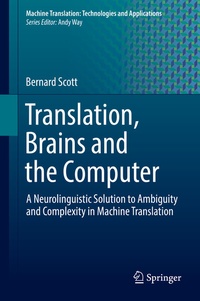
Translation, Brains and the Computer
Description

This book is about machine translation (MT) and the classic problems associated with this language technology. It examines the causes of these problems and, for linguistic, rule-based systems, attributes the cause to language's ambiguity and complexity and their interplay in logic-driven processes. For non-linguistic, data-driven systems, the book attributes translation shortcomings to the very lack of linguistics. It then proposes a demonstrable way to relieve these drawbacks in the shape of a working translation model (Logos Model) that has taken its inspiration from key assumptions about psycholinguistic and neurolinguistic function. The book suggests that this brain-based mechanism is effective precisely because it bridges both linguistically driven and data-driven methodologies. It shows how simulation of this cerebral mechanism has freed this one MT model from the all-important, classic problem of complexity when coping with the ambiguities of language. Logos Model accomplishes this by a data-driven process that does not sacrifice linguistic knowledge, but that, like the brain, integrates linguistics within a data-driven process. As a consequence, the book suggests that the brain-like mechanism embedded in this model has the potential to contribute to further advances in machine translation in all its technological instantiations.
Reviews / Votes
"Natural language processing is one of the most rapidly evolving areas of artificial intelligence, and is the subject of this excellent book. . One of the important contributions of this valuable resource is its presentation and comparison of many current state-of-the-art machine translation systems available to the general public. Summing Up: Recommended. Advanced undergraduates through faculty and professionals." (J. Brzezinski, Choice, Vol. 56 (6), February, 2019)
More details
Other editions
Additional editions