

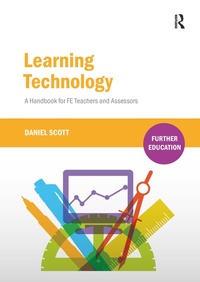
Learning Technology
A Handbook for FE Teachers and Assessors
Published on 28. February 2025
140 pages
978-1-040-37605-8 (ISBN)
Description

Written specifically for all FE and post-16 teachers, this book will help you to develop your digital capabilities and give you the skills to convert traditional learning and teaching resources into engaging and interactive online material.
The impact of the pandemic means that it is abundantly clear to all that digital capability is vital for learners, no matter what subject they study. You should therefore develop your digital capabilities as a basic competence in order to embrace current digital tools, apps and techniques to the pedagogy of teaching FE. The book provides you with the knowledge and skills required to source information learning technology (ILT) and content to convert traditional learning and teaching resources into engaging and interactive online material.
It is designed around each aspect of the teaching and training cycle - identifying needs, planning and designing, delivering and facilitating, assessing and evaluating - and includes:
when to use ILT / eLearning
barriers to implementing digital learning
the importance of digital capabilities
ways of keeping up to date and continuing professional development.
The impact of the pandemic means that it is abundantly clear to all that digital capability is vital for learners, no matter what subject they study. You should therefore develop your digital capabilities as a basic competence in order to embrace current digital tools, apps and techniques to the pedagogy of teaching FE. The book provides you with the knowledge and skills required to source information learning technology (ILT) and content to convert traditional learning and teaching resources into engaging and interactive online material.
It is designed around each aspect of the teaching and training cycle - identifying needs, planning and designing, delivering and facilitating, assessing and evaluating - and includes:
when to use ILT / eLearning
barriers to implementing digital learning
the importance of digital capabilities
ways of keeping up to date and continuing professional development.
Reviews / Votes
This book is really accessible as it's written in language anyone new to using learning technology can understand (and anyone currently using it who wishes to refresh their knowledge). The chapters give lots of information regarding theory and practice, and include practical tasks for the reader to carry out. There are lots of useful links to books and websites for the reader to explore topics further. A glossary, checklists and questionnaire are included in the appendices. I would certainly recommend this book!Ann Gravells, author and editor of textbooks, resources and online CPD modules for those in the further education and training sector
I would recommend this book wholeheartedly to busy colleagues teaching, assessing or - in many cases -managing in Further Education, particularly those with a genuine passion for collaborative, student-centred learning. It's short, accessible, and full of prompts to help teachers describe and critique their own approaches to digital learning. The practical tasks in the book are all doable *now* - they're bite sized, not onerous - and help consolidate the messages in the book, which I'd say are: have a go; don't expect to know it all or beat yourself up when things don't work out as expected; find sources of help and use them; consider the impact of doing/not doing said activities; look for opportunities to make the learning social/interactive where you can... and get your students talking to you about (how they feel about) their learning. I've been working in the field of Learning Technology for around 20 years and this is the most straightforward ('user friendly'?) book I've ever read on the subject.
Amazon verified Purchaser
...What sets the book apart from other learning technology texts is that it is primarily an educational guide, not a technical manual. It does not seek to review or explain how to use specific software in lessons. Instead, it encourages readers to use the planning frameworks and resources to consider how they could use technology with their own students in a way that truly makes an impact on their learning. Although the case studies concentrate on further education, the content is equally applicable to higher education...Practitioners or managers who are experienced with learning technology will find the body of the book a useful reference to the latest trends within digital education. I would recommend the average teacher who's not a digital expert to start with the specific practical tasks and online tools outlined within each chapter before exploring the wider material. As a teacher trainer, I would particularly encourage student practitioners to study the excellent frameworks in order to help them plan and deliver effective lessons with technology.
James Michael Maltby, learning technology manager at Plumpton CollegeInTuition magazine
This Learning Technology Handbook is a rich resource for anyone looking to improve their practice and its content is well-researched. The passion Daniel Scott has for his subject clearly comes across as does his strong expertise and practical know-how - giving his readers a real sense of how achievable and important it is to use learning technology for the benefit of all learners. See the full review: https://tinyurl.com/ALTLTbookFEreview
Maren Deepwell, Chief Executive of the Association for Learning Technology (ALT)
'Learning Technology' is a key player in post-16 teaching and assessment
With the use of technology and social media becoming ever more important within our lives today, it is understandable that it should also play an important role within teaching and learning. Daniel Scott presents this clear, concise and easy-to-use handbook to assist FE teachers and assessors in embedding ILT 'Information Learning Technology' as an integral part of their teaching practices.....
Louise Ford, education and skills tutor at PM Training
More details
Series
Language
English
Place of publication
London
United Kingdom
Publishing group
Taylor & Francis Ltd
Target group
Professional and scholarly
File size
5,47 MB
ISBN-13
978-1-040-37605-8 (9781040376058)
Copyright in bibliographic data and cover images is held by Nielsen Book Services Limited or by the publishers or by their respective licensors: all rights reserved.
Schweitzer Classification
Other editions
Additional editions
Book
09/2018
1st Edition
Critical Publishing Ltd
€44.75
Shipment within 3-4 weeks
Person
Daniel Scott began his learning technology career in further education, in the context of teacher education and learning support. He uses his extensive experience to provide digital and academic leadership, operational management and strategy, in the pedagogical and technical design and application of learning technologies, to create and support effective and innovative digital learning experiences in healthcare higher education. He holds a Technology Enhanced Learning MSc, Senior Fellowship of the Higher Education Authority (SFHEA) and Senior Certified Membership of the Association for Learning Technology (SCMALT). He is qualified in teaching, assessing, lead internal verification, management and leadership and information technology and computing, and shares his experiences on his professional and personal blog: http://danielscott86.blogspot.com.
Content
Foreword and introduction 1. Identify needs 2. Plan and design 3. Deliver and facilitate 4. Assess 5. Evaluate 6. Keep up to date Glossary Appendices
