

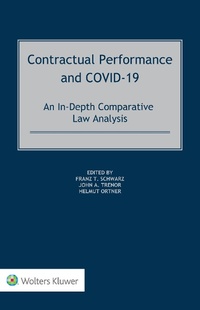
Contractual Performance and COVID-19
An In-Depth Comparative Law Analysis
Published on 25. November 2021
608 pages
978-94-035-2634-8 (ISBN)
Description

As the COVID-19 pandemic continues to take its toll, contractual parties have frequently faced significant obstacles in performing their contractual obligations due to unexpected impediments arising from the pandemic and government measures taken in response. This indispensable book the most comprehensive comparative examination of the impact of the COVID-19 pandemic on contractual performance discusses the legal provisions and doctrines available to address these issues. The book examines under what circumstances COVID-19-related impediments may excuse contractual performance or lead to modification or termination of the affected contractual obligations in twelve representative civil and common law jurisdictions the United States, England and Wales, Singapore, Brazil, Germany, France, Switzerland, Austria, Hong Kong, Costa Rica, China, and Russia. For each country, the book examines the following aspects in depth: the relevant fundamental legal principles; the various legal emergency valves available to an obligor to respond to COVID-19-related events; any remedies available to the obligee; selected examples for specific government measures related to particular types of contracts (e.g., construction, employment, lease agreements); and how the legal framework applies in typical factual scenarios. As further legal and factual developments occur, and with further jurisdictions being added, this publication will continue to be updated both online and in print. The book provides a detailed explanation under what conditions the emergency valves specific to each jurisdiction may apply. It cuts through the seeming complexity of the various legal rules and doctrines in these jurisdictions and shows that they often produce similar results in practice. The book thus opens up a wealth of insights for businesses, practitioners, and academics around the globe by providing an easily accessible analytical framework across key jurisdictions and typical factual scenarios. ';Definitely mandatory reading for practitioners and academics alike!' Klaus Peter Berger, University of Cologne ';Everyone who has had or is likely to have a brush with a COVID-19-induced legal issue would be well advised to keep this book within arm's reach.' Davinder Singh, Davinder Singh Chambers LLC, Singapore ';The ';holy book' for all those lawyers whose clients become ensnared in the rising attempts to fix legal liability midst the rampant COVID-19.' Charles Brower, Twenty Essex, London
More details
Other editions
Additional editions
Franz Schwarz | John A. Trenor | Helmut Ortner
Contractual Performance and COVID-19
An In-Depth Comparative Law Analysis
Book
11/2021
Kluwer Law International
€355.06
Shipment within 15-20 days
Content
- Intro
- Title Page
- Copyright Page
- Table of Contents
- Preface: A Note from the Editors
- Introduction
- A. The Basic Principles Relevant for Assessing the Impact of COVID-19 on Contractual Relationships
- 1. Pacta Sunt Servanda and the Sanctity of Contracts
- 2. Good Faith
- 3. Party Intent
- B. Structural Differences in How Legal Systems Address COVID-19-Related Impediments
- C. Similar End Results in How Legal Regimes Address COVID-19-Related Impediments
- Austria
- A. Introduction and Roadmap
- B. The General Principles of Contract Law
- C. The Overall Legal Framework of Emergency Valves
- 1. Force Majeure (höhere Gewalt)
- 2. Impossibility
- a) Permanent Impossibility
- (1) The Concept of Permanent Impossibility and Its Legal Consequences
- (2) A Closer Look at the Types of Impossibility Under Austrian Law
- b) Delay due to Temporary Impossibility (Verzug, Verzögerung)
- (1) Delay of the Obligor due to Temporary Impossibility
- (2) Delay of the Obligee due to Temporary Impossibility
- 3. Clausula Rebus Sic Stantibus
- a) The Doctrine of Clausula Rebus Sic Stantibus
- 4. Extraordinary Termination of Long-Term Contracts without a Notice Period for a Compelling Reason
- D. The Impact of COVID-19 on Contractual Obligations and Relationships
- 1. The Impact on the Obligor's Contractual Obligations
- a) Dissolution of the Obligor's Obligation to Perform by Operation of Law due to Impossibility
- b) Modification of the Contract
- (1) De Facto Suspension of Performance Because of Delay due to Temporary Impossibility
- (2) Modification of the Contract under the Clausula Rebus Sic Stantibus Doctrine
- c) Termination of Contractual Obligations
- (1) Termination due to Application of the Clausula Rebus Sic Stantibus Doctrine
- (2) Extraordinary Termination of a Long-Term Agreement for a Compelling Reason
- 2. The Impact on the Obligee's Contractual Remedies
- a) Right to Withhold Performance
- b) Right to Claim Modified Performance or Money in Lieu of Performance
- c) Termination of the Contract
- d) Right to Restitution
- e) Right to Claim Damages
- E. Specific Types of Agreements and Specific Government Measures in Response to COVID-19
- F. The Application of Austrian Law to Hypothetical Scenarios
- 1. Government Restrictions
- 2. Supply Shortage
- 3. Too Sick to Perform
- 4. Self-Imposed Lockdown
- 5. Collapse or Partial Collapse of the Economy
- Brazil
- A. Introduction and Roadmap
- B. The General Principles of Contract Law
- C. The Overall Legal Framework of Emergency Valves
- 1. Force Majeure and Fortuitous Events
- a) The Statutory Requirements of Force Majeure or Fortuitous Events
- b) The Legal Consequences of Force Majeure and Fortuitous Events
- 2. Impossibility
- a) Original Impossibility and Supervening Impossibility
- b) Absolute Impossibility and Relative Impossibility
- c) Permanent Impossibility and Temporary Impossibility
- d) Total Impossibility and Partial Impossibility
- e) Economic Impossibility
- 3. The Doctrine of Supervening Manifest Disproportion
- a) The Statutory Requirements of the Doctrine of Supervening Manifest Disproportion
- b) Legal Consequences of the Doctrine of Supervening Manifest Disproportion
- 4. The Doctrine of Excessive Onerousness
- a) The Statutory Requirements of the Doctrine of Excessive Onerousness
- b) Legal Consequences of the Doctrine of Excessive Onerousness
- 5. The Doctrine of Frustration of the Contract's Purpose
- a) The Requirements of the Doctrine of Frustration of the Contract's Purpose
- b) Legal Consequences of the Doctrine of Frustration of the Contract's Purpose
- D. The Impact of COVID-19 on Contractual Obligations and Relationships
- 1. The Impact on the Obligor's Contractual Obligations
- a) Exemption from Liability to Pay Damages
- b) Modification of Contractual Obligations
- (1) Suspension of Performance due to Temporary Impossibility
- (2) Contract Modification due to the Doctrine of Supervening Manifest Disproportion
- (3) Contract Modification due to Excessive Onerousness
- c) Termination of the Contract
- (1) Termination of the Contract due to Impossibility
- (2) Termination of the Contract due to Excessive Onerousness
- (3) Termination of the Contract due to the Frustration of Its Purpose
- 2. The Impact on the Obligee's Contractual Remedies
- a) Right to Withhold Performance
- b) Right to Price Reduction due to Impossibility
- c) Termination of the Contract due to Impossibility
- d) Right to Restitution
- e) Right to Claim Compensation for Any Damages
- E. Specific Types of Agreements and Specific Measures of the Government in Response to COVID-19
- F. The Application of Brazilian Law to Hypothetical Scenarios
- 1. Government Restrictions
- 2. Supply Shortage
- 3. Too Sick to Perform
- 4. Self-Imposed Lockdown
- 5. Collapse or Partial Collapse of the Economy
- China
- A. Introduction and Roadmap
- B. The General Principles of Contract Law
- C. The Overall Legal Framework of Emergency Valves
- 1. Force Majeure
- a) Elements of Force Majeure
- b) Legal Consequences of Force Majeure
- 2. Change of Circumstance
- a) Elements of Change of Circumstance
- b) Change of Circumstance vs. Force Majeure
- c) Legal Consequences of Change of Circumstance
- D. The Impact of COVID-19 on Contractual Obligations and Relationships
- 1. The Impact on the Obligor's Contractual Obligations
- a) Excuse from Liability
- b) Contract Modification
- c) Contract Termination
- 2. The Impact on the Obligee's Contractual Remedies
- E. Specific Types of Agreements and Specific Government Measures in Response to COVID-19
- F. The Application of Chinese Law to Hypothetical Scenarios
- 1. Government Restrictions
- 2. Supply Shortage
- 3. Too Sick to Perform
- 4. Self-Imposed Lockdown
- 5. Collapse or Partial Collapse of the Economy
- Costa Rica
- A. Introduction and Roadmap
- B. The General Principles of Contract Law
- C. The Overall Legal Framework of Emergency Valves
- 1. Force Majeure and a Fortuitous Event
- a) The Requirements for the Application of the Emergency Valves of Force Majeure or a Fortuitous Event
- b) Examples of Court Decisions Concerning Force Majeure and a Fortuitous Event under Costa Rican Law
- c) The Legal Consequences of Force Majeure or a Fortuitous Event
- 2. Hardship
- a) Applicability of the Hardship Doctrine in Costa Rica
- b) Elements of Hardship
- c) Legal Consequences of Hardship
- 3. Doctrine of Contract Frustration
- a) Applicability of the Doctrine of Contract Frustration
- b) Requirements of the Doctrine of Contract Frustration
- c) Possible Legal Consequences of the Doctrine of Contract Frustration
- D. The Impact of COVID-19 on Contractual Obligations and Relationships
- 1. The Impact on the Obligor's Contractual Obligations
- a) Suspension of Performance by Operation of Law due to a Temporary Force Majeure or Fortuitous Event
- b) Modification of a Contractual Obligation Under the Hardship Doctrine
- c) Termination of a Contractual Obligation
- (1) Termination due to Force Majeure or a Fortuitous Event
- (2) Termination due to the Doctrine of Contract Frustration
- (3) Termination due to the Doctrine of Hardship
- 2. The Impact on the Obligee's Contractual Remedies
- a) Right to Withhold Performance
- b) Right to Restitution
- c) Right to Terminate
- d) Right to Claim Damages
- E. Specific Types of Agreements and Specific Government Measures in Response to COVID-19
- F. The Application of Costa Rican Law to Hypothetical Scenarios
- 1. Government Restrictions
- 2. Supply Shortage
- 3. Too Sick to Perform
- 4. Self-Imposed Lockdown
- 5. Collapse or Partial Collapse of the Economy
- England and Wales
- A. Introduction and Roadmap
- B. The General Principles of Contract Law
- C. The Overall Legal Framework of Emergency Valves
- 1. The Test for Frustration
- 2. Elements of Frustration
- 3. Examples of Frustrating Events
- a) Unavailability of the Subject Matter of the Contract
- b) Supervening Illegality
- c) Delay
- d) Cancelation of an Expected Event/Frustration of Purpose
- e) Illness or Incapacity
- 4. Examples of Events That Did Not Give Rise to Frustration
- a) Risk of an Event That Was Assumed by the Party Claiming Frustration
- b) "Self-Induced Frustration"
- c) Contract More Onerous or Expensive to Perform
- D. Impact of COVID-19 on Contractual Obligations and Relationships
- 1. The Impact on the Obligor's Contractual Obligations
- 2. The Impact on the Obligee's Contractual Remedies
- E. Specific Types of Agreements and Specific Government Measures in Response to COVID-19
- F. The Application of English Law to Hypothetical Scenarios
- 1. Government Restrictions
- 2. Supply Shortage
- 3. Too Sick to Perform
- 4. Self-Imposed Lockdown
- 5. Collapse or Partial Collapse of the Economy
- France
- A. Introduction and Roadmap
- B. The General Principles of Contract Law
- C. The Overall Legal Framework of Emergency Valves
- 1. Force Majeure
- a) The Statutory Requirements of Force Majeure
- b) Examples of Force Majeure Events under French Law
- c) Legal Consequences of Force Majeure
- 2. Imprévision
- a) The Statutory Elements of Imprévision
- b) Contracts Concluded Prior to the 2016 Reform
- c) The Legal Consequences of Imprévision
- 3. Caducité
- a) The Statutory Elements of Caducité
- b) Caducité and Groups of Contracts
- c) The Legal Consequences of Caducité
- D. The Impact of COVID-19 on Contractual Obligations and Relationships
- 1. The Impact on the Obligor's Contractual Obligations
- a) Modification of Contractual Obligations
- (1) Force Majeure
- (2) Imprévision
- b) Termination of the Agreement
- (1) Termination by Operation of Law
- (a) Force Majeure
- (b) Caducité
- (2) Termination by Mutual Consent of the Parties or by Decision of a Court or Arbitral Tribunal
- 2. The Impact on the Obligee's Contractual Remedies
- a) Right to Withhold Performance
- b) Right to Terminate
- c) Right to Restitution
- d) Right to Claim Damages
- E. Specific Types of Agreements and Specific Government Measures in Response to COVID-19
- F. The Application of French Law to Hypothetical Scenarios
- 1. Government Restrictions
- 2. Supply Shortage
- 3. Too Sick to Perform
- 4. Self-Imposed Lockdown
- 5. Collapse or Partial Collapse of the Economy
- Germany
- A. Introduction and Roadmap
- B. The General Principles of Contract Law
- C. The Overall Legal Framework of Emergency Valves
- 1. Impossibility
- 2. Delay
- 3. Responsibility for Breach of Duty
- 4. Extraordinary Termination
- 5. Clausula Rebus Sic Stantibus
- 6. Good Faith, Statutory Prohibition
- D. The Impact of COVID-19 on Contractual Obligations and Relationships
- 1. The Impact on the Obligor's Contractual Obligations
- a) Exclusion of an Obligation to Perform due to Impossibility
- b) Modification of Contractual Obligations Based on the Clausula Rebus Sic Stantibus
- (1) Requirements for Application of the Clausula Rebus Sic Stantibus in General
- (2) Specifically, Contractual Risk Allocation and the Clausula Rebus Sic Stantibus
- (3) Specifically, Responsibility for the Change of Circumstances
- (4) Specifically, Foreseeabilityc) Contract Termination (Vertragsbeendigung)
- c) Contract Termination (Vertragsbeendigung)
- (1) Termination for a Compelling Reason
- (2) The Clausula Rebus Sic Stantibus as a Ground for Revocation/Termination
- 2. The Impact on the Obligee's Contractual Remedies
- a) Right to Withhold, or Release from, Counter-Performance
- b) Damages and Futile Expenses
- c) Claim for Surrogate
- d) Termination
- e) Suspension of Limitation Period
- E. Specific Types of Agreements and Specific Government Measures in Response to COVID-19
- F. The Application of German Law to Hypothetical Scenarios
- 1. Government Restrictions
- 2. Supply Shortage
- 3. Too Sick to Perform
- 4. Self-Imposed Lockdown
- 5. Collapse or Partial Collapse of the Economy
- Hong Kong
- A. Introduction and Roadmap
- B. The General Principles of Contract Law
- C. The Overall Legal Framework of Emergency Valves
- 1. The Doctrine of Frustration
- 2. The Test for Frustration
- 3. Elements of Frustration
- 4. Examples of Frustrating Events
- a) Unavailability of the Subject Matter of the Contract
- b) Illness or Incapacity
- c) Delay
- d) Supervening Illegality
- e) Cancelation of an Expected Event
- 5. Examples of Events Which Did Not Give Rise to Frustration
- a) Risk of Frustrating Event Assumed by Party Claiming Frustration
- b) Frustration Caused by the Fault of the Party Claiming Frustration
- c) Contract More Onerous or Expensive to Perform
- D. The Impact of COVID-19 on Contractual Obligations and Relationships
- 1. The Impact on the Obligor's Contractual Obligations
- 2. The Impact on the Obligee's Contractual Remedies
- E. Specific Types of Agreements and Specific Government Measures in Response to COVID-19
- F. The Application of Hong Kong Law to Hypothetical Scenarios
- 1. Government Restrictions
- 2. Supply Shortage
- 3. Too Sick to Perform
- 4. Self-Imposed Lockdown
- 5. Collapse or Partial Collapse of the Economy
- Russia
- A. Introduction and Roadmap
- B. The General Principles of Contract Law
- C. The Overall Legal Framework of Emergency Valves
- 1. Force Majeure
- 2. Impossibility to Perform
- 3. Material Change of Circumstances
- D. The Impact of COVID-19 on Contractual Obligations and Relationships
- 1. The Impact on the Obligor's Contractual Obligations
- a) Temporary Exemption from Liability for Non-performance
- b) Termination of Contractual Obligations
- (1) Termination of an Obligation by Operation of Law due to Permanent Impossibility to Perform
- (2) Judicial Termination of an Obligation due to a Material Change of Circumstances
- c) Modification of Contractual Obligations
- 2. The Impact on the Obligee's Contractual Remedies
- a) Right to Withhold Performance
- b) Right to Terminate the Contract
- c) Right to Restitution
- d) Right to Claim Damages
- E. Specific Types of Agreements and Specific Government Measures in Response to COVID-19
- F. The Application of Russian Law to Hypothetical Scenarios
- 1. Government Restrictions
- 2. Supply Shortage
- 3. Too Sick to Perform
- 4. Self-Imposed Lockdown
- 5. Collapse or Partial Collapse of the Economy
- Singapore
- A. Introduction and Roadmap
- B. The General Principles of Contract Law
- C. The Overall Legal Framework of Emergency Valves
- 1. Force Majeure Clauses and the Exclusion of Frustration
- 2. The Legal Test for Frustration
- 3. Multifactorial Approach to Determining Frustration
- 4. Examples of Events That May Amount to Frustration
- a) Physical Impossibility
- b) Legal Impossibility
- c) Impossibility of Purpose
- d) Delay
- 5. Examples of Events That May Not Amount to Frustration
- D. The Impact of COVID-19 on Contractual Obligations and Relationships
- 1. The Impact on the Obligor's Contractual Obligations
- 2. The Impact on the Obligee's Contractual Remedies
- E. Specific Types of Agreements and Specific Government Measures in Response to COVID-19
- F. The Application of Singapore Law to Hypothetical Scenarios
- 1. Government Restrictions
- 2. Supply Shortage
- 3. Too Sick to Perform
- 4. Self-Imposed Lockdown
- 5. Collapse or Partial Collapse of the Economy
- Switzerland
- A. Introduction and Roadmap
- B. The General Principles of Contract Law
- 1. Pacta Sunt Servanda
- 2. Good Faith
- 3. Principles Related to Contract Interpretation
- C. The Overall Legal Framework of Emergency Valves
- 1. Impossibility
- a) Permanent Impossibility under Swiss Law
- b) Temporary Impossibility under Swiss Law
- 2. The Clausula Rebus Sic Stantibus Doctrine
- 3. Extraordinary Termination of Long-term Contracts
- D. The Impact of COVID-19 on Contractual Obligations and Relationships
- 1. The Impact on the Obligor's Contractual Obligations
- a) Excuse from Obligation to Perform by Operation of Law
- b) Modification of the Contractual Obligations
- (1) Suspension of Performance due to Temporary Impossibility
- (2) Adaptation of the Contract Under the Clausula Rebus Sic Stantibus Doctrine
- c) Termination of Contractual Obligations
- (1) Termination of the Contract by Clausula Rebus Sic Stantibus
- (2) Extraordinary Termination of Long-term Agreements
- 2. The Impact on the Obligee's Contractual Remedies
- a) Right to Withhold Performance
- b) Termination of the Contract
- c) Right to Restitution
- d) Right to Claim Damages
- E. Specific Types of Agreements and Specific Government Measures in Response to COVID-19
- F. The Application of Swiss Law to Hypothetical Scenarios
- 1. Government Restrictions
- 2. Supply Shortage
- 3. Too Sick to Perform
- 4. Self-Imposed Lockdown
- 5. Collapse or Partial Collapse of the Economy
- United States
- A. Introduction and Roadmap
- B. The General Principles of Contract Law
- 1. Contract Interpretation
- 2. The Implied Duty of Good Faith and Fair Dealing
- 3. Sanctity of Contracts
- C. The Overall Legal Framework of Emergency Valves
- 1. The Doctrine of Impossibility
- a) The Legal Standard under the Doctrine of Impossibility
- (1) Unforeseeability of the Supervening Event/Basic Assumption of Its Non-Occurrence
- (2) The Meaning of Impossibility
- (3) Without Fault
- b) Partial or Temporary Impossibility
- (1) Partial Impossibility
- (2) Temporary Impossibility
- 2. The Doctrine of Impracticability
- a) The Legal Standard under the Doctrine of Impracticability
- (1) Unforeseeability of the Supervening Event/Basic Assumption of Its Non-Occurrence
- (2) The Meaning of Impracticability
- (3) Without Fault
- b) Partial or Temporary Impracticability
- (1) Partial Impracticability
- (2) Temporary Impracticability
- 3. The Doctrine of Frustration of Purpose
- a) The Legal Standard under the Doctrine of Frustration of Purpose
- (1) Unforeseeability of the Supervening Event/Basic Assumption of Its Non-Occurrence
- (2) The Meaning of Frustration
- (3) Without Fault
- b) Temporary Frustration of Purpose
- D. The Impact of COVID-19 on Contractual Obligations and Relationships
- 1. The Impact on the Obligor's Contractual Obligations
- a) Temporary Excuse from Performance under a Contract
- b) Partial Excuse from Performance under a Contract
- c) Permanent Excuse from All Performance under a Contract
- d) Restitution
- 2. The Impact on the Obligee's Contractual Remedies
- a) Temporary Excuse from Performance under a Contract
- b) Partial Excuse from Performance under a Contract
- c) Permanent Excuse from Performance of All Obligations under a Contract
- d) Restitution
- E. Specific Types of Agreements and Specific Government Measures in Response to COVID-19
- F. The Application of United States Law to Hypothetical Scenarios
- 1. Government Restrictions
- 2. Supply Shortage
- 3. Too Sick to Perform
- 4. Self-Imposed Lockdown
- 5. Collapse or Partial Collapse of the Economy
