

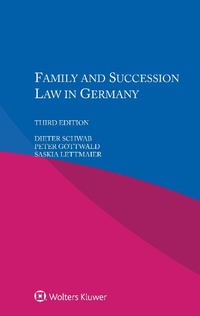
Family and Succession Law in Germany
3rd Edition
Published on 24. February 2017
208 pages
978-90-411-8769-7 (ISBN)
Description

Derived from the renowned multi-volume International Encyclopaedia of Laws, this concise exposition and analysis of the essential elements of law with regard to family relations, marital property, and succession to estates in Germany covers the legal rules and customs pertaining to the intertwined civic status of persons, the family, and property.
After an informative general introduction, the book proceeds to an in-depth discussion of the sources and instruments of family and succession law, the authorities that adjudicate and administer the laws, and issues surrounding the person as a legal entity and the legal disposition of property among family members. Such matters as nationality, domicile, and residence; marriage, divorce, and cohabitation; adoption and guardianship; succession and inter vivos arrangements; and the acquisition and administration of estates are all treated to a degree of depth that will prove useful in nearly any situation likely to arise in legal practice.
The book is primarily designed to assist lawyers who find themselves having to apply rules of international private law or otherwise handling cases connected with Germany. It will also be of great value to students and practitioners as a quick guide and easy-to-use practical resource in the field, and especially to academicians and researchers engaged in comparative studies by providing the necessary, basic material of family and succession law.
After an informative general introduction, the book proceeds to an in-depth discussion of the sources and instruments of family and succession law, the authorities that adjudicate and administer the laws, and issues surrounding the person as a legal entity and the legal disposition of property among family members. Such matters as nationality, domicile, and residence; marriage, divorce, and cohabitation; adoption and guardianship; succession and inter vivos arrangements; and the acquisition and administration of estates are all treated to a degree of depth that will prove useful in nearly any situation likely to arise in legal practice.
The book is primarily designed to assist lawyers who find themselves having to apply rules of international private law or otherwise handling cases connected with Germany. It will also be of great value to students and practitioners as a quick guide and easy-to-use practical resource in the field, and especially to academicians and researchers engaged in comparative studies by providing the necessary, basic material of family and succession law.
More details
Other editions
Additional editions
Dieter Schwab | Peter Gottwald | Saskia Lettmaier
Family and Succession Law in Germany
Book
03/2017
3rd Edition
Kluwer Law International
€117.80
Shipment within 10-20 days
Content
- Intro
- The Authors
- List of Abbreviations
- General Introduction
- Part I. Persons
- Chapter 1. The Status of a Person
- §1. Definition of a Person
- §2. Capacity
- I. General
- II. Minors
- III. Adults
- IV. Consent to Medical Treatment
- V. Responsibility for Tortious Acts under Civil Law
- VI. Criminal Responsibility
- §3. Absentees
- Chapter 2. Registration of Civil Status
- §1. The Registrar
- §2. Registers and Certificates
- Chapter 3. Personality Rights
- Chapter 4. Names
- §1. Composition of a Name (First Name, Surname, Individual Name, Title of Nobility)
- §2. Surname
- I. Acquisition of the Surname
- II. Change of Surname
- §3. First Name
- Chapter 5. Nationality
- Chapter 6. Domicile and Residence
- Chapter 7. Persons with Intellectual Disabilities
- Part II. Family Law
- Chapter 1. Introductory Remarks
- §1. The Development of Legislation in the Area of Family Law
- §2. Family Law and the German Constitution (Basic Law)
- Chapter 2. Marriage
- §1. Engagement
- I. Promise of Marriage
- II. Termination of an Engagement
- §2. Capacity to Marry
- I. Competence to Enter into Legal Transactions (Geschäftsfähigkeit)
- II. Majority
- III. Failure of Intention
- IV. Fraud and Threats
- V. Fictitious Marriages
- VI. Impediments to Marriage
- VII. Annulment
- §3. Marriage Formalities
- I. General
- II. The Marriage Ceremony
- §4. Effects of Marriage
- I. Duty of Consortium
- II. Enforcing Marital Duties
- III. Duty to Maintain
- IV. Transactions for Necessaries (Schlüsselgewalt)
- A. General
- B. Effects
- V. Presumption as to Ownership
- VI. Marital Name
- §5. Void and Voidable Marriages
- Chapter 3. Divorce
- §1. Grounds
- §2. Procedure
- §3. Effects
- I. Duty to Maintain
- A. General
- B. Grounds for Maintenance
- 1. Child Care, §1570 BGB
- 2. Age, §1571 BGB
- 3. Infirmity, §1572 BGB
- 4. Gross Inequity, §1576 BGB
- 5. Inability to Find Work, §1573 I BGB
- 6. Additional Maintenance, §1573 II BGB
- 7. Education/Retraining, §1575 BGB
- C. Amount of Maintenance
- D. Claimant's Lack of Means
- E. Financial Capability of the Debtor
- F. Gross Inequity
- G. Modes of Payment
- II. Equalization of Support (Pension Splitting)
- III. Household Effects and the Matrimonial Home
- §4. Separation
- Chapter 4. Cohabitation Outside Marriage
- §1. Introduction
- §2. Rules Relating to Marriage
- §3. General Rules of Civil Law
- §4. Explicit and Implicit Contractual Agreements
- §5. Registered Partnerships
- Chapter 5. Parent and Child
- §1. Mother and Father of a Child
- I. Mother
- II. Father
- A. Marriage to the Child's Mother
- B. Acknowledgement of Paternity
- C. Contesting Paternity
- D. Establishing Paternity by Judicial Decision
- E. Artificial Reproduction
- III. Knowledge of One's Genetic Origins
- §2. The Position of the Child (General)
- I. The Child's Name
- II. Assistance and Due Consideration
- Chapter 6. Adoption
- §1. Application and Consent
- §2. Placement Prior to Adoption
- §3. The Adoption Order and Its Effects
- §4. Revocation of the Adoption Order
- Chapter 7. Parental Responsibility
- §1. Acquiring Parental Responsibility
- I. Parental Responsibility Acquired by Law
- II. Parental Responsibility Acquired by Formal Declaration
- III. Parental Responsibility Acquired by Court Order
- §2. Care for the Child's Person (§§1626 I 1, 1631 BGB)
- §3. The Welfare Principle
- §4. Legal Representation
- I. Joint Parental Responsibility
- II. The Limits of Legal Representation
- §5. Disagreement Between Holders of Parental Responsibility
- §6. Self-Determination of the Child
- §7. Protecting Parental Responsibility
- I. Possession of the Child
- II. Contact
- §8. Third Parties Caring for Children
- §9. Care for the Child's Property
- §10. Claims Between Parents and Children Arising from the Exercise of Parental Responsibility
- §11. State Support
- §12. State Control
- I. Personal Welfare
- II. Management of Financial Affairs
- §13. Changing Parental Responsibility
- I. Suspension of Parental Responsibility
- II. The Termination of Parental Responsibility
- §14. Parental Responsibility Upon Separation/Divorce
- I. Joint Parental Responsibility
- II. Sole Parental Responsibility
- III. Unwed Parents
- §15. Procedure
- §16. Contact and Information
- I. Contact Between the Child and His or Her Parents
- II. Contact with Other Persons
- III. Information
- Chapter 8. Guardianship, Curatorship, and Care and Control
- §1. Introduction
- §2. Guardianship (Vormundschaft)
- I. Establishment
- II. Choosing the Guardian
- III. Personal Care
- IV. Legal Representation
- V. Financial Care
- VI. The Relationship Between Guardian and Ward
- VII. Ending Guardianship
- §3. Curatorship (Pflegschaft)
- I. General Matters
- II. Forms of Curatorship
- §4. Care and Control (Betreuung)
- I. Appointment of a Protector
- II. Forms of Protectorship
- III. The Protector's Rights and Duties
- IV. Termination
- Chapter 9. Financial Support among Relatives
- §1. General
- §2. Financial Support among Relatives
- I. Lack of Means
- II. Financial Capability
- III. Maintenance Claim
- IV. Restrictions
- V. Ranking
- VI. Reimbursement
- §3. The Parents' Duty to Maintain Their Children
- I. General
- II. The Child's Lack of Means
- III. The Parents' Financial Capability
- IV. The Maintenance Claim
- A. Level of Maintenance
- B. Mode of Provision
- V. Procedure
- §4. Special Provisions for Unmarried Parents
- Part III. Matrimonial Property Law
- Chapter 1. The Contractual Matrimonial Property Regimes
- §1. Separate Property
- §2. Community Property
- §3. Formalities
- §4. The Register of Marital Property
- Chapter 2. The Statutory Matrimonial Property Regime
- §1. Disposing of Property in Its Entirety, §1365 BGB
- §2. Disposing of Household Items, §1369 BGB
- §3. Consent
- Chapter 3. Equalization of Accrued Gains
- §1. Accrued Gains
- §2. Adjustments
- §3. The Claim for Equalization
- I. Gross Inequity
- II. Contractual Modifications
- §4. Advance Equalization
- §5. Further Claims for Equalization Beyond §§1363 Et seq. BGB
- §6. Special Provisions for Equalization upon Death
- Part IV. Law of Succession
- Chapter 1. Introduction
- §1. Basic Concepts of the Law of Inheritance
- I. Subject-Matter of the Law of Inheritance
- II. Legal Sources
- III. Probate Court Rules
- IV. Inheritance Tax
- §2. Fundamental Terms and Principles of the Law of Succession
- I. Universal Succession
- II. Succession to Liabilities
- III. Bequest of Specific Assets
- IV. Possible Heir
- V. Entry of Succession
- VI. Intestate Succession
- VII. Testamentary Succession
- VIII. Burial
- Chapter 2. Provisions Made and Succession in the Event of Death
- §1. Intestate Succession
- I. Relatives' Right of Succession
- A. Primary Heirs
- B. Secondary Heirs
- C. Tertiary Heirs
- D. Further Heirs
- E. Status of Illegitimate Children
- F. Status of Adopted Children
- II. Spouse's Inheritance Rights
- A. Community of Accrued Gains
- B. Separation of Property
- C. Joint Marital Property
- III. The Registered Partner's Right to Inherit
- IV. The State's Right to Succeed
- §2. Testamentary Succession
- I. Testamentary Freedom
- A. Constitutional Guarantees
- B. No Proxy in Making the Will
- C. Cancelling of the Will
- D. Illegality of the Will
- II. The Competence of the Testator to Make a Will
- A. Full Capacity
- B. Capacity of Minors
- C. General Incapacity
- D. Restrictions for the Handicapped
- III. Creation and Revocation of a Will
- A. Creation
- 1. Holographic Testament
- 2. The Public Will
- 3. Wills Made in an Emergency
- 4. Official Custody of Wills
- B. Revocation of a Will
- C. Challenging the Will
- IV. Contents and Interpretation of Wills
- A. Permissible Contents
- B. Interpretation
- V. The Joint Will of Spouses
- A. The Object and Purpose of a Joint Will
- B. The Creation of a Joint Will
- C. Contents of the Joint Will
- D. Challenging a Joint Will
- VI. The Contract of Inheritance
- A. Contractual Disposition Mortis Causa
- B. Concluding a Contract of Inheritance
- C. Contents of the Contract of Inheritance
- D. Obligations Arising from a Contract of Inheritance and Their Removal
- §3. The Right to a Compulsory Portion
- I. The Compulsory Portion
- A. Entitled Persons
- B. Debtor of the Compulsory Portion
- C. Extent of the Compulsory Portion
- D. Donations to Be Deducted From the Compulsory Portion
- E. Statutory Bars
- F. Respite from Paying Out the Compulsory Portion
- II. Protection of the Compulsory Portion
- A. The Claim for the Remainder of the Compulsory Portion
- B. Protection from Liabilities
- C. Right to a Supplement to the Compulsory Portion
- III. Exclusion of the Compulsory Portion
- A. Loss of the Right to Inherit
- B. Divestment of the Compulsory Portion
- C. Unworthy to Receive the Compulsory Portion
- D. The Bona Fide Confinement of the Compulsory Portion
- §4. Legal Transactions on Succession
- I. Power of Agency
- II. Donations on Succession
- A. Form of Promises Mortis Causa
- B. Donations Executed Inter Vivos
- III. The Contract for the Benefit of a Third Party Effective on Death
- A. Admissibility
- B. Covering Relation Between Testator and Beneficiary
- C. Taxation and the Obligation to Set Off Against the Compulsory Portion
- IV. Succession Clauses in Partnership Contracts
- A. Consequences of the Death of Partner
- B. Continuation Clauses
- C. Succession Clauses
- D. Qualified Succession Clauses
- E. Anticipated Succession
- V. Contracts as to the Estate of a Living Third Party
- VI. Renunciation of Inheritance
- Chapter 3. The Legal Position of the Heir
- §1. Devolution of the Inheritance and Legal Position of the Heir
- I. Devolution of the Inheritance, Waiver and Acceptance
- A. Devolution of the Inheritance
- B. Waiver of the Inheritance
- C. Acceptance of the Inheritance
- D. The Legal Position of the Provisional Heir
- II. Relinquishment of the Inheritance
- III. Disqualification of Inheritance
- IV. The Claim for the Inheritance
- A. Special Claim for Restitution
- B. Subject to the Claim
- C. Assets to be Restituted
- §2. The German and the European Certificate of Inheritance
- I. The Function of the Certificate of Inheritance
- II. Procedure for Issuance of the Certificate of Inheritance
- A. Jurisdiction of Probate Court
- B. Application
- C. Declaratory Decision on Applications
- D. Withdrawal of the Certificate
- E. Ordinary Proceedings with Regard to Succession Rights
- III. The Effects of the Certificate of Inheritance
- A. Presumption of Accuracy
- B. Bona Fide Protection
- C. German or European Certificate
- §3. The Heir's Constraints
- I. Estates of the Preliminary and Reversionary Heir
- A. Preliminary and Reversionary Heir
- B. Time of the Reversionary Heir's Succession
- C. Legal Position of the Preliminary Heir
- D. Relationship of Preliminary and Reversionary Heir
- E. The Legal Position of the Preliminary Heir Exempted from a Number of (Otherwise Applicable) Statutory Restrictions
- F. The Legal Position of the Reversionary Heir
- II. The Bequest and the Testamentary Burdens
- A. Bequest
- B. The Testamentary Burden
- III. The Executor
- A. Purpose of Appointing an Executor
- B. Types of Executors
- C. Duties of the Executor
- D. Civil Proceedings with Regard to Assets
- E. Position of Executor with Regard to Commercial Enterprise
- F. Relationship Between Heir and Executor
- §4. The Heir's Liability
- I. Unlimited Liability Which is Capable of Being Limited
- A. Possibilities of Limiting Liability
- B. Loss of Possibility to Limit Liability
- C. Public Citation of Creditors
- D. Debtor of Estate's Liabilities
- E. Determining and Executing the Estate Liabilities
- II. Possibilities of Restricting the Liability to the Estate
- A. The Administration of the Estate
- B. Proceedings on an Insolvent Estate ('Nachlassinsolvenzverfahren')
- C. Limiting Liability When the Estate is Meagre
- §5. The Community of Heirs ('Erbengemeinschaft')
- I. Joint Commitment and Joint Share in an Inheritance
- A. Estate as Common Assets
- B. Joint Ownership
- C. Joint Disposition on Items
- D. Surrogatio In Rem
- E. Disposition on Parts of Estate
- F. Pre-emptive Right of Joint Heirs
- II. Administration of the Estate
- A. Internal Management
- B. External Management
- III. The Dissolution of the Community of Heirs
- A. Possibility to Dissolve
- B. Rules for Partition
- C. Partition Contract
- D. Compensation for Advancements
- E. Assignment of the Share of the Inheritance
- IV. The Joint Heirs' Liability for Estate Debts
- A. Liability Before the Division of the Estate
- B. The Heirs' Joint Liability after Division of the Estate
- Selected Bibliography
- Index
