

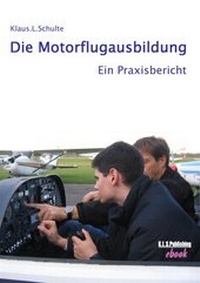
Die Motorflugausbildung (e-Book)
1st Edition
Published in January 2008
252 pages
978-3-9811404-7-7 (ISBN)
Available for download
Description

Das Buch ist der Praxisbericht einer Ausbildung zum Privatpiloten. Es schildert die einzelnen Stufen mit all ihren Herausforderungen und Erfolgserlebnissen in Form eines Tagesbuches. Es folgen Berichte zu ersten eigenen Erfahrungen als Rookie auf Flugtouren im In- und Ausland.
Das Buch wendet sich zunächst an alle, die eine Ausbildung zum Privatpiloten planen oder eine solche Ausbildung bereits begonnen haben. Last but not least wendet es sich natürlich an alle Luftfahrtbegeisterte, die schlichtweg einmal ein wenig mehr hinter den Zaun der Privatfliegerei schauen wollen.
Format PDF (ohne DRM), 17.1 MB, lesbar mit Acrobat Reader
Das Buch wendet sich zunächst an alle, die eine Ausbildung zum Privatpiloten planen oder eine solche Ausbildung bereits begonnen haben. Last but not least wendet es sich natürlich an alle Luftfahrtbegeisterte, die schlichtweg einmal ein wenig mehr hinter den Zaun der Privatfliegerei schauen wollen.
Format PDF (ohne DRM), 17.1 MB, lesbar mit Acrobat Reader
More details
Other editions
Additional editions
Klaus L. Schulte
Die Motorflugausbildung (gebunden)
Book
10/2011
1st Edition
K.L.S. Publishing
€29.90
Article exhausted; check different version

Klaus L. Schulte
Die Motorflugausbildung
Book
03/2007
1st Edition
K.L.S. Publishing
€24.80
Article exhausted; check different version
Person
Klaus L.Schulte lebt in Köln. Nach dem Studium der Mathematik und Physik war er als Dipl.-Mathematiker jahrzehntelang bei verschiedenen namhaften Unternehmen in der Softwarebranche tätig, als Systemprogrammierer, Projektleiter, Marketing und Produkt Manager, zwei Jahre arbeitete er in San Francisco, USA.
Neben dem vorliegenden Buch ist er Autor weiterer Bücher zu Themen der Allgemeinen Luftfahrt. Er hat ferner eine Reihe von Artikeln im Fachmagazin 'Pilot und Flugzeug' veröffentlicht.
Neben dem vorliegenden Buch ist er Autor weiterer Bücher zu Themen der Allgemeinen Luftfahrt. Er hat ferner eine Reihe von Artikeln im Fachmagazin 'Pilot und Flugzeug' veröffentlicht.
Content
1 - Inhalt [Seite 5]
2 - Vorwort [Seite 9]
3 - Der Auslöser - Flug mit einer Remos G3 [Seite 13]
4 - Teil 1: Die Flugausbildung [Seite 17]
4.1 - Aller Anfang ist Theorie [Seite 19]
4.2 - Die ersten Flugstunden [Seite 22]
4.3 - Platzrunden, die Wiege jedes Fliegers [Seite 37]
4.4 - Auf dem Weg zu besseren Landungen [Seite 48]
4.5 - Noch mehr Platzrunden [Seite 53]
4.6 - Der erste Alleinflug [Seite 55]
4.6.1 - Erster Alleinflug (aus dem Internet) [Seite 56]
4.6.2 - Erster Alleinflug - Glück im Unglück [Seite 61]
4.7 - Überlandflüge und terrestrische Navigation [Seite 62]
4.8 - Erste Überland-Alleinflüge [Seite 89]
4.9 - Fliegerurlaub in Malaga [Seite 94]
4.10 - Der Solo-Dreiecksflug [Seite 117]
4.11 - Weitere Soloflüge und die Vorprüfung [Seite 121]
4.12 - Der Prüfungsflug [Seite 128]
4.13 - Prüfung bestanden - kann ich jetzt fliegen? [Seite 134]
5 - Teil 2: Flugtouren, Flugerfahrungen, Fortbildung [Seite 137]
5.1 - Begegnung mit der Fuji FA200 [Seite 139]
5.2 - Flug nach Juist [Seite 141]
5.3 - Einweisung in die Diamond DA 20 Katana [Seite 148]
5.4 - Auf den Balearen [Seite 150]
5.4.1 - Flug über Mallorca [Seite 154]
5.4.2 - Flug nach Ibiza [Seite 158]
5.4.3 - Flug nach Menorca [Seite 161]
5.5 - Ultraleichte Erfahrungen [Seite 165]
5.6 - Die CVFR-Ausbildung [Seite 169]
5.7 - Die CVFR-Prüfung [Seite 173]
5.8 - Kanarische Inseln [Seite 177]
5.9 - Fliegen in Kalifornien [Seite 190]
5.9.1 - Über der Bucht von San Francisco [Seite 193]
5.9.2 - Flug über San Diego [Seite 199]
5.10 - 138 Stunden und 50 Minuten [Seite 204]
6 - Anhang Technik [Seite 207]
6.1 - Warum ein Flugzeug fliegt [Seite 209]
6.2 - Langsamflug [Seite 212]
6.3 - CVFR: Navigation mit VOR [Seite 215]
6.3.1 - Das VOR-Empfangsgerät [Seite 215]
6.3.2 - Navigation mit VORs [Seite 216]
6.3.3 - Der Begriff des Radials [Seite 220]
6.3.4 - Navigieren mit VORs [Seite 221]
6.3.4.1 - Zufliegen auf das VOR (inbound) [Seite 221]
6.3.4.2 - Wegfliegen vom VOR (outbound) [Seite 222]
6.3.4.3 - Intercept Radial mit einem vorgegebenen Anschneidewinkel [Seite 222]
6.3.4.4 - Positionsbestimmung durch Überqueren einer bestimmten Linie [Seite 223]
6.3.4.5 - Genaue Positionsbestimmung durch zwei VORs (Kreuzpeilung) [Seite 224]
6.3.4.6 - Genaue Positionsbestimmung durch VOR und DME [Seite 224]
6.3.5 - Tim Carlsons NAV Simulator [Seite 225]
6.4 - CVFR: Navigation mit ADF [Seite 226]
6.4.1 - Das ADF Empfangsgerät [Seite 226]
6.4.2 - Navigation mit dem ADF [Seite 227]
6.4.2.1 - Zufliegen auf das NDB (inbound) [Seite 229]
6.4.2.1.1 - Erfliegen einer stehenden Peilung (constant bearing procedure) [Seite 230]
6.4.2.1.2 - Inbound tracking [Seite 231]
6.4.2.2 - Wegfliegen vom NDB (outbound) [Seite 231]
6.4.2.2.1 - Inverses Homing [Seite 231]
6.4.2.2.2 - Erfliegen einer stehenden Peilung (constant bearing procedure) [Seite 232]
6.4.2.2.3 - Outbound tracking [Seite 233]
6.4.2.3 - Intercept QDM (interception inbound) [Seite 233]
6.4.2.4 - Intercept QDM (interception inbound) mit Anschneidewinkel [Seite 236]
6.4.2.5 - Intercept QDR (interception outbound) [Seite 237]
6.4.2.6 - Verifizieren und Checkliste [Seite 239]
6.4.2.7 - Positionsbestimmung durch Orientierung relativ zum NDB [Seite 240]
6.5 - Checkliste Cessna 172 [Seite 241]
6.6 - Weiterführende Literatur [Seite 245]
6.7 - Bildnachweis [Seite 246]
6.8 - Abkürzungen [Seite 247]
6.9 - Autor [Seite 250]
2 - Vorwort [Seite 9]
3 - Der Auslöser - Flug mit einer Remos G3 [Seite 13]
4 - Teil 1: Die Flugausbildung [Seite 17]
4.1 - Aller Anfang ist Theorie [Seite 19]
4.2 - Die ersten Flugstunden [Seite 22]
4.3 - Platzrunden, die Wiege jedes Fliegers [Seite 37]
4.4 - Auf dem Weg zu besseren Landungen [Seite 48]
4.5 - Noch mehr Platzrunden [Seite 53]
4.6 - Der erste Alleinflug [Seite 55]
4.6.1 - Erster Alleinflug (aus dem Internet) [Seite 56]
4.6.2 - Erster Alleinflug - Glück im Unglück [Seite 61]
4.7 - Überlandflüge und terrestrische Navigation [Seite 62]
4.8 - Erste Überland-Alleinflüge [Seite 89]
4.9 - Fliegerurlaub in Malaga [Seite 94]
4.10 - Der Solo-Dreiecksflug [Seite 117]
4.11 - Weitere Soloflüge und die Vorprüfung [Seite 121]
4.12 - Der Prüfungsflug [Seite 128]
4.13 - Prüfung bestanden - kann ich jetzt fliegen? [Seite 134]
5 - Teil 2: Flugtouren, Flugerfahrungen, Fortbildung [Seite 137]
5.1 - Begegnung mit der Fuji FA200 [Seite 139]
5.2 - Flug nach Juist [Seite 141]
5.3 - Einweisung in die Diamond DA 20 Katana [Seite 148]
5.4 - Auf den Balearen [Seite 150]
5.4.1 - Flug über Mallorca [Seite 154]
5.4.2 - Flug nach Ibiza [Seite 158]
5.4.3 - Flug nach Menorca [Seite 161]
5.5 - Ultraleichte Erfahrungen [Seite 165]
5.6 - Die CVFR-Ausbildung [Seite 169]
5.7 - Die CVFR-Prüfung [Seite 173]
5.8 - Kanarische Inseln [Seite 177]
5.9 - Fliegen in Kalifornien [Seite 190]
5.9.1 - Über der Bucht von San Francisco [Seite 193]
5.9.2 - Flug über San Diego [Seite 199]
5.10 - 138 Stunden und 50 Minuten [Seite 204]
6 - Anhang Technik [Seite 207]
6.1 - Warum ein Flugzeug fliegt [Seite 209]
6.2 - Langsamflug [Seite 212]
6.3 - CVFR: Navigation mit VOR [Seite 215]
6.3.1 - Das VOR-Empfangsgerät [Seite 215]
6.3.2 - Navigation mit VORs [Seite 216]
6.3.3 - Der Begriff des Radials [Seite 220]
6.3.4 - Navigieren mit VORs [Seite 221]
6.3.4.1 - Zufliegen auf das VOR (inbound) [Seite 221]
6.3.4.2 - Wegfliegen vom VOR (outbound) [Seite 222]
6.3.4.3 - Intercept Radial mit einem vorgegebenen Anschneidewinkel [Seite 222]
6.3.4.4 - Positionsbestimmung durch Überqueren einer bestimmten Linie [Seite 223]
6.3.4.5 - Genaue Positionsbestimmung durch zwei VORs (Kreuzpeilung) [Seite 224]
6.3.4.6 - Genaue Positionsbestimmung durch VOR und DME [Seite 224]
6.3.5 - Tim Carlsons NAV Simulator [Seite 225]
6.4 - CVFR: Navigation mit ADF [Seite 226]
6.4.1 - Das ADF Empfangsgerät [Seite 226]
6.4.2 - Navigation mit dem ADF [Seite 227]
6.4.2.1 - Zufliegen auf das NDB (inbound) [Seite 229]
6.4.2.1.1 - Erfliegen einer stehenden Peilung (constant bearing procedure) [Seite 230]
6.4.2.1.2 - Inbound tracking [Seite 231]
6.4.2.2 - Wegfliegen vom NDB (outbound) [Seite 231]
6.4.2.2.1 - Inverses Homing [Seite 231]
6.4.2.2.2 - Erfliegen einer stehenden Peilung (constant bearing procedure) [Seite 232]
6.4.2.2.3 - Outbound tracking [Seite 233]
6.4.2.3 - Intercept QDM (interception inbound) [Seite 233]
6.4.2.4 - Intercept QDM (interception inbound) mit Anschneidewinkel [Seite 236]
6.4.2.5 - Intercept QDR (interception outbound) [Seite 237]
6.4.2.6 - Verifizieren und Checkliste [Seite 239]
6.4.2.7 - Positionsbestimmung durch Orientierung relativ zum NDB [Seite 240]
6.5 - Checkliste Cessna 172 [Seite 241]
6.6 - Weiterführende Literatur [Seite 245]
6.7 - Bildnachweis [Seite 246]
6.8 - Abkürzungen [Seite 247]
6.9 - Autor [Seite 250]

