

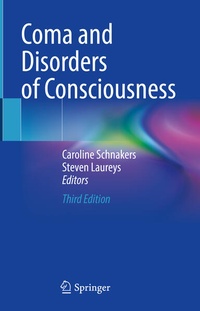
Coma and Disorders of Consciousness
Description

Coma and Disorders of Consciousness, 3e
is a fully revised new edition offering a comprehensive review of the field for clinicians and researchers in the field of disorders of consciousness.
Caring for patients with disorders of consciousness (DOC) such as unresponsive wakefulness syndrome (vegetative state) or minimally conscious state and related conditions such as locked-in syndrome currently represent a financial, medical and ethical conundrum. Although severe brain injuries represent a fraction of the population with brain injury, their cost is enormous (around $4 billion in direct medical costs per year), mostly due to the long-term care they need. The impressive number of studies performed on disorders of consciousness in the last decade has allowed refining diagnosis criteria, acquiring a better understanding of prognosis, and developing new tools to care and treat this challenging population. In this context, recently published milestone papers have provided new guidelines to clinicians for managing patients with DOC. This should lead to a shift in mentality and in the way we care for these patients.
This book brings together researchers and clinicians to write about recent and future changes that will altogether improve the outcome of patients with DOC.
More details
Other editions
Additional editions
Previous edition
Persons
Dr Schnakers has been working as a clinical scientist in the neurorehabilitation field for the past 15 years. She focuses her research on brain-injured patients with Disorders of Consciousness (DOC) and, more particularly, on the assessment of their brain activity and cognitive functions using behavioral, electrophysiological and neuroimaging techniques. She has published more than 100 articles (H-index: 52) in international peer reviewed journals such as Neurology, Annals of Neurology, Nature Reviews Neurology and Lancet. She serves as the chair of the Special Interest Group on DOC for the International Brain Injury Association and she is actively involved in the Curing Coma Campaign. She currently works as assistant director at the Research Institute of Casa Colina Hospital and Centers for Healthcare (Pomona, CA).
Neurologist and Clinical Professor at the Brain Center of the University Hospital of Liège, Research Director at the FNRS, Steven Laureys directed, until thebeginning of 2020, the Coma Science Group which he created in 2014 within the GIGA Consciousness center of the University of Liege. Most of his research work is devoted to the study of altered consciousness in severely brain-damaged patients (coma, unresponsive vegetative/awake state, minimally conscious state, locked-in syndrome), as well as during anesthesia, sleep, meditation and in the hypnotic state.Steven Laureys MD PhD FEAN is a neurologist, neuroscientist, author and keynote speaker, recognised for his research on human consciousness. He is Research Director at the Belgian National Fund for Scientific Research, founder and head of the Centre Cerveau at the Liège University Hospital in Belgium, founder of the 'Coma Science Group', director of the GIGA Consciousness Research Unit at Liège University & Invited Professor at CERVO Brain Centre, Laval University, Canada, and Harvard Medical School, Boston. He also serves as Founding Co-Director of the Hangzhou International Consciousness Institute, China and is Chief Neurologist at TRAINM / Brain-NM Clinics, Antwerp and Amsterdam. With his team and collaborators, he uses neuroimaging to study concussion, coma, locked-in syndrome , vegetative state/unresponsive wakefulness and minimally conscious states but also brain death and near death experiences. Laureys interests include the study of neuroplasticity and brain function in severe brain damage but also in sleep, anesthesia, hypnosis and meditation. He is the founder & past-chair of the World Federation of Neurology Applied Research Group on Coma, past president of the Association for the Scientific Study of Consciousness and fellow of the Belgian Royal Academy of Medicine and the European Academy of Neurology. He has published over 560 scientific articles (H-index 141) and is the author of 6popular books.
Content
Neural Correlates of Consciousness.- Behavioral Assessment and Diagnosis of Disorders of Consciousness.- Brain-Computer Interfaces and its Place in the Management of Disorders of Consciousness.- Prognosis in Disorders of Consciousness.- Neuromedical Comorbidities and their management in Patients with DOC.- Music as sensory stimulation and therapeutic intervention.- Pharmacological treatments.- Emerging treatment for patients with disorders of consciousness: the field of neuromodulation.- The Ethics in the Management of Patients with Disorders of Consciousness.- Models and Systems of Care for Patients with Disorders of Consciousness.- Taking care of Patients with Disorders of Consciousness: The Role of the Informal Caregivers.- Paediatric DOC: diagnosis, prognosis, and treatment.- Near-Death Experiences: What do we know?.- Future Perspectives of Clinical Coma Science.
