

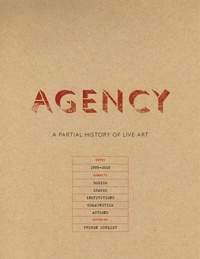
Agency
A Partial History of Live Art
Published on 12. April 2019
322 pages
978-1-78938-029-3 (ISBN)
Description

Notoriously difficult to define as a genre, Live Art is commonly positioned as a challenge to received artistic, social and political categories: not theatre, not dance, not visual art... and often wilfully anti-mainstream and anti-establishment. But as it has become an increasingly prevalent category in international festivals, major art galleries, diverse publications and higher education streams, it is time for a reassessment.
This collection of essays, conversations, provocations and archival images takes the twentieth anniversary of the founding of one of the sector's most committed champions, the Live Art Development Agency (LADA) in London, as an opportunity to consider not only what Live Art has been against, but also what it has been for. Rather than defining the practices in oppositional terms - what they might be seeking to critique, reject or disrupt - this collection reframes these practices in terms of the relations and commitments they might be used to model or advocate. What kinds of care and recovery do they enable? What do they connect as well as reject? What do they make possible as they test the impossible? What ideas of success do they stand for as they risk failure? In this way, the central theme of the collection, and to which all contributors were invited to respond, is the idea of agency: the capacity for new kinds of thoughts, actions and energies as enacted by individual artists and groups. It seems appropriate that this question would be considered in relation to the history of one particular 'agency': LADA itself.
These questions are explored in a unique conversational format, bringing together a diverse range of emerging and established practitioners, curators and leading figures in the field, each paired with another practitioner for a live conversation that has been sensitively edited for the page. Curated within a structure of five overlapping themes - Bodies, Spaces, Institutions, Communities and Actions - this format produces unexpected insights and accounts of the development of the field. Each theme also contains two provocative essays by leading scholars, thinkers and makers, exploring the conceptual frames in more detail. The result is a collection that is as heterogeneous, ambitious, contradictory and inspiring as the field of Live Art itself.
Contributors: Aaron Williamson, Adrian Heathfield, Alan Read, Alastair MacLennan, Alexandrina Hemsley, Amelia Jones, Andrew Mottershead, Andy Field, Anne Bean, Barby Asante, Bryan Biggs, Cassils, Catherine Wood, David A. Bailey, Dominic Johnson, Gary Anderson, George Chakravarthi, Guillermo Gomez-Pena, Hayley Newman, Heike Roms, Helen Paris, James Leadbitter, Jamila Johnson-Small, Jane Trowell, Jen Harvie, Johanna Tuukkanen, John Jordan, John McGrath, Jordan McKenzie, Joshua Sofaer, Katherine Araniello, Kira O'Reilly, Lena Simic, Leslie Hill, Lois Keidan, Lois Weaver, Manuel Vason, Martin O'Brien, Mary Paterson, Rajni Shah, Rebecca French, Richard Dedomenici, Ron Athey, RoseLee Goldberg, Selina Thompson, Simon Casson and Tim Etchells.
Co-published with Live Art Development Agency.
Winner of the 2021 TaPRA Edited Collection Prize
This collection of essays, conversations, provocations and archival images takes the twentieth anniversary of the founding of one of the sector's most committed champions, the Live Art Development Agency (LADA) in London, as an opportunity to consider not only what Live Art has been against, but also what it has been for. Rather than defining the practices in oppositional terms - what they might be seeking to critique, reject or disrupt - this collection reframes these practices in terms of the relations and commitments they might be used to model or advocate. What kinds of care and recovery do they enable? What do they connect as well as reject? What do they make possible as they test the impossible? What ideas of success do they stand for as they risk failure? In this way, the central theme of the collection, and to which all contributors were invited to respond, is the idea of agency: the capacity for new kinds of thoughts, actions and energies as enacted by individual artists and groups. It seems appropriate that this question would be considered in relation to the history of one particular 'agency': LADA itself.
These questions are explored in a unique conversational format, bringing together a diverse range of emerging and established practitioners, curators and leading figures in the field, each paired with another practitioner for a live conversation that has been sensitively edited for the page. Curated within a structure of five overlapping themes - Bodies, Spaces, Institutions, Communities and Actions - this format produces unexpected insights and accounts of the development of the field. Each theme also contains two provocative essays by leading scholars, thinkers and makers, exploring the conceptual frames in more detail. The result is a collection that is as heterogeneous, ambitious, contradictory and inspiring as the field of Live Art itself.
Contributors: Aaron Williamson, Adrian Heathfield, Alan Read, Alastair MacLennan, Alexandrina Hemsley, Amelia Jones, Andrew Mottershead, Andy Field, Anne Bean, Barby Asante, Bryan Biggs, Cassils, Catherine Wood, David A. Bailey, Dominic Johnson, Gary Anderson, George Chakravarthi, Guillermo Gomez-Pena, Hayley Newman, Heike Roms, Helen Paris, James Leadbitter, Jamila Johnson-Small, Jane Trowell, Jen Harvie, Johanna Tuukkanen, John Jordan, John McGrath, Jordan McKenzie, Joshua Sofaer, Katherine Araniello, Kira O'Reilly, Lena Simic, Leslie Hill, Lois Keidan, Lois Weaver, Manuel Vason, Martin O'Brien, Mary Paterson, Rajni Shah, Rebecca French, Richard Dedomenici, Ron Athey, RoseLee Goldberg, Selina Thompson, Simon Casson and Tim Etchells.
Co-published with Live Art Development Agency.
Winner of the 2021 TaPRA Edited Collection Prize
Reviews / Votes
'This is an elegant and beautifully presented mapping of important themes and topics in Live Art. The lens of agency provides an original perspective as well as providing a well-deserved tribute to the work of the Live Art Agency. The editorial strategy for the volume is very clearly articulated and the variety of voices and registers was extremely well curated and framed.The work is very precisely edited with very good introduction to each sub-section. All the elements, including the images, are excellently integrated in a coherent totality.' -- 2021 TaPRA Edited Collection Prize awarding panel 'The contributions to the volume are authored by some of the most significant artists and researchers in the field, and there is a range of fascinating and urgent voices, practices, and questions collected here. Agency is essential reading for anyone interested or invested in Live Art and who wants to know more about LADA's history and practices. The book is both a (partial) history of Live Art, and a proposal for how the complex and multifarious concept of agency might help to shape future practice, communities, and actions.' -- Harriet Curtis, New Theatre Quarterly 'The strength of Agency is that the book is about much more than LADA itself. Using the term agency as 'the capacity for new kinds of thoughts, actions, and energies as enacted by individual artists and groups', Schmidt is interested in exploring the agency, or relational encounters, between different entities, locations, and bodies that have fallen under the umbrella created by LADA. [...] Agency could easily have been a book about live art's radicality. It is to Schmidt's credit, however, that as much attention is given to institutions, spaces, and support systems as to the individual artists.' -- Jennie Klein, Contemporary Theatre Review '[Agency] places itself in the mid-stream of engaged public discourse about what matters for artists (and indeed for all of us) in cultural/political life.[...] There is so much here in these essays and dialogues that multiple readings are truly worthwhile.[...] Agency is published at a critical moment for an institution that has forged resilience among artists over time. It deserves to be widely read and used by artists, scholars, change-makers, and social activists. It matters.' -- Claire MacDonald, PAJ: A Journal of Performance and Art 'A series of provocations and conversations.[...] While I believe that many of the questions that characterise live art are still vital and urgent, sometimes the insistence on live art's overtly politicised and provocative mode of 'unruly' practice floats its material base. I am sometimes suspicious of how live art is so unquestionably predisposed to the political, rather than an assessment of how such associations and definitions have developed, changed and crystalised, perhaps even taking on their own conservatisms. Schmidt, in his introduction, reframes this idea perfectly, asking what has live art 'been against' but also what has it been for?' -- Bryony White, Art Monthly 'Agency offers one of the clearest explanations in plain English of exactly what constitutes Live Art, what sets it apart from theatre or other practices in the creative industries and why that matters. As a reference book it offers an intelligent and rigorous interrogation of Live Art its guts and gore, its shock tactics and disruptions, its raw energy, risk taking and ingenuity.' -- Julie McNamara, Disability Arts Online, June 2019
More details
Language
English
Place of publication
Bristol
United Kingdom
Publishing group
Intellect
Target group
Professional and scholarly
ISBN-13
978-1-78938-029-3 (9781789380293)
Copyright in bibliographic data and cover images is held by Nielsen Book Services Limited or by the publishers or by their respective licensors: all rights reserved.
Schweitzer Classification
Other editions
Additional editions
Book
04/2019
Intellect Books
€54.61
Shipment within 3-4 weeks
Person
Theron Schmidt works internationally as a writer, teacher and performer. He is a founding co-convener of the international Performance Philosophy network, founding co-editor of the journal Performance Philosophy and associate editor of Performance Research. In addition to his academic research, he has written widely about contemporary performance and Live Art for a variety of publications, including magazines and artist books, and also as part of innovative critical writing projects that foster interaction between scholars, artists and publics.
Content
Introduction
Bodies
Conversations
Kira O'Reilly and Martin O' Brien
George Chakravarthi and Manuel Vason
Alexandrina Hemsley and Jamila Johnson-Small (Project 0) and Selina Thompson
Provocations
Those who have suffered understand suffering: Notes on the body (in pain)
Dominic Johnson
Agency, habitus, embodiment
Amelia Jones
Spaces and Places
Conversations
Tim Etchells and Andy Field
Leslie Hill and Helen Paris (Curious) and Johanna Tukkanen
Rebecca French and Andrew Mottershead (French & Mottershead) and Hayley Newman
Provocations
From a distance
Heike Roms
The gift of place
John E. McGrath
Institutions
Conversations
Mary Paterson and Joshua Sofaer
RoseLee Goldberg and Catherine Wood
Gary Anderson and Lena simic (The Institute for the Art and Practice of Dissent at Home) and Bryan Briggs
Provocations
Still live: The Free University of Liverpool (2010-13)
Jane Trowell
Institutional celebration
Jen Harvie
Communities
Conversations
Simon Casson and James Leadbitter
Jordan McKenzie and Rajni Shah
Anne Bean and Alastair MacLennan
Provocations
Performed communities: Imagining some research worth doing
Alan Read
Community - a case study in four acts: The brewery, the circus, the wick and the green
Lois Weaver
Actions
Conversations
Katherine Araniello and Aaron Williamson (Disabled Avant-Garde) and Richard DeDomenici
Barby Asante and David A. Bailey
Ron Athey and Cassils
Provocations
Performing utopias: For a Live Art that lives and lets live
John Jordan
'Philosophical tantrum' #10: On art, imagination, democracy, censorship, hope, etc.
Guillermo Gómez-Peña
Timeline
Index
Works Cited
Acknowledgements
Bodies
Conversations
Kira O'Reilly and Martin O' Brien
George Chakravarthi and Manuel Vason
Alexandrina Hemsley and Jamila Johnson-Small (Project 0) and Selina Thompson
Provocations
Those who have suffered understand suffering: Notes on the body (in pain)
Dominic Johnson
Agency, habitus, embodiment
Amelia Jones
Spaces and Places
Conversations
Tim Etchells and Andy Field
Leslie Hill and Helen Paris (Curious) and Johanna Tukkanen
Rebecca French and Andrew Mottershead (French & Mottershead) and Hayley Newman
Provocations
From a distance
Heike Roms
The gift of place
John E. McGrath
Institutions
Conversations
Mary Paterson and Joshua Sofaer
RoseLee Goldberg and Catherine Wood
Gary Anderson and Lena simic (The Institute for the Art and Practice of Dissent at Home) and Bryan Briggs
Provocations
Still live: The Free University of Liverpool (2010-13)
Jane Trowell
Institutional celebration
Jen Harvie
Communities
Conversations
Simon Casson and James Leadbitter
Jordan McKenzie and Rajni Shah
Anne Bean and Alastair MacLennan
Provocations
Performed communities: Imagining some research worth doing
Alan Read
Community - a case study in four acts: The brewery, the circus, the wick and the green
Lois Weaver
Actions
Conversations
Katherine Araniello and Aaron Williamson (Disabled Avant-Garde) and Richard DeDomenici
Barby Asante and David A. Bailey
Ron Athey and Cassils
Provocations
Performing utopias: For a Live Art that lives and lets live
John Jordan
'Philosophical tantrum' #10: On art, imagination, democracy, censorship, hope, etc.
Guillermo Gómez-Peña
Timeline
Index
Works Cited
Acknowledgements
