

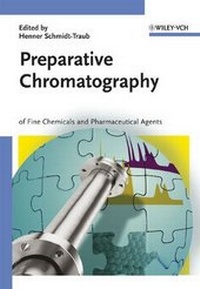
Preparative Chromatography
of Fine Chemicals and Pharmaceutical Agents
1st Edition
Published on 6. March 2006
XXVII, 458 pages
978-3-527-60590-3 (ISBN)
Description

This interdisciplinary approach combines the chemistry and engineering involved to describe the conception and improvement of chromatographic processes. The book covers recent developments in preparative chromatographic processes for the separation of "smaller" molecules using standard laboratory equipment as well as the detailed conception of industrial chemical plants.
Following an introductory section on the history of chromatography, the current state of research and the design of chromatographic processes, the book goes on to define the general terminology. There then follow sections on solid materials and packed columns process concepts. Final chapters on modeling and determination of model parameters, the design and optimization of preparative chromatographic processes and chromatographic reactors allow for the optimum selection of chromatographic systems.
Essential for chemists and engineers working in the chemicals and pharmaceutical industries as well as for food technologies, due to the interdisciplinary nature of these processes.
Following an introductory section on the history of chromatography, the current state of research and the design of chromatographic processes, the book goes on to define the general terminology. There then follow sections on solid materials and packed columns process concepts. Final chapters on modeling and determination of model parameters, the design and optimization of preparative chromatographic processes and chromatographic reactors allow for the optimum selection of chromatographic systems.
Essential for chemists and engineers working in the chemicals and pharmaceutical industries as well as for food technologies, due to the interdisciplinary nature of these processes.
Reviews / Votes
"I would not hesitate to recommend it to anyone working in this field."Chromatographia
"Overall the coverage is a bit uneven - nevertheless the volume does compile some useful material... In conclusion, this is a comprehensive reference text, which should find its way into the libraries of all companies who are serious about process scale preparative chromatography, whether internally or via outsource contracts."
Organic Process Research and Development
"This special volume is essential for chemists and engineers working in chemical and pharmaceutical industries, as well as for food technologies, due to the interdisciplinary nature of these preparative chromatographic processes."
Advances in Food Sciences
More details
Other editions
New editions
Henner Schmidt-Traub | Michael Schulte | Andreas Seidel-Morgenstern
Preparative Chromatography
E-Book
09/2012
2nd Edition
Wiley-VCH
€138.99
Available for download
Additional editions
Book
01/2005
1st Edition
Wiley-VCH
€189.00
Article exhausted; check for reprint
Person
Henner Schmidt-Traub has gained 15 years of industrial experience in plant engineering. Since 1989 he has been Professor for Plant and Process Design at the Department of Biochemical and Chemical Engineering, University of Dortmund. His main areas of research focus on preparative chromatography, down stream processing, integrated processes, plant design and innovative energy transfer.
Content
INTRODUCTION
Liquid Chromatography - It's History
Focus of the Book
How to read this Book?
FUNDAMENTALS AND GENERAL TERMINOLOGY
Principles of Adsorption Chromatography
Basic Effects and Chromatographic Definitions
Fluid Dynamics
Mass Transfer Phenomena
Equilibrium Thermodynamics
Thermodynamic Effects on Mass Separation
Practical Aspects of Parameter Determination
COLUMNS, PACKINGS AND STATIONARY PHASES
Column Design
Column Packings
Column Packing Technology
Column Testing
Column Maintenance and Regeneration
Guidelines for Choosing Chromatographic Columns and Stationary Phases
SELECTION OF CHROMATOGRAPHIC SYSTEMS
Definition of the Task
Properties of Chromatographic Systems
Criteria for the Choice of Chromatographic Systems
PROCESS CONCEPTS
Design and Operation of Equipment
Discontinuous Processes
Continuous Processes
Guidelines
MODELLING AND DETERMINATION OF MODEL PARAMETERS
Introduction
Models for Single Chromatographic Columns
Modelling HPLC Plants
Numerical Methods
Parameter Determination
Validation of Column Models
Modelling of SMB-Processes
MODEL BASED DESIGN AND OPTIMISATION
Basic Principles
Batch Chromatography
SMB Chromatography
Comparison of Batch and SMB Chromatography
CHROMATOGRAPHIC REACTORS
Introduction
Types of Chromatographic Reactors
Modelling of Chromatographic Reactors
Operation and Design of Chromatographic Reactors
Design Examples
ADVANCED CONTROL OF SIMULATED MOVING BED PROCESSES
Introduction
Model Predictive Control
State of the Art in Control of Simulated Moving Bed Processes
Online Optimising Control of a Reactive Simulated Moving Bed Process
Conclusions
APPENDIX
Liquid Chromatography - It's History
Focus of the Book
How to read this Book?
FUNDAMENTALS AND GENERAL TERMINOLOGY
Principles of Adsorption Chromatography
Basic Effects and Chromatographic Definitions
Fluid Dynamics
Mass Transfer Phenomena
Equilibrium Thermodynamics
Thermodynamic Effects on Mass Separation
Practical Aspects of Parameter Determination
COLUMNS, PACKINGS AND STATIONARY PHASES
Column Design
Column Packings
Column Packing Technology
Column Testing
Column Maintenance and Regeneration
Guidelines for Choosing Chromatographic Columns and Stationary Phases
SELECTION OF CHROMATOGRAPHIC SYSTEMS
Definition of the Task
Properties of Chromatographic Systems
Criteria for the Choice of Chromatographic Systems
PROCESS CONCEPTS
Design and Operation of Equipment
Discontinuous Processes
Continuous Processes
Guidelines
MODELLING AND DETERMINATION OF MODEL PARAMETERS
Introduction
Models for Single Chromatographic Columns
Modelling HPLC Plants
Numerical Methods
Parameter Determination
Validation of Column Models
Modelling of SMB-Processes
MODEL BASED DESIGN AND OPTIMISATION
Basic Principles
Batch Chromatography
SMB Chromatography
Comparison of Batch and SMB Chromatography
CHROMATOGRAPHIC REACTORS
Introduction
Types of Chromatographic Reactors
Modelling of Chromatographic Reactors
Operation and Design of Chromatographic Reactors
Design Examples
ADVANCED CONTROL OF SIMULATED MOVING BED PROCESSES
Introduction
Model Predictive Control
State of the Art in Control of Simulated Moving Bed Processes
Online Optimising Control of a Reactive Simulated Moving Bed Process
Conclusions
APPENDIX
