

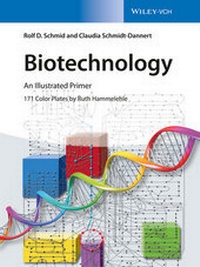
Biotechnology
Description

The content has been completely updated and restructured to reflect recent trends and developments and to follow the teaching curricula of most academic courses. New entries include glycobiology, algae, epigenetics, pre- and probiotics as well as C-sources and synthetic biology. The textbook still contains entries on the key topics in fermentation, bioprocess engineering and enzyme technology, along with industrial applications of biotechnology, focusing on the fields of food and medicine. The basic terms of microbiology, biochemistry, genetic engineering and cell biology are explained via an attractive layout including full color plates and the corresponding explanatory text. The whole is rounded off by a section on agricultural and environmental topics, as well as safety and ethical aspects.
The result is the number-one primer in biotechnology.
Reviews / Votes
"...you should have it close at hand on your desktop as you read new articles. I would recommend this reference book...not only to clinical chemists, pathalogists, and medical technologists, but to anyone in medicine who wants to know how all the new therapeutic agents are made and appriciates the impact of biotechnology an medicine and society."Clinical Chemistry
"...this book is a useful, interesting and colourful guide to modern biotechnology and genetic engineering. It will achieve its objective of providing students with an overview of the field presented in manageable portions and a clear and accessible manner, but it will also be a source of information, a useful reference and an interesting read for any researcher who is working across the traditional boundaries of chemistry, biology or biochemistry."
ChemBioChem
"This pocket guide can be recommended unreservedly for all students and researchers in natural and engineering sciences and medicine, but is also useful to readers with a general interest in biotechnology and genetic engineering. I can certainly agree with the final sentence of the book cover: A perfect introduction to the field - for professionals and students."
Angewandte Chemie IE
Erwähnung in: Process
"...provides a broad coverage of the relevant facts on products, methods and applications in biotechnology and genetic engineering...Instructive yet attractive color illustrations and a didactic approach throughout the book..."
Process worldwide
"Beginners and experts will like this wonderfully composed book."
Journal of Statistical Computation & Simulation
"In the wilderness of biotechnology, Schmid's "Pocket Guide to Biotechnology and Genetic Engineering" is a welcome addition that with all likelihood will find many friends. During the review process it has definitely found one! The book is excellently produced. The figures are as sharp as tacks and as informative as the text...The overall verdict is: useful and recommendable to students and biotechnologists alike."
Engineering in Life Sciences
More details
Other editions
Additional editions
Persons
Dr. Claudia Schmidt-Dannert is Distinguished McKnight Professor in the Department of Biochemistry, Molecular Biology and Biophysics, at the University of Minnesota (USA). She studied Biology and Biochemistry at the Carolo Wilhelmina University Braunschweig (Germany), where she received her Ph.D. in Biochemistry in 1994. Schmidt-Dannert held a Postdoc position in Molecular Biotechnology at the University of Stuttgart (Germany) and became Professor at the University of Minnesota in 2010. Her research focuses on exploring and utilizing the metabolic machineries of plants and microorganisms to enable the discovery and synthesis of valuable microbial or plant-derived compounds in engineered microbial cells.
Content
Early developments
Biotechnology today
MICROBIOLOGY
Viruses
Bacteriophages
Microorganisms
Bacteria
Yeasts
Fungi
Algae
Some bacteria of importance for biotechnology
Microorganisms: isolation, preservation, safety
Microorganisms: strain improvement
BIOCHEMISTRY
Biochemistry
Amino acids, peptides, proteins
Enzymes: structure, function, kinetics
Sugars, glycosides, oligo- and polysaccharides
Lipids, membranes, membrane proteins
Metabolism
GENETIC ENGINEERING
DNA: structure
DNA: function
RNA
Genetic engineering: general steps
Preparation of DNA
Other useful enzymes for DNA manipulation
PCR: general method
PCR: laboratory methods
DNA: synthesis and size determination
DNA sequencing
Transfer of foreign DNA in living cells (transformation)
Gene cloning and identification
Gene expression
Gene silencing
Epigenetics
Gene libraries and gene mapping
Genetic maps of prokaryotes
Genetic maps of eukaryotes
Metagenomics
CELL BIOLOGY
Cell biology
Stem cells
Blood cells and immune system
Antibodies
Reporter groups
BIOENGINEERING
Solid state fermentation (SSF)
Growing microorganisms
Growth kinetics and product formation
Fed-batch, continuous and high cell density fermentation
Fermentation technology
Fermentation technology: scale-up
Cultivation of mammalian cells
Mammalian cell bioreactors
Enzyme and cell reactors
Recovery of bioproducts
Recovery of proteins: chromatography
Economic aspects of industrial processes
FOOD AND FOOD ADDITIVES
Alcoholic beverages
Beer
Fermented food
Food and lactic acid fermentation
Prebiotics and probiotics
Baker's yeast and fodder yeasts
Fodder yeasts from petroleum feedstocks, single cell oil
Amino acids
L-Glutamic acid
D,L-Methionine, L-lysine, and L-threonine
AspartameTM, L-phenylalanine, and L-aspartic acid
Amino acids via enzymatic transformation
Vitamines
Nucleosides and nucleotides
INDUSTRIAL PRODUCTS
Bio-Ethanol
1-Butanol
Higher alcohols and alkenes
Acetic acid/ vinegar
Citric acid
Lactic acid, 3-hydroxy-propionic acid (3-HP)
Gluconic acid and "green" sugar chemicals
Dicarboxylic acids
Biopolymers: Polyesters
Biopolymers: Polyamides
Polysaccharides
Biosurfactants
Fatty Acids and their esters
ENZYME TECHNOLOGY
Biotransformation
Technical enzymes
Applied enzyme catalysis
Regio- and enantioselective enzymatic synthesis
Enzymes as processing aids
Detergent enzymes
Enzymes for starch hydrolysis
Enzymatic starch hydrolysis
Enzymes and sweeteners
Enzymes for the hydrolysis of cellulose and polyoses
Enzymes in pulp and paper processing
Pectinases
Enzymes and milk products
Enzymes in baking and meat processing
Other enzymes for food products and animal feed
Enzymes in leather and textile treatment
Procedures for obtaining novel technical enzymes
Protein design
ANTIBIOTICS
Antibiotics: occurrence, applications, mechanism of action
Antibiotics: screening, industrial production, and mechanism of action
Antibiotic resistance
ß-Lactam antibiotics: structure, biosynthesis, and mechanism of action
ß-Lactam antibiotics: manufacture
Amino acids and peptide antibiotics
Glycopeptide, lipopeptide, polyether, and nucleoside antibiotics
Aminoglycoside antibiotics
Tetracyclines, chinones, chinolones, and other aromatic antibiotics
Macolide antibiotics
New pathways to antibiotics
PHARMACEUTICALS AND MEDICAL TECHNOLOGY
Insulin
Growth hormone and other hormones
Hemoglobin, serum albumin, and lactoferrin
Blood clotting agents
Anticoagulants and thrombolytic agents
Enzyme inhibitors
Interferons
Interleukins and "anti-interleukins"
Erythropoietin and other growth factors
Other therapeutic proteins
Monoclonal and catalytic antibodies
Recombinant antibodies
Therapeutic antibodies
Vaccines
Recombinant vaccines
Steroid biotransformations
Diagnostic enzymes
Enzyme tests
Biosensors
Immunoanalysis
Glycobiology
AGRICULTURE AND ENVIRONMENT
Animal breeding
Embryo transfer, cloned animals
Gene maps
Transgenic animals
Breeding, gene pharming and xenotransplantation
Plant breeding
Plant tissue surface culture
Plant cell suspension cu
Microbiology
Viruses
General. A virus is an infectious particle without indigenous metabolism. Its genetic program is written in either DNA or RNA, whose replication depends on the assistance of a living host cell. A virus propagates by causing its host to form a protein coat (capsid), which assembles with the viral nucleic acid (virus particle, nucleocapsid). Viruses can infect most living organisms; they are mostly host-specific or even tissue- or cell-specific. Viruses are classified by their host range, their morphology, their nucleic acid (DNA/RNA), and their capsids. In medicine and veterinary medicine, the early diagnosis, prophylaxis and therapy of viral human and veterinary diseases plays a crucial role. AIDS (HI virus), viral hemorrhagic fever (Ebola virus), avian flu (H5N1-, H7N9-virus) (250) or hepatitis (several virus families) are important examples of viruses involved in human diseases, as are Rinderpest (Morbillivirus) or infectious salmon anemia (ISA virus) in epizootic veterinary diseases. In biotechnology, viruses are used for the development of coat-specific or component vaccines and for obtaining genetic vector and promoter elements which are, e. g., used in animal cell culture and studied for use in gene therapy.
Viruses for animal experiments. The first cloning experiments with animal cells were done in 1979, using a vector derived from simian virus 40 (SV40) (98). This virus can infect various mammals, propagating in lytic or lysogenic cycles (lysis vs. retarded lysis of host cells). Its genome of ca. 5.2 kb contains early genes for DNA replication and late genes for capsid synthesis. Expression vectors based on SV40 contain its origin of replication (ori), usually also a promoter, and a transcription termination sequence (polyA) derived from the viral DNA. For the transfection of mouse cells, DNA constructs based on bovine papilloma virus (BPV) are preferred. In infected cells, they change into multicopy plasmids which, during cell division, are passed on to the daughter cells. Attenuated viruses derived from retro, adeno, and herpes viruses are being investigated as gene shuttles for gene therapy (304). Retroviruses, e. g., the HI virus, contain an RNA genome. They infect only dividing cells and code for a reverse transcriptase which, in the host cell, transcribes the RNA into cDNA. HIV-cDNA is then integrated into the host genome where it directs, via strong promoters, the formation of viral nucleic acid and capsid proteins. Some hundred experiments with retroviral vectors having replication defects have already been carried out for gene therapy. A disadvantage of using retroviral vectors lies in their small capacity to package foreign DNA (inserts), whereas vectors derived from adenoviruses can accommodate up to 28 kb of inserted DNA. In contrast to retroviruses, adenoviruses can infect non-dividing cells, but their DNA does not integrate into the host chromosomal DNA. For gene therapy targeted to neuronal cells, e. g., in experiments related to Alzheimer's or Parkinson's disease, Herpes simplex-derived vectors are often used. Their large genome of 152 kb allows them to accommodate inserts > 20 kb of foreign DNA. A similar insert size is reached with Vaccina viruses, which may infect a wide range of cell types.
Viruses for plant experiments. Most plant viruses have an RNA genome (280). Only two groups of DNA viruses are known that infect higher plants, caulimo virus and gemini virus. Caulimo viruses have a quite narrow host range: they infect only crucifers such as beets and some cabbage varieties. Their small genome reduces their potential for accommodating foreign inserts. Gemini viruses infect important agricultural plants such as maize and wheat and thus bear significant risks for application. Moreover, their genomes undergo various rearrangements and deletions during the infection cycle, rendering the correct expression of foreign DNA inserts difficult.
Baculoviruses infect insects but not mammals. After infection, host cells form a crystalline protein (polyhedrin), which may constitute > 50 % of the insect cell. The polyhedrin promoter is therefore useful for the heterologous expression of proteins, using cell cultures of Spodoptera (a butterfly). An advantage of this system is that posttranslational glycosylations in this system resemble those of mammalian cells (262). Scale-up of this system is, however, limited, rendering it most useful for laboratory experiments. In Japan, silk worms (Bombyx mori) are considered an interesting system for expressing foreign proteins. The nuclear polyhedral virus BmNPV is being used for their transfection.
Bacteriophages
General. Viruses that attack bacteria are termed bacteriophages or simply phages. Their taxonomy is determined by the International Committee on Taxonomy of Viruses, ICTV. Phages occur everywhere in nature, and are abundant in metagenomic analyses of water samples (74). As there are historic reports of healing by "holy waters," they have been widely studied for the treatment of bacterial infections but results are equivocal. Fermentation processes, e. g., starter culture production (114), are always endangered by phage infections. As a preventive measure, attempts are usually made to select phage-resistant strains. Phages are useful in genetic engineering, e. g., for the development of cloning vectors or promoters, for DNA sequencing, and for the preparation of gene and protein libraries (62, 64, 68). Since most cloning experiments use E. coli, phages specific for this bacterium (?-, M13-, Qß-, T-phages) play a key role.
? Phage. When infecting E. coli, ? phage can follow two routes: either its linear doublestranded DNA (ca. 48.5 kbp, ca. 1 % of the E. coli genome) is propagated independent of the E. coli genome, resulting in lysis (lytic cycle), or it is integrated into the E. coli genome, resulting in lysogenic cells containing latent prophages, which replicate with the bacterium over several generations. Upon stress, such as a rise in temperature or UV irradiation, the prophage is excised from the E. coli genome and lyses the host cell. ? is able to form cohesive or sticky ends of 12 unpaired nucleotides each (cos sites), which are necessary for circular ? DNA formation and for its integration into the E. coli genome. The sticky ends also form the recognition signal for the formation of the viral gene product A, an exonuclease. After replication of the ? DNA into a concatemer of linear ? genomes, endonuclease A cuts at this position, initiating the packaging of progeny into its capsids. Cosmids, an important tool for the construction of large gene libraries, are derived from the ? phage, as is a family of ? plasmids such as ?EMBL4, which can be induced by a rise in temperature.
The M13 phage infects E. coli according to a different mechanism. It contains single-stranded DNA of ca. 6.4 kb, which after infection directs the synthesis of its complementary strand. The resulting double-stranded phage DNA is not integrated into the E. coli genome but is continuously replicated in the cytoplasm, giving rise to up to 1,000 phage particles/cell. During host cell division, the phage infection is passed on to the daughter cells (ca. 100/cell). Genes that have been cloned into a vector derived from M13 can be obtained as singlestranded DNA - a technique used for classical DNA sequencing (56). Prior to the invention of PCR, M13 vectors were used for site-directed mutagenesis of proteins.
T Phages occur in 7 different types. For genetic engineering, two enzymes coded by T phage genomes are useful: the DNA ligase of T4, which links DNA fragments regardless of the quality of their ends (sticky or blunt), and the DNA polymerase of T7, which polymerizes DNA on a single strand DNA matrix; it is used in gene sequencing (Sanger-Coulson method). The promoter of the T7-RNA polymerase is used in several E. coli expression vectors. T7-RNA polymerase transcribes DNA into RNA, which in turn serves as mRNA in cell-free protein synthesis, based on mRNA, tRNAs, ribosomes, amino acids and ATP.
Phages of other bacteria. Among the > 1,000 classified phages (some 2800 in total), > 300 are specific for enterobacteria, > 230 for bacteriococci, and > 150 each for Bacilli and Actinomycetes. Another group (at present 13 phages), described only recently, is the Ligamenvirales which attack archaeabacteria. Their structure and function are closely related to those of other viruses, including those specific for E. coli. Some of them can be either virulent or lysogenic, similar to the ? phage. Lactobacilli-specific phages are a major problem in the manufacture of milk products. Resistant bacteria prevent adsorption or replication of these phages. Among the 5 groups of Bacillus phages, ø105 and SPO2 are often used for transformation, and PBS1 has been used in construction of the B. subtilis genome sequence map. Phage D3112 is the preferred vector for the transformation of Pseudomonads, and SH3, SH5, SH10, or øC31 are preferred for the genetic engineering of Streptomyces.
Microorganisms
General. Microorganisms play a key role in the chemical cycles on earth. They are involved in the biodegradation of many compounds; these processes occur not only in the environment, but also in symbiosis with other organisms (e. g., lichens, intestinal and rumen bacteria). Some microorganisms are parasites or pathogens, impairing the health or life of other organisms. In biotechnology, nonpathogenic microorganisms are used to...
