

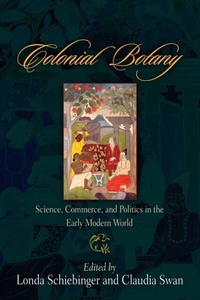
Colonial Botany
Science, Commerce, and Politics in the Early Modern World
1st Edition
Published on 1. March 2016
352 pages
978-0-8122-9347-0 (ISBN)
Description

In the early modern world, botany was big science and big business, critical to Europe's national and trade ambitions. Tracing the dynamic relationships among plants, peoples, states, and economies over the course of three centuries, this collection of essays offers a lively challenge to a historiography that has emphasized the rise of modern botany as a story of taxonomies and "pure" systems of classification. Charting a new map of botany along colonial coordinates, reaching from Europe to the New World, India, Asia, and other points on the globe, Colonial Botany explores how the study, naming, cultivation, and marketing of rare and beautiful plants resulted from and shaped European voyages, conquests, global trade, and scientific exploration.
From the earliest voyages of discovery, naturalists sought profitable plants for king and country, personal and corporate gain. Costly spices and valuable medicinal plants such as nutmeg, tobacco, sugar, Peruvian bark, peppers, cloves, cinnamon, and tea ranked prominently among the motivations for European voyages of discovery. At the same time, colonial profits depended largely on natural historical exploration and the precise identification and effective cultivation of profitable plants. This volume breaks new ground by treating the development of the science of botany in its colonial context and situating the early modern exploration of the plant world at the volatile nexus of science, commerce, and state politics.
Written by scholars as international as their subjects, Colonial Botany uncovers an emerging cultural history of plants and botanical practices in Europe and its possessions.
From the earliest voyages of discovery, naturalists sought profitable plants for king and country, personal and corporate gain. Costly spices and valuable medicinal plants such as nutmeg, tobacco, sugar, Peruvian bark, peppers, cloves, cinnamon, and tea ranked prominently among the motivations for European voyages of discovery. At the same time, colonial profits depended largely on natural historical exploration and the precise identification and effective cultivation of profitable plants. This volume breaks new ground by treating the development of the science of botany in its colonial context and situating the early modern exploration of the plant world at the volatile nexus of science, commerce, and state politics.
Written by scholars as international as their subjects, Colonial Botany uncovers an emerging cultural history of plants and botanical practices in Europe and its possessions.
Reviews / Votes
"Well illustrated and imaginatively written, this . . . superb collection surveys the leading edge of current approaches but also points towards future research."-Renaissance Studies"This collection contributes importantly not only to scholarship on science and empire, but makes clear the diversity of colonial relationships and the myriad and complex ways in which scientific knowledge was made."-Renaissance Quarterly
More details
Language
English
Place of publication
Pennsylvania
United States
Target group
College/higher education
Illustrations
54 illus.
File size
6,80 MB
ISBN-13
978-0-8122-9347-0 (9780812293470)
Copyright in bibliographic data and cover images is held by Nielsen Book Services Limited or by the publishers or by their respective licensors: all rights reserved.
Schweitzer Classification
Other editions
Additional editions
Londa Schiebinger | Claudia Swan
Colonial Botany
Science, Commerce, and Politics in the Early Modern World
Book
07/2007
University of Pennsylvania Press
€37.50
Shipment within 10-20 days
Persons
Londa Schiebinger is John L. Hinds Professor of History of Science and Barbara D. Finberg Director of the Institute for Research on Women and Gender, Stanford University. She is the author of The Mind Has No Sex? Women in the Origins of Modern Science; Has Feminism Changed Science?; Nature's Body: Gender in the Making of Modern Science; and Plants and Empire: Colonial Bioprospecting in the Atlantic World. Claudia Swan is Associate Professor in the Department of Art History at Northwestern University and founding Director of the Program in the Study of Imagination. She is the author of The Clutius Botanical Watercolor: Plants and Flowers of the Renaissance and Art, Science, and Witchcraft in Early Modern Holland: Jacques de Gheyn II (1565-1629).
Content
INTRODUCTION
-Londa Schiebinger and Claudia Swan
I. COLONIAL GOVERNANCE AND BOTANICAL PRACTICES
1. Dominion, Demonstration, and Domination: Religious Doctrine, Territorial Politics, and French Plant Collection
-Chandra Mukerji
2. Walnuts at Hudson Bay, Coral Reefs in Gotland: The Colonialism of Linnaean Botany
-Staffan Mueller-Wille
3. Mission Gardens: Natural History and Global Expansion, 1720-1820
-Michael T. Bravo
4. Gathering for the Republic: Botany in Early Republic America
-Andrew J. Lewis
II. TRANSLATING INDIGENOUS, CREOLE, AND EUROPEAN BOTANIES: LOCAL KNOWLEDGE(S), GLOBAL SCIENCE
5. Books, Bodies, and Fields: Sixteenth-Century Transatlantic Encounters with New World Materia Medica
-Daniela Bleichmar
6. Global Economies and Local Knowledge in the East Indies: Jacobus Bontius Learns the Facts of Nature
-Harold J. Cook
7. Prospecting for Drugs: European Naturalists in the West Indies
-Londa Schiebinger
8. Linnaean Botany and Spanish Imperial Biopolitics
-Antonio Lafuente and Nuria Valverde
9. How Derivative was Humboldt? Microcosmic Nature Narratives in Early Modern Spanish America and the (Other) Origins of Humboldt's Ecological Sensibilities
-Jorge Canizares-Esguerra
III. CASH CROPS: MAKING AND REMAKING NATURE
10. The Conquest of Spice and the Dutch Colonial Imaginary: Seen and Unseen in the Visual Culture of Trade
-Julie Berger Hochstrasser
11. Of Nutmegs and Botanists: The Colonial Cultivation of Botanical Identity
-E. C. Spary
12. Out of Africa: Colonial Rice History in the Black Atlantic
-Judith Carney
IV. TECHNOLOGIES OF ACCUMULATION
13. Collecting Naturalia in the Shadow of Early Modern Dutch Trade"
-Claudia Swan
14. Accounting for the Natural World: Double-Entry Bookkeeping in the Field
-Anke te Heesen
15. Surgeons, Fakirs, Merchants, and Craftspeople: Making L'Empereur's Jardin in Early Modern South Asia
-Kapil Raj
16. Measurable Difference: Botany, Climate, and the Gardener's Thermometer in
Eighteenth-Century France
-Marie-Noelle Bourguet
Notes
List of Contributors
Index
Acknowledgments
-Londa Schiebinger and Claudia Swan
I. COLONIAL GOVERNANCE AND BOTANICAL PRACTICES
1. Dominion, Demonstration, and Domination: Religious Doctrine, Territorial Politics, and French Plant Collection
-Chandra Mukerji
2. Walnuts at Hudson Bay, Coral Reefs in Gotland: The Colonialism of Linnaean Botany
-Staffan Mueller-Wille
3. Mission Gardens: Natural History and Global Expansion, 1720-1820
-Michael T. Bravo
4. Gathering for the Republic: Botany in Early Republic America
-Andrew J. Lewis
II. TRANSLATING INDIGENOUS, CREOLE, AND EUROPEAN BOTANIES: LOCAL KNOWLEDGE(S), GLOBAL SCIENCE
5. Books, Bodies, and Fields: Sixteenth-Century Transatlantic Encounters with New World Materia Medica
-Daniela Bleichmar
6. Global Economies and Local Knowledge in the East Indies: Jacobus Bontius Learns the Facts of Nature
-Harold J. Cook
7. Prospecting for Drugs: European Naturalists in the West Indies
-Londa Schiebinger
8. Linnaean Botany and Spanish Imperial Biopolitics
-Antonio Lafuente and Nuria Valverde
9. How Derivative was Humboldt? Microcosmic Nature Narratives in Early Modern Spanish America and the (Other) Origins of Humboldt's Ecological Sensibilities
-Jorge Canizares-Esguerra
III. CASH CROPS: MAKING AND REMAKING NATURE
10. The Conquest of Spice and the Dutch Colonial Imaginary: Seen and Unseen in the Visual Culture of Trade
-Julie Berger Hochstrasser
11. Of Nutmegs and Botanists: The Colonial Cultivation of Botanical Identity
-E. C. Spary
12. Out of Africa: Colonial Rice History in the Black Atlantic
-Judith Carney
IV. TECHNOLOGIES OF ACCUMULATION
13. Collecting Naturalia in the Shadow of Early Modern Dutch Trade"
-Claudia Swan
14. Accounting for the Natural World: Double-Entry Bookkeeping in the Field
-Anke te Heesen
15. Surgeons, Fakirs, Merchants, and Craftspeople: Making L'Empereur's Jardin in Early Modern South Asia
-Kapil Raj
16. Measurable Difference: Botany, Climate, and the Gardener's Thermometer in
Eighteenth-Century France
-Marie-Noelle Bourguet
Notes
List of Contributors
Index
Acknowledgments
