

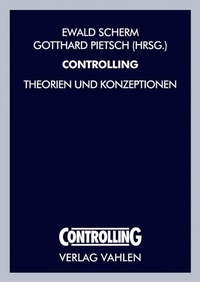
Controlling
Theorien und Konzeptionen
1st Edition
Published on 23. July 2015
X, 934 pages
978-3-8006-5069-9 (ISBN)
Description

Obwohl das Controlling bereits seit Jahrzehnten ausgiebig und gerade in jüngster Zeit auch theoretisch diskutiert wird, fehlt bisher ein umfassender Überblick über die vielfältigen theoretischen und konzeptionellen Entwicklungen in der Controllingforschung. Der Band "Controlling - Theorien und Konzeptionen" liefert erstmals diesen Gesamtüberblick über den "State of the Art" der Theorien und Konzeptionen des Controlling. Über 50 renommierte Vertreter der deutschsprachigen Controllingforschung bringen ihre Erkenntnisse ein. Es werden sowohl die gestaltungsorientierten Konzeptionen als auch die eher auf Beschreibung und Erklärung der Controllingpraxis ausgerichteten Theorien des Controlling dargestellt und diskutiert. Erstmals folgt in einem eigenen Kapitel die umfassende Analyse des Zusammenhangs zwischen Controlling und gesellschaftlichen Verhältnissen aus unterschiedlichen Perspektiven. Aufgrund seiner breiten theoretisch-konzeptionellen Ausrichtung ist dieser Sammelband in der Controllingforschung bisher einzigartig. Er gibt nicht nur Impulse für die weitere Entwicklung der Controllingforschung, sondern bietet gleichzeitig Praktikern einen vollständigen und detaillierten Überblick über die Konzeptionen des Controllings und stiftet damit Orientierung für die Gestaltung der Controllingpraxis.
More details
Other editions
New editions
Additional editions
Book
09/2004
Vahlen
€85.00
Shipment within 5-7 days
Content
- Cover
- Zum Inhalt / Zu den Herausgebern
- Titel
- Vorwort
- Inhaltsverzeichnis
- Teil I. Theorie und Konzeption in der Controllingforschung
- Theorie und Konzeption in der Controllingforschung
- Teil II. Controlling als interdisziplinäre Wissenschaft
- Notwendigkeit der theoretischen Fundierung des Controlling
- Ein interdisziplinärer Bezugsrahmen für die Controllingforschung
- Controlling - Verstehen, Erklären oder Gestalten? Interdisziplinäre Perspektiven eines Konzeptes und einer sozialen Praxis aus der Sicht einer sozialwissenschaftlichen Management- und Organisationstheorie
- Teil III. Controlling und Information
- Kennzahlengestützte Controlling-Konzeption
- Informationsorientierte Controllingkonzeptionen - Ein Überblick und Ansatzpunkte der Weiterentwicklung
- Gestaltungsaspekte eines Controlling integrierenden Rechnungswesens
- Die Informationsökonomik in der Controllingforschung
- Performancemessung aus agencytheoretischer Sicht
- Bereichs- und unternehmensbezogene Performancemaße zur Koordination und Steuerung von Bereichsleitern - Eine agency-theoretische Analyse
- Informationsökonomische Ansätze des Investitionscontrolling
- Spieltheoretische Analyse der Verrechnungspreisgestaltung
- Teil IV. Controlling und Unternehmenserfolg
- Die Ergebniszielorientierung des Controlling als Unterstützungsfunktion
- Theoretische Grundlagen der Erfolgsmessung im Controlling
- Theorien von Shareholder Value-Ansätzen und unternehmenswertorientiertem Controlling
- Investitions- und finanzierungstheoretische Grundlagen des wertorientierten Controllings
- Teil V. Controlling und Koordination
- Zukunftsperspektiven der koordinationsorientierten Controllingkonzeption
- Modifikationen der Koordinationsfunktion des Controlling
- Präzisierung und Ergänzung der Koordinationsorientierung: Der kontributionsorientierte Ansatz
- Controlling: Von der erweiterten Koordinationsorientierung zur qualitätszentrierten Dienstleistung
- Teil VI. Controlling und Rationalität
- Thesen zum Controlling
- Möglichkeiten und Grenzen der Operationalisierung des Konstrukts "Rationalitätssicherung"
- Rationalitätssicherung durch Kontrolle
- Zum Kern des Controllings: Von der Rationalitätssicherung zur Effektivitäts- und Effizienzsicherung
- Teil VII. Controlling und Reflexion
- Reflexionsorientiertes Controlling
- Erkenntnistheoretische Grundlagen einer reflexionsorientierten Controllingforschung
- Bild und Realität: Controllingtheorie als kritische Bildtheorie. Ein Ansatz zu einer umfassenden Controllingtheorie, die nicht umklammert
- Anforderungen an das reflexionsorientierte Controlling aus Sicht des Supply Chain Management
- Teil VIII. Controlling und Verhalten
- Verhaltenswirkungen des Controllings
- Controlling, Anreizsysteme und Verhaltenswissenschaften
- Gestaltung von Controllingsystemen - Empirische Ergebnisse des Kontingenzansatzes des Behavioral Accounting
- Psychologie und Controlling
- Kognitionsorientiertes Controlling
- Teil IX. Controlling und Gesellschaft
- Controlling als Praxis: Eine strukturationstheoretische Perspektive auf Controlling
- Controlling und Systemtheorie. Oder: Alles im Griff? Die Konstruktion organisationaler Wirklichkeit durch Controlling
- Controlling aus neoinstitutionalistischer Perspektive
- Controlling und Postmoderne - eine theoretische Betrachtung
- Zur Relevanz der Kulturanthropologie für die Konstruktion von Controllingsystemen
- Controlling und Ethik - Grundlegung eines Zusammenhangs
- Die Wirkung von Rechtsnormen auf das Controlling: ein Analysedefizit konzeptioneller Forschung?
- Teil X. Entwicklungstendenzen und Zukunftsperspektiven der Controllingforschung
- Entwicklungstendenzen und Zukunftsperspektiven der Controllingforschung
- Impressum
