

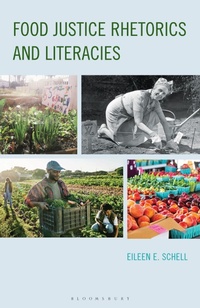
Food Justice Rhetorics and Literacies
1st Edition
Published on 30. October 2025
216 pages
979-8-216-20136-6 (ISBN)
Description

Presents an argument for a food justice-oriented rhetoric and literacy that shifts the emphasis in the local food movement from individualized conscious eater literacies to addressing the broader social, political, and cultural implications, histories, and power relations embedded in the food system.
Food Justice Rhetorics and Literacies provides a critical examination of the dominant rhetorical tropes and arguments of local food discourse and their exclusions. The author addresses that through understanding complex patterns of discrimination and social action in relation to land ownership and food production, we can begin to imagine and enact a more just and sustainable food system. This book explores and assesses periods in history when the U.S. public took an active role in agriculture through publicly-promoted, often federal and state subsidized gardening projects and widescale grassroots gardening efforts in times of crisis, thus building alternative agrarian literacies among the U.S. publics and ensuring a stable food supply during times of crisis.
The shift to a food justice-oriented rhetoric centers food activists, BIPOC farmers, community gardeners and policy advocates who are seeking to change systems of food production and distribution so that all can eat well.
Food Justice Rhetorics and Literacies provides a critical examination of the dominant rhetorical tropes and arguments of local food discourse and their exclusions. The author addresses that through understanding complex patterns of discrimination and social action in relation to land ownership and food production, we can begin to imagine and enact a more just and sustainable food system. This book explores and assesses periods in history when the U.S. public took an active role in agriculture through publicly-promoted, often federal and state subsidized gardening projects and widescale grassroots gardening efforts in times of crisis, thus building alternative agrarian literacies among the U.S. publics and ensuring a stable food supply during times of crisis.
The shift to a food justice-oriented rhetoric centers food activists, BIPOC farmers, community gardeners and policy advocates who are seeking to change systems of food production and distribution so that all can eat well.
More details
Edition
1. Auflage
Language
English
Place of publication
New York
United States
Publishing group
Bloomsbury Publishing Plc
Target group
Professional and scholarly
Illustrations
15 b/w illustrations
ISBN-13
979-8-216-20136-6 (9798216201366)
Copyright in bibliographic data and cover images is held by Nielsen Book Services Limited or by the publishers or by their respective licensors: all rights reserved.
Schweitzer Classification
Other editions
Additional editions
Eileen E. Schell
Food Justice Rhetorics and Literacies
Book
approx. 01/2026
Rowman & Littlefield Publishers
€113.30
Not yet published
Person
Eileen E. Schell is Professor of Writing and Rhetoric and the Laura J. and L. Douglas Meredith Professor of Teaching Excellence in the Department of Writing Studies, Rhetoric, and Composition at Syracuse University.
Content
Acknowledgements
List of Figures
Introduction: Engaging Food Justice Rhetorics and Literacies in Rhetoric and Writing Studies
1. Locating the "Crisis" Rhetorics and Literacies around Food and Farming
2. Who Is In and Who is Out? Alternative Food Networks, Conscious Eater Literacies, and the Rhetorics of Local Food
3. Racialized Rhetorics of Food Politics: Black Farmers, the Case of Shirley Sherrod, and Struggle for Land Equity and Access
4. Gardening for Victory: The Rhetorics and Literacies of Community Gardening
5. Toward Food Justice Rhetorics and Literacies in Precarious Times
References
Index
About the Author
List of Figures
Introduction: Engaging Food Justice Rhetorics and Literacies in Rhetoric and Writing Studies
1. Locating the "Crisis" Rhetorics and Literacies around Food and Farming
2. Who Is In and Who is Out? Alternative Food Networks, Conscious Eater Literacies, and the Rhetorics of Local Food
3. Racialized Rhetorics of Food Politics: Black Farmers, the Case of Shirley Sherrod, and Struggle for Land Equity and Access
4. Gardening for Victory: The Rhetorics and Literacies of Community Gardening
5. Toward Food Justice Rhetorics and Literacies in Precarious Times
References
Index
About the Author
