

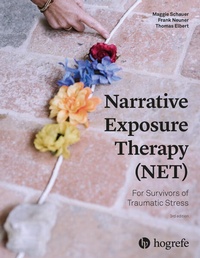
Narrative Exposure Therapy (NET) For Survivors of Traumatic Stress
3rd Edition
Published on 10. February 2025
X, 220 pages
978-1-61676-595-8 (ISBN)
Description

Extensive evidence shows that six to twelve sessions of Narrative Exposure Therapy (NET) can be sufficient to provide considerable relief from events such as organized violence, torture, war, rape, and childhood abuse. The new manual is clearly structured and easy to follow, and includes new figures that help illustrate and guide the reader through the steps of NET. The theoretical sections offer a solid basis for carrying out the therapeutic intervention. The reader will learn the NET approach step by step, with robust and straightforward practical advice and tools, including how to deal with challenging situations, e.g., how to go deeper when faced with the challenging dynamics of remembering trauma, and how to manage dissociation, avoidance, strong emotions, lost memories, or the sudden emergence of unexpected recollections from the past. NET therapy conversations and resulting narrations from trauma scenes demonstrate the level of Narrative Exposure details required. Finally, the importance of reading back the testimony to the individual is explained.
A new section on the variations of NET details how to offer KIDNET for children and young people, FORNET for victims of trauma who are perpetrators of violence, NETfacts for communities, and ElderNET for older adults as well as online NET (eNET). Experienced therapists also get an idea of how NET is typically trained and how to facilitate NET exercises. Downloadable resources for use in clinical practice include handouts, examples of narrations, and a checklist for adverse life events.
This book is an invaluable resource for clinical psychologists, psychotherapists, psychiatrists, counselors, crisis workers, social workers, health workers, and physicians.
More details
Edition
3rd ed. 2025
Language
English
Place of publication
Cambridge
United States
Target group
Professional and scholarly
Clinical psychologists, psychiatrists, psychotherapists, counselors, crisis workers, health workers, social workers, and physicians.
File size
15,51 MB
ISBN-13
978-1-61676-595-8 (9781616765958)
DOI
10.1027/00595-000
Schweitzer Classification
Other editions
Additional editions
Maggie Schauer | Frank Neuner | Thomas Elbert
Narrative Exposure Therapy (NET) For Survivors of Traumatic Stress
Book
02/2025
3rd Edition
Hogrefe Publishing
€64.95
Available immediately
Maggie Schauer | Frank Neuner | Thomas Elbert
Narrative Exposure Therapy (NET) For Survivors of Traumatic Stress
E-Book
02/2025
3rd Edition
Hogrefe Publishing
€57.99
Available for download
Persons
Maggie Schauer, PhD, is a psychotraumatologist at the University of Konstanz, Germany. Together with Frank Neuner and Thomas Elbert, she has developed Narrative Exposure Therapy (NET). Maggie is a founding member of the NGO vivo international, of the NGO BabyForum (counteracting neglect and maltreatment in early childhood), and of the NET Institute. She is constantly training the next generations of psychotherapists and mental health professionals, as well as psychosocial skills to support survivors of trauma.
Frank Neuner, PhD, is the head of the Clinical Psychology Department at Bielefeld University, including the university's outpatient clinic. He has gained international reputation for the co-development of NET. Frank published the first randomized treatment trial for posttraumatic stress disorder with refugees living in a war region, which was followed by a series of wide published randomized controlled trials of his working group.
Thomas Elbert, PhD, specializes in research on the consequences of social and traumatic stress. He has conducted laboratory and clinical studies as well as field studies and care projects directly in conflict areas. Moreover, his research team has asked what motivates people to perpetrate violence, whether domestic or in organized groups. Thomas is a member of the German Academy of Sciences Leopoldina, the Berlin-Brandenburg Academy of Sciences, and the Academia Europaea.
Frank Neuner, PhD, is the head of the Clinical Psychology Department at Bielefeld University, including the university's outpatient clinic. He has gained international reputation for the co-development of NET. Frank published the first randomized treatment trial for posttraumatic stress disorder with refugees living in a war region, which was followed by a series of wide published randomized controlled trials of his working group.
Thomas Elbert, PhD, specializes in research on the consequences of social and traumatic stress. He has conducted laboratory and clinical studies as well as field studies and care projects directly in conflict areas. Moreover, his research team has asked what motivates people to perpetrate violence, whether domestic or in organized groups. Thomas is a member of the German Academy of Sciences Leopoldina, the Berlin-Brandenburg Academy of Sciences, and the Academia Europaea.
Content
About the Authors
1 Introduction: Voices of Victims
2 Theoretical Base
Traumatic Stress
Traumatic Events
Stress and the Defense Cascade
Violence: The Major Source of Traumatic Stress
The Concept of PTSD
Psychosocial Problems and Comorbid Disorders
in Adults and Children
PTSD and Drug Abuse
PTSD and Physical Health
Vulnerability for PTSD
Culture and Symptoms of the Trauma Spectrum
Social Trauma
Rationale of NET
Nature of Traumatic Memory
Sensory-Perceptual Representation
Autobiographical Contextual Memory
Neurobiological Basis of Memory and Trauma
Disorders
Processing of Affective Experiences
Regulation of Emotions
Implications for Treatment
Speechlessness of Trauma: Sociopolitical
Implications
The Nature of NET as a Treatment and its Ethical
Position
NET Characteristics and Principles
Activating Memory Associations - NET in a
Nutshell
3 Therapeutic Approach of NET
Basic Procedure of NET
NET Process Step by Step
Step 1: Event Intake Checklist, Structured
Assessment of Trauma Reactions, and
Psychoeducation
Step 2: Building the Lifeline as an Autobiographical
Review
Step 3: Narrative Exposure
Sample Transcript of a Narrative Exposure
Conversation
Testimony Reading Example: "Mountain Accident"
Trusting Narrative Exposure in the Face of the
Typical Trauma Memory Dynamics
4 NET for People With Special Needs and
Requirements
KIDNET: NET for Children and Adolescents
Trauma Treatment for Children
KIDNET Step 1: Structured Diagnostic Interview
Including Event Checklists With the Child
KIDNET Step 2: Lifeline With Children - Make It
a Game!
KIDNET Step 3: Narrative Exposure
FORNET:(Forensic) Offender Rehabilitation & NET
for Ex-Combatants
Violence Breeds Violence - How and Why?
Torn Between Victory and Defeat - Associative
Memory Network of the Fighter
The Steps of FORNET
The NETfacts Health System: Healing Traumatized
Communities
ElderNET:NET as Trauma-Memory Focused
Treatment for Older Adults
Obstacles and Specifics of Trauma Treatment in
Old and Very Old Age
The Past as a Resource - Reminiscence Through
ElderNET
Adjustments of NET Steps for ElderNET Protocol
eNET: Delivering NET via the Internet
Introduction
Structure of eNET
General Elements for eNET Sessions
5 Challenging Moments in the Therapeutic
Process
Avoidance
Etiology and Treatment of Trauma-Induced
Dissociation
General Characteristic of Dissociation
Other Helpful Considerations to Manage the
Tendency to Dissociate
Shame and Guilt and the Threat to Human Life
Difference Between Guilt and Shame
Guilt
Shame
Other Challenges During the Narration Process
Narrator is Withholding Information
There Seems to Be No Physiological and
Emotional Relieve
Therapist's Avoidance
6 The Role of Interpreters in NET
7 Teaching Narrative Exposure
References
Appendix and Online Supplementary Materials
1 Introduction: Voices of Victims
2 Theoretical Base
Traumatic Stress
Traumatic Events
Stress and the Defense Cascade
Violence: The Major Source of Traumatic Stress
The Concept of PTSD
Psychosocial Problems and Comorbid Disorders
in Adults and Children
PTSD and Drug Abuse
PTSD and Physical Health
Vulnerability for PTSD
Culture and Symptoms of the Trauma Spectrum
Social Trauma
Rationale of NET
Nature of Traumatic Memory
Sensory-Perceptual Representation
Autobiographical Contextual Memory
Neurobiological Basis of Memory and Trauma
Disorders
Processing of Affective Experiences
Regulation of Emotions
Implications for Treatment
Speechlessness of Trauma: Sociopolitical
Implications
The Nature of NET as a Treatment and its Ethical
Position
NET Characteristics and Principles
Activating Memory Associations - NET in a
Nutshell
3 Therapeutic Approach of NET
Basic Procedure of NET
NET Process Step by Step
Step 1: Event Intake Checklist, Structured
Assessment of Trauma Reactions, and
Psychoeducation
Step 2: Building the Lifeline as an Autobiographical
Review
Step 3: Narrative Exposure
Sample Transcript of a Narrative Exposure
Conversation
Testimony Reading Example: "Mountain Accident"
Trusting Narrative Exposure in the Face of the
Typical Trauma Memory Dynamics
4 NET for People With Special Needs and
Requirements
KIDNET: NET for Children and Adolescents
Trauma Treatment for Children
KIDNET Step 1: Structured Diagnostic Interview
Including Event Checklists With the Child
KIDNET Step 2: Lifeline With Children - Make It
a Game!
KIDNET Step 3: Narrative Exposure
FORNET:(Forensic) Offender Rehabilitation & NET
for Ex-Combatants
Violence Breeds Violence - How and Why?
Torn Between Victory and Defeat - Associative
Memory Network of the Fighter
The Steps of FORNET
The NETfacts Health System: Healing Traumatized
Communities
ElderNET:NET as Trauma-Memory Focused
Treatment for Older Adults
Obstacles and Specifics of Trauma Treatment in
Old and Very Old Age
The Past as a Resource - Reminiscence Through
ElderNET
Adjustments of NET Steps for ElderNET Protocol
eNET: Delivering NET via the Internet
Introduction
Structure of eNET
General Elements for eNET Sessions
5 Challenging Moments in the Therapeutic
Process
Avoidance
Etiology and Treatment of Trauma-Induced
Dissociation
General Characteristic of Dissociation
Other Helpful Considerations to Manage the
Tendency to Dissociate
Shame and Guilt and the Threat to Human Life
Difference Between Guilt and Shame
Guilt
Shame
Other Challenges During the Narration Process
Narrator is Withholding Information
There Seems to Be No Physiological and
Emotional Relieve
Therapist's Avoidance
6 The Role of Interpreters in NET
7 Teaching Narrative Exposure
References
Appendix and Online Supplementary Materials
