

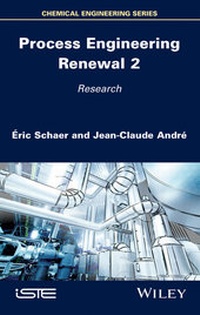
Process Engineering Renewal 2
Research
1st Edition
Published on 16. July 2020
336 pages
978-1-119-75120-5 (ISBN)
Description

Process engineering emerged at the beginning of the 20th Century and has become an essential scientific discipline for the matter and energy processing industries. Its success is incontrovertible, with the exponential increase in techniques and innovations.
Rapid advances in new technologies such as artificial intelligence, as well as current societal needs sustainable development, climate change, renewable energy, the environment are developments that must be taken into account in industrial renewal.
Process Engineering Renewal 2 focuses on research in process engineering, which is partly overshadowed by the sciences that contribute to its development. The external constraints of this interface science must be seen in relation to conservation, sustainable development, global warming, etc., which are linked to current success and the difficulty of taking risks in research.
Rapid advances in new technologies such as artificial intelligence, as well as current societal needs sustainable development, climate change, renewable energy, the environment are developments that must be taken into account in industrial renewal.
Process Engineering Renewal 2 focuses on research in process engineering, which is partly overshadowed by the sciences that contribute to its development. The external constraints of this interface science must be seen in relation to conservation, sustainable development, global warming, etc., which are linked to current success and the difficulty of taking risks in research.
More details
Other editions
Additional editions
Book
07/2020
1st Edition
Wiley-ISTE
€164.50
Shipment within 3-4 weeks

Persons
Eric Schaer is an engineer at ENSIC (French National School of Chemical Industries) and Professor at the University of Lorraine, France. His research extends to the implementation of homogeneous and heterogeneous chemical reactions.
Jean-Claude Andre is Research Director at CNRS (French National Center for Scientific Research), researcher at the University of Lorraine, France and an ENSIC engineer. He focuses his research on light-matter interactions and associated process engineering.
Jean-Claude Andre is Research Director at CNRS (French National Center for Scientific Research), researcher at the University of Lorraine, France and an ENSIC engineer. He focuses his research on light-matter interactions and associated process engineering.
Content
Foreword ix
Preface xiii
Introduction xxix
Chapter 1. From "Autonomous" Research to Societal Solutions 1
1.1. Positioning of process engineering 3
1.2. A forced transition 9
Chapter 2. Highly "Autonomous" Research 21
2.1. Intensification 23
2.1.1. Reminders on microfluidics 24
2.1.2. Applications 28
2.2. Additive manufacturing 31
2.3. Nanotechnologies 39
Chapter 3. Externally Stimulated Research 43
3.1. Chemistry and process engineering 45
3.2. Biotechnologies - bioprocess engineering 46
3.3. Impacts of digital technology 48
3.4. Product engineering 54
3.5. Materials and process engineering 57
3.6. Biomimicry and process engineering 60
3.6.1. Emergence of biomimetic concepts in PE 63
3.6.2. Applicability of biomimicry 64
3.7. Complexity and process engineering 64
3.7.1. Between complication and complexity 65
3.7.2. Complexity "quite simply" 66
3.7.3. To start the debate 67
Chapter 4. Research in Response to Societal Questions 73
4.1. General framework 76
4.2. Some additional elements 86
4.2.1. Some additions and considerations 87
4.3. Energies 91
4.3.1. Biomass 96
4.3.2. Electrochemistry, photochemistry 99
4.3.3. Storage of electrical energy 100
4.3.4. Processes related to negative greenhouse gas emissions 104
4.3.5. Energy and raw materials 106
4.3.6. Consequences in terms of a low-carbon industry 106
4.4. Life Cycle Assessment (LCA) 108
4.4.1. Life Cycle Assessment limitations 109
4.4.2. Life Cycle Assessment methodology 109
4.4.3. Environmental mechanism: cause-and-effect chain (Becaert 2010) 111
Chapter 5. Non-Exhaustive List of Possible Actions in Process Engineering 115
5.1. Process engineering under constraints stimulating upstream research 117
5.2. Methodological development and paradigms 125
5.3. Challenges and innovations 126
5.4. Possible science behind the application 128
Chapter 6. Consequences and Attempting to Reach an Operative Conclusion 131
6.1. A provisional assessment 133
6.1.1. Consolidating knowledge 136
6.1.2. Developing a sense of belonging, creativity and innovation 137
6.2. A possible operational conclusion 140
6.2.1. A little reflection on PE research 144
Appendix 1. Process Engineering in the French National Strategy and in "Horizon Europe" 151
Appendix 2. Reminders on Artificial Intelligence 181
Appendix 3. Between Process and Environmental Engineering 205
References 223
Index 283
Preface xiii
Introduction xxix
Chapter 1. From "Autonomous" Research to Societal Solutions 1
1.1. Positioning of process engineering 3
1.2. A forced transition 9
Chapter 2. Highly "Autonomous" Research 21
2.1. Intensification 23
2.1.1. Reminders on microfluidics 24
2.1.2. Applications 28
2.2. Additive manufacturing 31
2.3. Nanotechnologies 39
Chapter 3. Externally Stimulated Research 43
3.1. Chemistry and process engineering 45
3.2. Biotechnologies - bioprocess engineering 46
3.3. Impacts of digital technology 48
3.4. Product engineering 54
3.5. Materials and process engineering 57
3.6. Biomimicry and process engineering 60
3.6.1. Emergence of biomimetic concepts in PE 63
3.6.2. Applicability of biomimicry 64
3.7. Complexity and process engineering 64
3.7.1. Between complication and complexity 65
3.7.2. Complexity "quite simply" 66
3.7.3. To start the debate 67
Chapter 4. Research in Response to Societal Questions 73
4.1. General framework 76
4.2. Some additional elements 86
4.2.1. Some additions and considerations 87
4.3. Energies 91
4.3.1. Biomass 96
4.3.2. Electrochemistry, photochemistry 99
4.3.3. Storage of electrical energy 100
4.3.4. Processes related to negative greenhouse gas emissions 104
4.3.5. Energy and raw materials 106
4.3.6. Consequences in terms of a low-carbon industry 106
4.4. Life Cycle Assessment (LCA) 108
4.4.1. Life Cycle Assessment limitations 109
4.4.2. Life Cycle Assessment methodology 109
4.4.3. Environmental mechanism: cause-and-effect chain (Becaert 2010) 111
Chapter 5. Non-Exhaustive List of Possible Actions in Process Engineering 115
5.1. Process engineering under constraints stimulating upstream research 117
5.2. Methodological development and paradigms 125
5.3. Challenges and innovations 126
5.4. Possible science behind the application 128
Chapter 6. Consequences and Attempting to Reach an Operative Conclusion 131
6.1. A provisional assessment 133
6.1.1. Consolidating knowledge 136
6.1.2. Developing a sense of belonging, creativity and innovation 137
6.2. A possible operational conclusion 140
6.2.1. A little reflection on PE research 144
Appendix 1. Process Engineering in the French National Strategy and in "Horizon Europe" 151
Appendix 2. Reminders on Artificial Intelligence 181
Appendix 3. Between Process and Environmental Engineering 205
References 223
Index 283
