

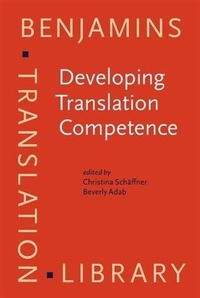
Developing Translation Competence
1st Edition
Published on 15. October 2000
XVI, 244 pages
978-90-272-8545-4 (ISBN)
Description

This volume presents a comprehensive study of what constitutes Translation Competence, from the various sub-competences to the overall skill. Contributors combine experience as translation scholars with their experience as teachers of translation. The volume is organized into three sections: Defining, Building, and Assessing Translation Competence.
The chapters offer insights into the nature of translation competence and its place in the translation training programme in an academic environment and show how theoretical considerations have contributed to defining, building and assessing translation competence, offering practical examples of how this can be achieved.
The first section introduces major sub-competences, including linguistic, cultural, textual, subject, research, and transfer competence. The second section presents issues relating to course design, methodology and teaching practice. The third section reflects on criteria for quality assessment.
The chapters offer insights into the nature of translation competence and its place in the translation training programme in an academic environment and show how theoretical considerations have contributed to defining, building and assessing translation competence, offering practical examples of how this can be achieved.
The first section introduces major sub-competences, including linguistic, cultural, textual, subject, research, and transfer competence. The second section presents issues relating to course design, methodology and teaching practice. The third section reflects on criteria for quality assessment.
More details
Other editions
Additional editions
Christina Schaeffner | Beverly Adab
Developing Translation Competence
Book
10/2000
John Benjamins Publishing Co
€111.30
Shipment within 10-15 days
Persons
Content
- DEVELOPING TRANSLATION COMPETENCE
- Editorial page
- Title page
- Copyright page
- Table of contents
- Developing Translation Competence: Introduction
- Translation as performance
- Defining Translation Competence
- Building Translation Competence
- Assessing Translation Competence
- In conclusion
- Notes
- References
- Part I. Defining Translation Competence
- Competence in Language, in Languages, and in Translation
- Demands on the Cognitive System of the Translator
- Overall Features of Translation Competence
- Qualitative Parameters of Translation Competence
- Equivalence Revisited
- Units of Translation and Translation Procedures
- Practical Implications
- References
- Bilingual Competence and Translation Competence
- Introduction
- Bilingual competence
- The Novice Translator versus the Expert Translator
- The Development of Translation Competence
- Conclusion
- Notes
- References
- Levels of Speech and Grammar When Translating Between English and French
- Introduction
- Grammatical markers of levels of speech as a translation problem
- The data used
- Patterns in the data
- Conclusions
- Appendix: Source Text and Target Text Used in the Analysis
- Notes
- References
- The Broader View: How Freelance Translators Define Translation Competence
- Introduction
- Academics Learning From Professionals
- The Translation Brief
- Translation Resources
- Feedback and Evaluation
- Conclusion
- References
- Translator Training between Academia and Profession: A European Perspective
- Introduction
- Matching Training and the Demands of Industry
- POSI and Europe
- Subject Field Knowledge
- The Need for Theory
- Lesser-used Languages
- Main Factors in a Translation Programme and their Interactions
- Notes
- References
- Part II. Building Translation Competence
- Teaching Strategies for Emancipatory Translation
- Stages of Expertise
- Basic concepts
- Role metaphors
- Strategies
- Teaching with Strategies
- Norms and values
- Emancipatory translation
- References
- Which Competences Should We Teach to Future Translators, and How?
- On Translation Competence and Translation Situation
- The Core of Translation Competence and Exercises for Developing this
- Examples of Exercises to Develop the Abilities Required at this First Stage
- Examples of Exercises to Develop the Abilities Required at this Second Stage
- Conclusion
- References
- Reflections on Teaching Translation from French into Hungarian at the Technical University of Budapest:Towards a Function-Dependent Course Typology
- Introduction
- Characteristics of the Intermediate Level Groups in Comparison with the Student Translator/Interpreter Groups
- Experience with Student Translators/Interpreters
- Conclusion
- References
- The Use of Translation Diaries in a Process-Oriented Translation Teaching Methodology
- Introduction
- Developing Translation Competence
- Course objectives
- Diary Writing
- Conclusion
- Appendix: Texts Used
- Notes
- References
- Structuring Specialised Translation Courses: A Hit and Miss Affair?
- Introduction
- The Professional Market
- Student Profiles and Expectations
- Course Objectives
- Choice of Fields
- Text Typology
- References
- Running before Walking? Designing a Translation Programme at Undergraduate Level
- Introduction
- Programme Structure and Content
- Initiating Students to Translation Competence
- Conclusion
- Notes
- References
- Text Selection for Developing Translator Competence: Why Texts From The Tourist Sector Constitute Suitable Material
- Introduction and Context
- Text Selection Criteria
- Notes
- References
- A Training Strategy for Translation Studies
- Introduction
- The Essentials of Translator Training
- The Training Objectives
- General Objectives
- The Theoretical Framework
- Conclusion
- References
- Part III. Assessing Translation Competence
- Evaluating the Development of Translation Competence
- Introduction
- Translation Competence Models
- Exploratory Studies: 1995 and 1996
- 1997 Study
- Conclusion
- Appendix - Text Used in the 1997 Test
- Notes
- References
- Building A Measuring Instrument for the Acquisition of Translation Competence in Trainee Translators
- Introduction: The Notion of Translation Competence
- Research Methodology
- Research Design
- Application and assessment of measuring instruments
- Conclusion
- Appendix
- Notes
- References
- Evaluating Translation Competence
- Introduction
- What is the Purpose of Evaluation of a Target Text ?
- Translation in the Academic Environment
- A Framework For Evaluation
- Methodology
- Evaluation: Defining Criteria
- Evaluation: A Practical Example
- Conclusion
- References
- The Evaluation of Translation into a Foreign Language
- The Background
- Translation Assessment Theory
- Evaluation in Accreditation
- Positive Evaluation
- Editing Time as a Criterion
- The Need for a Standard of Translation Adequacy
- Notes
- References
- Index
- The series Benjamins Translation Library
