

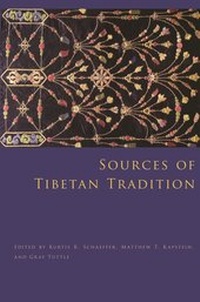
Sources of Tibetan Tradition
1st Edition
Published on 26. March 2013
856 pages
978-0-231-50978-7 (ISBN)
Description

The most comprehensive collection of Tibetan works in a Western language, this volume illuminates the complex historical, intellectual, and social development of Tibetan civilization from its earliest beginnings to the modern period. Including more than 180 representative writings, Sources of Tibetan Tradition spans Tibet's vast geography and long history, presenting for the first time a diversity of works by religious and political leaders; scholastic philosophers and contemplative hermits; monks and nuns; poets and artists; and aristocrats and commoners. The selected readings reflect the profound role of Buddhist sources in shaping Tibetan culture while illustrating other major areas of knowledge. Thematically varied, they address history and historiography; political and social theory; law; medicine; divination; rhetoric; aesthetic theory; narrative; travel and geography; folksong; and philosophical and religious learning, all in relation to the unique trajectories of Tibetan civil and scholarly discourse. The editors begin each chapter with a survey of broader social and cultural contexts and introduce each translated text with a concise explanation. Concluding with writings that extend into the early twentieth century, this volume offers an expansive encounter with Tibet's exceptional intellectual heritage.
All prices
More details
Other editions
Additional editions
Kurtis R. Schaeffer | Matthew T. Kapstein | Gray Tuttle
Sources of Tibetan Tradition
Book
03/2013
Columbia University Press
€140.12
Article not available at the moment
Kurtis R. Schaeffer | Matthew T. Kapstein | Gray Tuttle
Sources of Tibetan Tradition
Book
03/2013
Columbia University Press
€52.08
Article not available at the moment
Persons
Kurtis R. Schaeffer is professor and chair of the Department of Religious Studies at the University of Virginia. He is the author of The Culture of the Book in Tibet and Himalayan Hermitess: The Life of a Tibetan Buddhist Nun. With Gray Tuttle, he is coeditor of The Tibetan History Reader.
Matthew T. Kapstein is director of Tibetan Studies at the École Pratique des Hautes Études in Paris and Numata Visiting Professor of Buddhist Studies at the University of Chicago. He is the author of The Tibetans and The Tibetan Assimilation of Buddhism: Conversion, Contestation, and Memory.
Gray Tuttle is the Leila Hadley Luce Associate Professor of Modern Tibet in the Department of East Asian Languages and Cultures at Columbia University. He is the author of Tibetan Buddhists in the Making of Modern China and the editor of Mapping the Modern in Tibet. With Kurtis R. Schaeffer, he is coeditor of The Tibetan History Reader.
Matthew T. Kapstein is director of Tibetan Studies at the École Pratique des Hautes Études in Paris and Numata Visiting Professor of Buddhist Studies at the University of Chicago. He is the author of The Tibetans and The Tibetan Assimilation of Buddhism: Conversion, Contestation, and Memory.
Gray Tuttle is the Leila Hadley Luce Associate Professor of Modern Tibet in the Department of East Asian Languages and Cultures at Columbia University. He is the author of Tibetan Buddhists in the Making of Modern China and the editor of Mapping the Modern in Tibet. With Kurtis R. Schaeffer, he is coeditor of The Tibetan History Reader.
Content
Preface
Acknowledgments
Transcription and Transliteration Conventions
List of Contributors
Dates in Tibetan History and Key Events in Neighboring Lands
Maps
PART ONE. Political Expansion and the Beginnings of Tibetan Buddhist Culture (Seventh to Tenth Centuries)
1. Tibet in Medieval Chinese
2. Imperial Records from Dunhuang
3. Imperial Edicts from Central and Far Eastern Tibet
4. Institutions and Knowledge Under the Tibetan Empire
5. Early Religion and the Beginnings of Buddhism
PART TWO. Tibet in Fragments: From Empire to Monastic Principalities (Eleventh to Twelfth Centuries)
6. Renewal and Rediscovery: The Later Diffusion of Buddhism and the Response of the "Ancients"
7. The Proliferation of New Lineages
8. The Bön Tradition
9. The Development of Medical Tradition
PART THREE. The Age of Monastic and Aristocratic Hegemonies: The Florescence of Tibetan Culture (Thirteenth to Sixteenth Centuries)
10. Elaborating the Narratives of Tibetan Antiquity
11. Historians and Historical Documents of the Thirteenth to Sixteenth Centuries
12. Explorations of Buddhist Doctrine
13. Literary Developments
14. Writings on Death and Dying
15. The Growth of the Arts and Sciences
PART FOUR. The Age of Centralization: The Rise of the Ganden Government and the Period of Its Bid for Cultural Hegemony (Seventeenth to Twentieth Centuries)
16. The Beginnings of the Gandenpa School
17. The Fifth Dalai Lama and the Ganden Government
18. Aristocrats
19. Religious and Political Developments in Eastern Tibet
20. Encountering Other Cultures
21. Religious Writers in Amdo and Kham
PART FIVE. Expanding Horizons in the Early Twentieth Century
22. Early Twentieth-Century Tibetan Encounters with the West
23. Tibetans Addressing Modern Political Issues
Credits
For Further Reading
Index
06_scha13598_00_toc.doc: viii
Acknowledgments
Transcription and Transliteration Conventions
List of Contributors
Dates in Tibetan History and Key Events in Neighboring Lands
Maps
PART ONE. Political Expansion and the Beginnings of Tibetan Buddhist Culture (Seventh to Tenth Centuries)
1. Tibet in Medieval Chinese
2. Imperial Records from Dunhuang
3. Imperial Edicts from Central and Far Eastern Tibet
4. Institutions and Knowledge Under the Tibetan Empire
5. Early Religion and the Beginnings of Buddhism
PART TWO. Tibet in Fragments: From Empire to Monastic Principalities (Eleventh to Twelfth Centuries)
6. Renewal and Rediscovery: The Later Diffusion of Buddhism and the Response of the "Ancients"
7. The Proliferation of New Lineages
8. The Bön Tradition
9. The Development of Medical Tradition
PART THREE. The Age of Monastic and Aristocratic Hegemonies: The Florescence of Tibetan Culture (Thirteenth to Sixteenth Centuries)
10. Elaborating the Narratives of Tibetan Antiquity
11. Historians and Historical Documents of the Thirteenth to Sixteenth Centuries
12. Explorations of Buddhist Doctrine
13. Literary Developments
14. Writings on Death and Dying
15. The Growth of the Arts and Sciences
PART FOUR. The Age of Centralization: The Rise of the Ganden Government and the Period of Its Bid for Cultural Hegemony (Seventeenth to Twentieth Centuries)
16. The Beginnings of the Gandenpa School
17. The Fifth Dalai Lama and the Ganden Government
18. Aristocrats
19. Religious and Political Developments in Eastern Tibet
20. Encountering Other Cultures
21. Religious Writers in Amdo and Kham
PART FIVE. Expanding Horizons in the Early Twentieth Century
22. Early Twentieth-Century Tibetan Encounters with the West
23. Tibetans Addressing Modern Political Issues
Credits
For Further Reading
Index
06_scha13598_00_toc.doc: viii
