


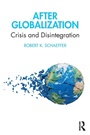
After Globalization
Crisis and Disintegration
1st Edition
Published on 20. September 2021
338 pages
978-1-000-43299-2 (ISBN)
Description

In the 1980s, U.S. officials adopted tax and monetary policies that channeled huge new resources into Wall Street, which fueled a stock market boom. To increase profits and payouts to investors as stock prices soared, corporate managers consolidated businesses, outsourced manufacturing to low-wage countries, and adopted new technologies to increase productivity. Government officials then facilitated mergers and negotiated free trade agreements to speed the process of globalization. Wall Street became an engine of capital accumulation and a force for global change.
These developments resulted in massive job losses and stagnant wages for most Americans. Meanwhile, tax cuts and the stock market boom created vast new wealth for the rich, and the top 10 percent seized 50 percent of all income in the United States. The result was growing economic inequality.
During the decades that followed, globalization triggered regional economic crises, toppled governments, transformed societies, galvanized economic development in China, and created new forms of wealth and inequality around the world. Then in 2008, a financial crisis rooted in Wall Street triggered the Great Recession, wrecked the legitimacy of globalization as a development strategy, and unleashed populist or "restrictionist" social movements and political parties that challenged globalization and attacked its economic and political foundations.
This book examines the origins of globalization in the 1980s, the developments that triggered the Great Recession, and the political and economic forces that contributed to the disintegration of globalization as a force for change in the modern world. After Globalization explains what happened-and what comes next.
These developments resulted in massive job losses and stagnant wages for most Americans. Meanwhile, tax cuts and the stock market boom created vast new wealth for the rich, and the top 10 percent seized 50 percent of all income in the United States. The result was growing economic inequality.
During the decades that followed, globalization triggered regional economic crises, toppled governments, transformed societies, galvanized economic development in China, and created new forms of wealth and inequality around the world. Then in 2008, a financial crisis rooted in Wall Street triggered the Great Recession, wrecked the legitimacy of globalization as a development strategy, and unleashed populist or "restrictionist" social movements and political parties that challenged globalization and attacked its economic and political foundations.
This book examines the origins of globalization in the 1980s, the developments that triggered the Great Recession, and the political and economic forces that contributed to the disintegration of globalization as a force for change in the modern world. After Globalization explains what happened-and what comes next.
Reviews / Votes
By situating the period from 1980 to 2020 as one moment within the 500-year history of the globalization, Robert Schaeffer's book enables a dialogue between two otherwise vying traditions of thought: globalization literature and world-systems analysis. The book's consistent world-historical account lays bare long-standing, but short-sighted misconceptions of globalization and carefully unpacks the shifts in meanings as well as the political and economic consequences of its main buzzwords, from globalization itself to crisis, nationalism, and (dis)integration. A fascinating, at times chilling history of the present that every globally-minded social scientist will want to read. Manuela Boatca, University of FriebergRobert Schaeffer has written a revelatory history of the last forty years of global capitalism. Schaeffer rejects the common view that globalization was driven by the removal of government constraints on private capital. Instead, he argues, and demonstrates convincingly, that it was the product of very definite government actions - actions that have come a cropper in the wake of the Great Recession and the pandemic. Schaeffer shows how an event like the financial crash of 1987, which economists have attributed to machine trading, was in fact the result of Reagan administration policy. And he shows how Trump's economic policies, overshadowed by his bigotry and disdain for democracy, did in fact contribute to the end of this era of global capitalism.
John Judis, Journalist and author of The Politics of Our Times
After Globalization is an excellent overview and analysis of what has happened during the wave of economic globalization in the last decades of the 20th century and the early decades of the 21st century. It discusses why left-wing and right-wing populist resistance to the neoliberal globalization project have emerged and discusses likely further developments as a new period of deglobalization begins. The book will be great for upper division undergraduate global studies, sociology and political science courses.
Christopher Chase-Dunn, University of California-Riverside
More details
Edition
1. Auflage
Language
English
Place of publication
London
United Kingdom
Publishing group
Taylor & Francis Ltd
Target group
College/higher education
ISBN-13
978-1-000-43299-2 (9781000432992)
Copyright in bibliographic data and cover images is held by Nielsen Book Services Limited or by the publishers or by their respective licensors: all rights reserved.
Schweitzer Classification
Other editions
Additional editions
Book
09/2021
1st Edition
Routledge
€51.80
Shipment within 10-20 days

Book
09/2021
1st Edition
Routledge
€207.10
Shipment within 10-20 days
Person
Robert K. Schaeffer is Professor Emeritus of Sociology at California Polytechnic State University in San Luis Obispo, and Professor Emeritus of Sociology at Kansas State University. He is the author of Warpaths: The Politics of Partition (1990); War in the World- System (1990); Power to the People: Democratization Around the World (1997); Understanding Globalization: The Social Consequences of Political, Economic, and Environmental Change (1997; 2001; 2005; 2009; 2016); Severed States: Dilemmas of Democracy in a Divided World (1999); Red Inc.: Dictatorship and the Development of Capitalism in China, 1949 to the Present (2012); Social Movements and Global Social Change: The Rising Tide (2014); and with Torry Dickinson, Fast Forward: Work, Gender and Protest in a Changing World (2001); and Transformations: Feminist Pathways to Global Change (2008).
Content
1. The Crisis of U.S. Hegemony and the Battle Against Inflation
2. Jumpstarting Wall Street
3. Wall Street and Stock-Price Inflation
4. Mergers and Downsizing
5. De-Unionization, Outsourcing, and De-Industrialization
6. Technology and Job Loss
7. Economic Inequalities
8. Globalization and Crises
9. Globalization and China
10. Housing and the Great Recession
11. The Economic Costs of the Great Recession
12. The Political Consequences of the Crisis
13. Uncoupling and De-Globalization
14. Marginalization and Disintegration
15. Covid and the Greater Recession
2. Jumpstarting Wall Street
3. Wall Street and Stock-Price Inflation
4. Mergers and Downsizing
5. De-Unionization, Outsourcing, and De-Industrialization
6. Technology and Job Loss
7. Economic Inequalities
8. Globalization and Crises
9. Globalization and China
10. Housing and the Great Recession
11. The Economic Costs of the Great Recession
12. The Political Consequences of the Crisis
13. Uncoupling and De-Globalization
14. Marginalization and Disintegration
15. Covid and the Greater Recession
