

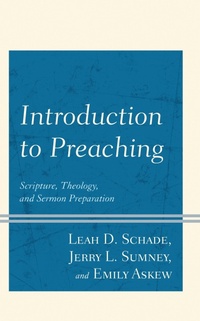
Introduction to Preaching
Scripture, Theology, and Sermon Preparation
1st Edition
Published on 3. February 2023
390 pages
978-1-5381-3861-8 (ISBN)
Description

Coauthored by a homiletician, a theologian, and a biblical scholar, this book is a preaching primer that provides tools for crafting effective, engaging, and inspiring sermons. Using a unique workbook-style format, Introduction to Preaching equips seminarians and preachers to use appropriate theological claims informed by solid biblical interpretation while providing several sample sermons from the authors. Readers will learn how to use a three-part schema-the Central Question, the Central Claim, and the Central Purpose-to provide the drive, direction, and destination for the sermon. Offering guidelines for using appropriate sermon forms, imagery, metaphors, and creativity, together with advice on how to deliver contextually relevant sermons using our bodies, presence, and voice make this a staple for both new and experienced preachers.
Introduction to Preaching includes a chapter on exploring the space of preaching, including onsite and online sermons. In addition, it features charts and worksheets to help organize the sermon-writing process, as well as exercises for the preacher's voice and body and tips for advice for guest preachers and supply preachers. A glossary of terms and an extensive bibliography make this a handy reference guide for students and all preachers.
Introduction to Preaching includes a chapter on exploring the space of preaching, including onsite and online sermons. In addition, it features charts and worksheets to help organize the sermon-writing process, as well as exercises for the preacher's voice and body and tips for advice for guest preachers and supply preachers. A glossary of terms and an extensive bibliography make this a handy reference guide for students and all preachers.
More details
Edition
1. Auflage
Language
English
Place of publication
New York
United States
Publishing group
Bloomsbury Publishing Plc
Illustrations
2 b/w photos; 3 tables; 107 textboxes
ISBN-13
978-1-5381-3861-8 (9781538138618)
Copyright in bibliographic data and cover images is held by Nielsen Book Services Limited or by the publishers or by their respective licensors: all rights reserved.
Schweitzer Classification
Other editions
Additional editions
Leah D. Schade | Jerry L. Sumney | Emily Askew
Introduction to Preaching
Scripture, Theology, and Sermon Preparation
Book
02/2023
Rowman & Littlefield Publishers
€120.10
Shipment within 3-4 weeks
Persons
Leah D. Schade is the Associate Professor of Preaching and Worship at Lexington Theological Seminary in Kentucky and an ordained Lutheran minister (ELCA) for more than twenty years. She is the author of five books on topics such as preaching, environmental issues, and political polarization, including Preaching in the Purple Zone: Ministry in the Red-Blue Divide (Rowman & Littlefield, 2019). She has pastored congregations in suburban, urban, and rural contexts. Leah will serve as the President of the Academy of Homiletics in 2024.
Jerry L. Sumney is the Professor of Biblical Studies at Lexington Theological Seminary. He specializes in the historical-critical method of biblical interpretation and has written more than 40 articles and ten books on the Bible and New Testament texts including The Bible: An Introduction (Fortress 2010; third edition, 2021). He has contributed entries to the New Interpreter's Dictionary of the Bible and the Dictionary of the Later New Testament and Its Developments, and the Dictionary of Scripture and Ethics. He is a member of the Society of Biblical Literature and is past president for the Southeastern Region of the Society.
Emily Askew is Professor Emeritus of Theology at Lexington Theological Seminary. A member of the LGBTQI community, she co-authored, with O. Wesley Allen, Beyond Heterosexism in the Pulpit (Wipf & Stock, 2014) to help preachers to learn to be more inclusive of LGBTQIA+ people in preaching and teaching in the church. She also writes on issues of immigration and her courses include an immersion experience on the US/Mexico border in Tucson/Sonora.
Jerry L. Sumney is the Professor of Biblical Studies at Lexington Theological Seminary. He specializes in the historical-critical method of biblical interpretation and has written more than 40 articles and ten books on the Bible and New Testament texts including The Bible: An Introduction (Fortress 2010; third edition, 2021). He has contributed entries to the New Interpreter's Dictionary of the Bible and the Dictionary of the Later New Testament and Its Developments, and the Dictionary of Scripture and Ethics. He is a member of the Society of Biblical Literature and is past president for the Southeastern Region of the Society.
Emily Askew is Professor Emeritus of Theology at Lexington Theological Seminary. A member of the LGBTQI community, she co-authored, with O. Wesley Allen, Beyond Heterosexism in the Pulpit (Wipf & Stock, 2014) to help preachers to learn to be more inclusive of LGBTQIA+ people in preaching and teaching in the church. She also writes on issues of immigration and her courses include an immersion experience on the US/Mexico border in Tucson/Sonora.
Content
- Intro
- Contents
- List of Sermons
- Guidance for the Instructor
- Acknowledgments
- Introduction
- I Interpreting Scripture for Sermons
- 1 Interpreting Scripture for the Church
- 2 Using History to Understand the Text
- 3 Using Literary Analysis to Understand the Text
- 4 Using Explicit Perspectives to Understand the Text
- 5 Practical Use of Exegesis
- 6 Choosing Biblical Texts for Preaching
- 7 Sermon Exercise
- II Identifying Theological Claims for Sermons
- 8 Theology and Theological Claims
- 9 Identifying Theological Claims in a Biblical Text
- 10 Identifying Theological Claims in a Sermon
- 11 Sermon Exercise on Luke 13:31-35-"Jesus, Mother Hen"
- III Central Question, Central Claim, Central Purpose
- 12 The Central Question
- 13 Two Examples of Developing the Central Question
- 14 The Central Claim
- 15 Two Exercises and Examples of Developing the Central Claim
- 16 The Central Purpose
- 17 Two Exercises and Examples of Developing the Central Purpose
- IV Creativity and Structures for Sermons
- 18 Activating Theological Imagination in Sermons with Salience, Resonance, Coherence, and Creativity
- 19 Vibrant Words, Vivid Images, and Evocative Stories
- 20 Structuring Your Preaching
- 21 Examples of Four Sermon Forms
- 22 Starting Strong, Threading Through, and Concluding Convincingly
- V Sermon Delivery and Performance
- 23 Editing, Formatting, and Practicing Your Sermon
- 24 Preparing Your Voice and Body for Preaching
- 25 The Performance of Preaching
- 26 Exploring the Space of Preaching
- Afterword
- Appendix A How to Use Biblical Resources for Exegesis
- List of Recommended Commentaries
- Appendix B Genres in the Bible Quick Reference Guide
- Appendix C Exegesis Guide Chart
- Appendix D Theological Categories
- Appendix E Worksheet for Choosing Texts and Planning to Preach
- Appendix F Grammar Refresher for Determining Theological Claims
- Appendix G Names and Metaphors for God, Jesus Christ, and the Holy Spirit from the Bible
- Appendix H Central Question Worksheet
- Appendix I Central Claim Worksheet
- Appendix J Central Purpose Worksheet
- Appendix K Creativity Exercises Quick Reference Guide
- Appendix L A Short List of Sermon Forms and How the Central Claim Can Be Used
- Appendix M Exercises for the Preacher's Voice and Body
- Appendix N Tips and Advice for Guest Preachers and Supply Preachers
- Glossary
- Bibliography
- Scriptural Index
- Topical Index
- About the Authors
