
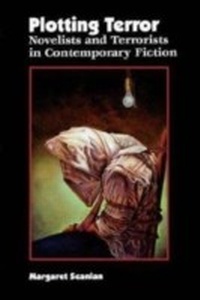
Plotting Terror
Description
Alles über E-Books | Antworten auf Fragen rund um E-Books, Kopierschutz und Dateiformate finden Sie in unserem Info- & Hilfebereich.
Is literature dangerous? In the romantic view, writers were rebels--Shelley's "unacknowledged legislators of mankind"--poised to change the world. In relation to twentieth-century literature, however, such a view becomes suspect. By looking at a range of novels about terrorism, Plotting Terror raises the possibility that the writer's relationship to actual politics may be considerably reduced in the age of television and the Internet.
Margaret Scanlan traces the figure of the writer as rival or double of the terrorist from its origins in the romantic conviction of the writer's originality and power through a century of political, social, and technological developments that undermine that belief. She argues that serious writers like Friedrich Dürrenmatt, Doris Lessing, and Don DeLillo imagine a contemporary writer's encounter with terrorists as a test of the old alliance between writer and revolutionary.
After considering the possibility that televised terrorism is replacing the novel, or that writing, as contemporary theory would have it, is itself a form of violence, Scanlan asks whether the revolutionary impulse itself is dying--in politics as much as in literature. Her analyses take the reader on a fascinating exploration of the relationship between actual bombs and stories about bombings, from the modern world to its electronic representation, and from the exercise of political power to the fiction writer's power in the world.
All prices
More details
Other editions
Additional editions
Person
Margaret Scanlan, Department Chair and Professor of English at Indiana University South Bend, is the author of Traces of Another Time: History and Politics in Postwar British Fiction.
Content
- Cover
- Title Page
- Copyright Page
- Table of Contents
- Acknowledgements
- Intorduction
- Part I: The Terrorist Rival
- Chapter 1: Don DeLillo's Mao II and the Rushdie Affair
- Chapter 2: Eoin McNamee's Resurrection Man
- Part II: Displaced Causes
- Chapter 3: Mary McCarthy's Cannibals and Missionaries
- Chapter 4: Doris Lessing's The Good Terrorist
- Part III: Novelist as Terrorist: Terrorism as Fiction
- Chapter 5: J. M. Coetzee's The Master of Petersburg
- Chapter 6: Friedrich Dürrenmatt's The Assignment
- Part IV: Is Terrorism Dead?
- Chapter 7: Philip Roth's and Robert Stone's Jerusalem Novels
- Chapter 8: Volodine's Lisbonne Dernière Marge
- Epilogue: Conrad and the Unabomber
- Notes
- Bibliography
- Index

System requirements
File format: ePUB
Copy protection: Adobe-DRM (Digital Rights Management)
System requirements:
- Computer (Windows; MacOS X; Linux): Install the free reader Adobe Digital Editions prior to download (see eBook Help).
- Tablet/smartphone (Android; iOS): Install the free app Adobe Digital Editions or the app PocketBook before downloading (see eBook Help).
- E-reader: Bookeen, Kobo, Pocketbook, Sony, Tolino and many more (not Kindle).
The file format ePub works well for novels and non-fiction books – i.e., „flowing” text without complex layout. On an e-reader or smartphone, line and page breaks automatically adjust to fit the small displays.
This eBook uses Adobe-DRM, a „hard” copy protection. If the necessary requirements are not met, unfortunately you will not be able to open the eBook. You will therefore need to prepare your reading hardware before downloading.
Please note: We strongly recommend that you authorise using your personal Adobe ID after installation of any reading software.
For more information, see our ebook Help page.
File format: PDF
Copy-Protection: Adobe-DRM (Digital Rights Management)
System requirements:
- Computer (Windows; MacOS X; Linux): Install the free reader Adobe Digital Editions prior to download (see eBook Help).
- Tablet/smartphone (Android; iOS): Install the free app Adobe Digital Editions or the app PocketBook before downloading (see eBook Help).
- E-reader: Bookeen, Kobo, Pocketbook, Sony, Tolino and many more (only limited: Kindle).
The file format PDF always displays a book page identically on any hardware. This makes PDF suitable for complex layouts such as those used in textbooks and reference books (images, tables, columns, footnotes). Unfortunately, on the small screens of e-readers or smartphones, PDFs are rather annoying, requiring too much scrolling.
This eBook uses Adobe-DRM, a „hard” copy protection. If the necessary requirements are not met, unfortunately you will not be able to open the eBook. You will therefore need to prepare your reading hardware before downloading.
Please note: We strongly recommend that you authorise using your personal Adobe ID after installation of any reading software.
For more information, see our eBook Help page.
File format: ePUB
Copy protection: without DRM (Digital Rights Management)
System requirements:
- Computer (Windows; MacOS X; Linux): Use a reader that can handle the file format ePUB, such as Adobe Digital Editions or FBReader – both free (see eBook Help).
- Tablet/Smartphone (Android; iOS): Install the free app Adobe Digital Editions or the app PocketBook (see eBook Help).
- E-reader: Bookeen, Kobo, Pocketbook, Sony, Tolino and many more (not Kindle).
The file format ePUB works well for novels and non-fiction books – i.e., 'flowing' text without complex layout. On an e-reader or smartphone, line and page breaks automatically adjust to fit the small displays.
This eBook does not use copy protection or Digital Rights Management
For more information, see our eBook Help page.
