

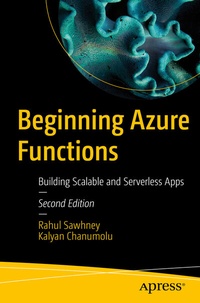
Beginning Azure Functions
Description

Start creating highly scalable apps and monitoring your Azure functions in production using Azure Functions 4.0. This book thoroughly explains durable functions for statefulness, covering the basics all the way through how to create bindings in durable functions. It's a deep dive into the Azure Functions serverless API and will guide you through the process of converting monolithic applications to use Azure Functions.
This updated edition is revised to cover changes to Azure Portal and delves into Azure Functions runtime versions, the Isolated Process model, and offers a comparison of Azure Functions and Azure Logic Apps. You'll also learn how to register binding extensions and gain an introduction to Azure Functions binding expression patterns, along with best practices for using Azure Functions. Beginning Azure Functions will provide you with the foundational knowledge to work with Azure Functions and teach you practical skills, such as how tocreate Azure Functions using different triggers and bindings. You'll also see how to monitor your Azure Functions in production with live monitoring, and how to perform remote debugging and how to secure your functions.
Upon completing this book, you'll understand Azure Functions and how to create them using the Azure portal and Visual Studio.
What You Will Learn
- Use triggers and bindings in an Azure function
- Create a serverless API using Azure Functions
- Understand durable Azure functions, including scalability, disaster recovery, and geo-distribution
- Deploy Azure Function and monitor it in production
Who This Book Is For
Developers who want to get started with Azure Functions, as well as DevOps developers, who are looking for guidance in how to deploy and monitor functions.
More details
Other editions
Additional editions
Previous edition
Persons
Kalyan Chanumolu
is a Senior Technical Program Manager at Microsoft. He works on building the engineering systems that power the world's computer - Azure. He is a technical reviewer for books on ASP.Net Blazor, Microservices etc. and is extremely passionate about distributed systems and cloud computing. He has vast experience in software development, consulting, and migrating large customer workloads to the cloud. He loves cycling, swimming and reading books.
Content
Chapter 1: Introduction to Azure Functions.- Chapter 2: Creating Azure Functions.- Chapter 3: Understanding Azure Functions Triggers And Bindings.- Chapter 4: Serverless APIs Using Azure Functions.- Chapter 5: Azure Durable Functions .- Chapter 6: Deploying Functions to Azure.- Chapter 7: Getting Functions Production-Ready.- Chapter 8: Best Practices of working with Azure Functions.
