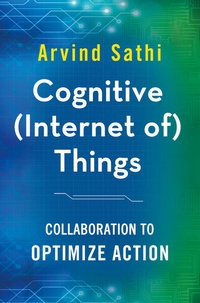
Cognitive (Internet of) Things
Description

This book explores cognitive behavior among Internet of Things. Using a series of current and futuristic examples - appliances, personal assistants, robots, driverless cars, customer care, engineering, monetization, and many more - the book covers use cases, technology and communication aspects of how machines will support individuals and organizations.
This book examines the Cognitive Things covering a number of important questions:
What are Cognitive Things?
What applications can be driven from Cognitive Things - today and tomorrow?
How will these Cognitive Things collaborate with each and other, with individuals and with organizations?
What is the cognitive era? How is it different from the automation era?How will the Cognitive Things support or accelerate human problem solving?
Which technical components make up cognitive behavior?
How does it redistribute the work-load between humans and machines?
What types of data can be collected from them and shared with external organizations?
How do they recognize and authenticate authorized users? How is the data safeguarded from potential theft? Who owns the data and how are the data ownership rights enforced?
Overall, Sathi explores ways in which Cognitive Things bring value to individuals as well as organizations and how to integrate the use of the devices into changing organizational structures. Case studies are used throughout to illustrate how innovators are already benefiting from the initial explosion of devices and data. Business executives, operational managers, and IT professionals will understand the fundamental changes required to fully benefit from cognitive technologies and howto utilize them for their own success.
Reviews / Votes
"Arvind Sathi has assembled a comprehensive and yet easy-to-read introduction to cognitive computing and the Internet of Things. Business stakeholders will find these concepts crucial for identifying and acting on key opportunities arising in the very near future. Academics will appreciate the context for understanding our changing world. This book offers friendly teaching on the topic of an increasingly personal and prevalent set of technologies that will soon impact us all." (Christine T. Dee, PhD, IBM Global Solutions Executive, Telco, Media, and Entertainment)
"Arvind provides the authentic perspective of a true practitioner on the emerging - and transformative - field of cognitive computing and IOT. A highly recommended read for business stakeholders and practitioners alike. " (Bjorn Austraat, Practice Leader, North America, Client Value & Transformation, IBM Watson)
"Allen Newell once noted that 'Computer technology offers the possibility of incorporating intelligent behavior in all the nooks and crannies of our world. With it, we could build an enchanted land.' In this book, Arvind takes on an enchanting journey through this landscape of the possible. Full of engaging real-world stories and pragmatic advice, Cognitive Things will help you understand and act upon the emergence of the Internet of Things." (Grady Booch, Chief Scientist, IBM Watson)
"This is easy reading for non-technical readers demystifying 'things' and bringing out how cognition in 'things' gives it greater awareness about itself and its surroundings. Smart Cognitive things are always about making an impact by improving itself or changing the surrounding 'system'. Contemporary examples and very real futuristic potential makes this an excellent overview of the topic." (Sumit Chowdhury, Founder & CEO, Gaia Smart Cities)
More details
Other editions
Additional editions