

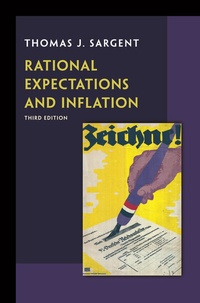
Rational Expectations and Inflation
Third Edition
3rd Edition
Published on 16. June 2015
392 pages
978-1-4008-4764-8 (ISBN)
Description

A fully expanded edition of the Nobel Prize-winning economist's classic book
This collection of essays uses the lens of rational expectations theory to examine how governments anticipate and plan for inflation, and provides insight into the pioneering research for which Thomas Sargent was awarded the 2011 Nobel Prize in economics. Rational expectations theory is based on the simple premise that people will use all the information available to them in making economic decisions, yet applying the theory to macroeconomics and econometrics is technically demanding. Here, Sargent engages with practical problems in economics in a less formal, noneconometric way, demonstrating how rational expectations can satisfactorily interpret a range of historical and contemporary events. He focuses on periods of actual or threatened depreciation in the value of a nation's currency. Drawing on historical attempts to counter inflation, from the French Revolution and the aftermath of World War I to the economic policies of Margaret Thatcher and Ronald Reagan, Sargent finds that there is no purely monetary cure for inflation; rather, monetary and fiscal policies must be coordinated.
This fully expanded edition of Rational Expectations and Inflation includes Sargent's 2011 Nobel lecture, "United States Then, Europe Now." It also features new articles on the macroeconomics of the French Revolution and government budget deficits.
This collection of essays uses the lens of rational expectations theory to examine how governments anticipate and plan for inflation, and provides insight into the pioneering research for which Thomas Sargent was awarded the 2011 Nobel Prize in economics. Rational expectations theory is based on the simple premise that people will use all the information available to them in making economic decisions, yet applying the theory to macroeconomics and econometrics is technically demanding. Here, Sargent engages with practical problems in economics in a less formal, noneconometric way, demonstrating how rational expectations can satisfactorily interpret a range of historical and contemporary events. He focuses on periods of actual or threatened depreciation in the value of a nation's currency. Drawing on historical attempts to counter inflation, from the French Revolution and the aftermath of World War I to the economic policies of Margaret Thatcher and Ronald Reagan, Sargent finds that there is no purely monetary cure for inflation; rather, monetary and fiscal policies must be coordinated.
This fully expanded edition of Rational Expectations and Inflation includes Sargent's 2011 Nobel lecture, "United States Then, Europe Now." It also features new articles on the macroeconomics of the French Revolution and government budget deficits.
All prices
More details
Other editions
Additional editions
Book
05/2013
3rd Edition
Princeton University Press
€59.50
Shipment within 10-20 days
Person
Thomas J. Sargent is professor of economics at New York University. His books include Robustness and The Big Problem of Small Change (both Princeton). He was awarded the 2011 Nobel Prize in economics.
Content
Frontmatter, pg. a
Contents, pg. vii
List of Figures, pg. xi
List of Tables, pg. xiii
Acknowledgements, pg. xv
Preface to the Third Edition, pg. xvii
Preface to the Second Edition, pg. xix
Preface to the First Edition, pg. xxi
1. Rational Expectations and the Reconstruction of Macroeconomics, pg. 1
2. Reaganomics and Credibility, pg. 17
3. The Ends of Four Big Inflations, pg. 38
4. Stopping Moderate Inflations: The Methods of Poincaré and Thatcher, pg. 111
5. Some Unpleasant Monetarist Arithmetic, pg. 162
6. Interpreting the Reagan Deficits, pg. 197
7. Speculations about the Speculation against the Hong Kong Dollar, pg. 211
8. Six Essays in Persuasion, pg. 228
9. Macroeconomic Features of the French Revolution, pg. 248
10. United States Then, Europe Now, pg. 297
References, pg. 339
Author Index, pg. 357
Subject Index, pg. 361
Contents, pg. vii
List of Figures, pg. xi
List of Tables, pg. xiii
Acknowledgements, pg. xv
Preface to the Third Edition, pg. xvii
Preface to the Second Edition, pg. xix
Preface to the First Edition, pg. xxi
1. Rational Expectations and the Reconstruction of Macroeconomics, pg. 1
2. Reaganomics and Credibility, pg. 17
3. The Ends of Four Big Inflations, pg. 38
4. Stopping Moderate Inflations: The Methods of Poincaré and Thatcher, pg. 111
5. Some Unpleasant Monetarist Arithmetic, pg. 162
6. Interpreting the Reagan Deficits, pg. 197
7. Speculations about the Speculation against the Hong Kong Dollar, pg. 211
8. Six Essays in Persuasion, pg. 228
9. Macroeconomic Features of the French Revolution, pg. 248
10. United States Then, Europe Now, pg. 297
References, pg. 339
Author Index, pg. 357
Subject Index, pg. 361

