

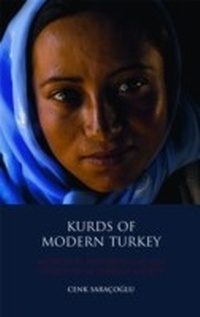
Kurds of Modern Turkey
Migration, Neoliberalism and Exclusion in Turkish Society
1st Edition
Published on 30. October 2010
248 pages
978-0-85771-910-2 (ISBN)
Description

The role of the Kurds in Turkey has long been a controversial issue, although discussion has generally been focused around the political and cultural rights and activities of the Kurds. This book aims to bring a new approach to this contentious subject by shifting attention to the changing popular image of the Kurds in Turkish cities. It focuses particularly on the ways in which the middle-class in Turkish cities develop an exclusionary discourse against the Kurds. Cenk Saracoglu investigates the social origins of such a perception by bringing into focus how neoliberal economic policies and Kurdish migration have transformed urban life in Turkey.
More details
Edition
1. Auflage
Language
English
Place of publication
London
United Kingdom
Publishing group
Bloomsbury Publishing PLC
Target group
Professional and scholarly
Illustrations
3 figures
ISBN-13
978-0-85771-910-2 (9780857719102)
Copyright in bibliographic data and cover images is held by Nielsen Book Services Limited or by the publishers or by their respective licensors: all rights reserved.
Schweitzer Classification
Other editions
Additional editions
Book
10/2010
Tauris Academic Studies
€178.56
Shipment within 3-4 weeks
Person
Cenk Saracoglu teaches Political Science and International Relations at the Middle East Technical University, North Cyprus Campus.
Content
Chapter 1: Introduction
Chapter 2: Ethnographic Fieldwork and Methodological Considerations
2.1 The Stage of Exploratory Research
2.1.1 An Overview of the Historical Transformation of Urban Life in Izmir
2.1.2 Exploratory Interviews
2.2 The Stage of In-Depth Interviews
2.3 The Stage of Analysis and Interpretation
2.4 Study Limitations
2.5 Reducing the Role of Bias in the Research
Chapter 3: Clarifying the Research Object: Exclusive Recognition
3.1 The Subjects of the Ethnicization: Middle-class Izmirlis
3.2 The Object of the Ethnicization: Kurdish Migrants of the last 25 years
3.3 The Content of the Ethnicization
3.3.1 'Ignorant and Cultureless'
3.3.2 'Benefit Scroungers'
3.3.3 'Disrupters of Urban Life'
3.3.4 'Invaders'
3.3.5 Separatists
3.4 The Research Object in its full sense: 'Exclusive Recognition'
Chapter 4: The Historical Specificity of 'Exclusive Recognition'
4.1 The Kurds and Kurdishness in the Official Discourse of the State
4.1.1 Representation of the Kurds in the Discourse of the Ottoman State
4.1.2 The Kurds in the Eyes of the Resistance Movement
4.1.3 The Kurds in the Discourse of the Modern Turkish State
4.2 Exclusive Recognition: Is it the Discourse of a Mass Political Organization
Chapter 5: Urban Everyday Life: The Locus of Exclusive Recognition
5.1 The Concept of Urban Everyday Life
5.2 The Formation of Exclusive Recognition in Urban Everyday Life
Chapter 6: National-Level Dynamics and the Social Life in Turkish Cities
6.1 Neoliberalism as a New Regime of Capital Accumulation
6.1.1 Turkey's Experiment with Neoliberalism
6.1.2 The Transition to Neoliberalism in Turkey
6.1.3 Social Outcomes of Neoliberal Transformation in Turkey
6.2 The Political and Military Conflict in Eastern Anatolia
6.3 The Exodus from Eastern Anatolia
6.3.1 Economic Impoverishment, Regional Insecurity and Migration
6.4 Conclusion: Three Sets of Processes in Light of Three National Dynamics
Chapter 7: The Recognition of 'Kurdish Migrants'
7.1 The Recognition and Separation in Urban Everyday Life
7.1.1 The Socio-Economic Separation
7.1.2 Spatial Separation
7.2 The Recognition of the 'Kurdish' in the Urban Space
7.3 Conclusion
Chapter 8: Excluding the Recognized
8.1 'Benefit Scroungers'
8.2 'Ignorant and Cultureless'
8.3 'Invaders'
8.4 'Separatists' (Boeluecue)
8.5 'Disrupters of Urban Life'
8.6 Conclusion
Chapter 9: The Reinforcement of Exclusive Recognition
9.1 The Hegemony of the Neoliberal Project and Decline of Labour Politics
9.2 The Outcomes of the American Occupation in Iraq
9.2.1 Kurdish Nationalism after the American Occupation
9.2.2 The Media Representations of the Political Turmoil in Iraq
9.3 Conclusion
Chapter 10: Exclusive Recognition: An Ideology
10.1 The Materiality of Exclusive Recognition as an Ideology
10.2 The Partiality and Falsity of Exclusive Recognition as an Ideology
10.3 Conclusion: What Kind of Ideology is Exclusive Recognition?
Chapter 11: Conclusion
Chapter 2: Ethnographic Fieldwork and Methodological Considerations
2.1 The Stage of Exploratory Research
2.1.1 An Overview of the Historical Transformation of Urban Life in Izmir
2.1.2 Exploratory Interviews
2.2 The Stage of In-Depth Interviews
2.3 The Stage of Analysis and Interpretation
2.4 Study Limitations
2.5 Reducing the Role of Bias in the Research
Chapter 3: Clarifying the Research Object: Exclusive Recognition
3.1 The Subjects of the Ethnicization: Middle-class Izmirlis
3.2 The Object of the Ethnicization: Kurdish Migrants of the last 25 years
3.3 The Content of the Ethnicization
3.3.1 'Ignorant and Cultureless'
3.3.2 'Benefit Scroungers'
3.3.3 'Disrupters of Urban Life'
3.3.4 'Invaders'
3.3.5 Separatists
3.4 The Research Object in its full sense: 'Exclusive Recognition'
Chapter 4: The Historical Specificity of 'Exclusive Recognition'
4.1 The Kurds and Kurdishness in the Official Discourse of the State
4.1.1 Representation of the Kurds in the Discourse of the Ottoman State
4.1.2 The Kurds in the Eyes of the Resistance Movement
4.1.3 The Kurds in the Discourse of the Modern Turkish State
4.2 Exclusive Recognition: Is it the Discourse of a Mass Political Organization
Chapter 5: Urban Everyday Life: The Locus of Exclusive Recognition
5.1 The Concept of Urban Everyday Life
5.2 The Formation of Exclusive Recognition in Urban Everyday Life
Chapter 6: National-Level Dynamics and the Social Life in Turkish Cities
6.1 Neoliberalism as a New Regime of Capital Accumulation
6.1.1 Turkey's Experiment with Neoliberalism
6.1.2 The Transition to Neoliberalism in Turkey
6.1.3 Social Outcomes of Neoliberal Transformation in Turkey
6.2 The Political and Military Conflict in Eastern Anatolia
6.3 The Exodus from Eastern Anatolia
6.3.1 Economic Impoverishment, Regional Insecurity and Migration
6.4 Conclusion: Three Sets of Processes in Light of Three National Dynamics
Chapter 7: The Recognition of 'Kurdish Migrants'
7.1 The Recognition and Separation in Urban Everyday Life
7.1.1 The Socio-Economic Separation
7.1.2 Spatial Separation
7.2 The Recognition of the 'Kurdish' in the Urban Space
7.3 Conclusion
Chapter 8: Excluding the Recognized
8.1 'Benefit Scroungers'
8.2 'Ignorant and Cultureless'
8.3 'Invaders'
8.4 'Separatists' (Boeluecue)
8.5 'Disrupters of Urban Life'
8.6 Conclusion
Chapter 9: The Reinforcement of Exclusive Recognition
9.1 The Hegemony of the Neoliberal Project and Decline of Labour Politics
9.2 The Outcomes of the American Occupation in Iraq
9.2.1 Kurdish Nationalism after the American Occupation
9.2.2 The Media Representations of the Political Turmoil in Iraq
9.3 Conclusion
Chapter 10: Exclusive Recognition: An Ideology
10.1 The Materiality of Exclusive Recognition as an Ideology
10.2 The Partiality and Falsity of Exclusive Recognition as an Ideology
10.3 Conclusion: What Kind of Ideology is Exclusive Recognition?
Chapter 11: Conclusion
