

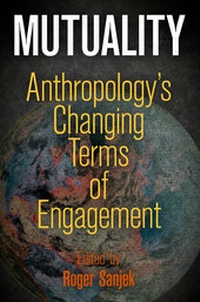
Mutuality
Anthropology's Changing Terms of Engagement
1st Edition
Published on 11. November 2014
384 pages
978-0-8122-9031-8 (ISBN)
Description

Why do people do social-cultural anthropology? Beyond professional career motivations, what values underpin anthropologists' commitments to lengthy training, fieldwork, writing, and publication? Mutuality explores the values that anthropologists bring from their wider social worlds, including the value placed on relationships with the people they study, work with, write about and for, and communicate with more broadly.
In this volume, seventeen distinguished anthropologists draw on personal and professional histories to describe avenues to mutuality through collaborative fieldwork, community-based projects and consultations, advocacy, and museum exhibits, including the American Anthropological Association's largest public outreach ever-the RACE: Are We So Different? project. Looking critically at obstacles to reciprocally beneficial engagement, the contributors trace the discipline's past and current relations with Native Americans, indigenous peoples exhibited in early twentieth-century world's fairs, and racialized populations. The chapters range widely-across the Punjabi craft caste, Filipino Igorot, and Somali Bantu global diasporas; to the Darfur crisis and conciliation efforts in Sudan and Qatar; to applied work in Panama, Micronesia, China, and Peru. In the United States, contributors discuss their work as academic, practicing, and public anthropologists in such diverse contexts as Alaskan Yup'ik communities, multiethnic New Mexico, San Francisco's Japan Town, Oakland's Intertribal Friendship House, Southern California's produce markets, a children's ward in a Los Angeles hospital, a New England nursing home, and Washington D.C.'s National Mall. Deeply personal as well as professionally astute, Mutuality sheds new light on the issues closest to the present and future of contemporary anthropology.
Contributors: Rogaia Mustafa Abusharaf, Robert R. Alvarez, Garrick Bailey, Catherine Besteman, Parminder Bhachu, Ann Fienup-Riordan, Zibin Guo, Lane Ryo Hirabayashi, Lanita Jacobs, Susan Lobo, Yolanda T. Moses, Sylvia RodrIguez, Roger Sanjek, RenEe R. Shield, Alaka Wali, Deana L. Weibel, Brett Williams.
In this volume, seventeen distinguished anthropologists draw on personal and professional histories to describe avenues to mutuality through collaborative fieldwork, community-based projects and consultations, advocacy, and museum exhibits, including the American Anthropological Association's largest public outreach ever-the RACE: Are We So Different? project. Looking critically at obstacles to reciprocally beneficial engagement, the contributors trace the discipline's past and current relations with Native Americans, indigenous peoples exhibited in early twentieth-century world's fairs, and racialized populations. The chapters range widely-across the Punjabi craft caste, Filipino Igorot, and Somali Bantu global diasporas; to the Darfur crisis and conciliation efforts in Sudan and Qatar; to applied work in Panama, Micronesia, China, and Peru. In the United States, contributors discuss their work as academic, practicing, and public anthropologists in such diverse contexts as Alaskan Yup'ik communities, multiethnic New Mexico, San Francisco's Japan Town, Oakland's Intertribal Friendship House, Southern California's produce markets, a children's ward in a Los Angeles hospital, a New England nursing home, and Washington D.C.'s National Mall. Deeply personal as well as professionally astute, Mutuality sheds new light on the issues closest to the present and future of contemporary anthropology.
Contributors: Rogaia Mustafa Abusharaf, Robert R. Alvarez, Garrick Bailey, Catherine Besteman, Parminder Bhachu, Ann Fienup-Riordan, Zibin Guo, Lane Ryo Hirabayashi, Lanita Jacobs, Susan Lobo, Yolanda T. Moses, Sylvia RodrIguez, Roger Sanjek, RenEe R. Shield, Alaka Wali, Deana L. Weibel, Brett Williams.
Reviews / Votes
"A terrific collection of essays that combines personal commentary with theoretical analysis focused on the heart of cultural anthropology. Rather than examine the more conventional concepts of 'collaboration' and 'engagement,' this collection goes deeper and examines not just the relationships that the anthropologist establishes with subjects/collaborators but also the impact of these relationships and experiences on the anthropologist's research, writing, career, values, and, most important, sense of self." (Louise Lamphere, University of New Mexico)More details
Language
English
Place of publication
Pennsylvania
United States
Target group
College/higher education
Professional and scholarly
Illustrations
16 illus
16 illus
File size
2,18 MB
ISBN-13
978-0-8122-9031-8 (9780812290318)
Copyright in bibliographic data and cover images is held by Nielsen Book Services Limited or by the publishers or by their respective licensors: all rights reserved.
Schweitzer Classification
Other editions
Additional editions
Book
12/2014
University of Pennsylvania Press
€89.28
Article not available at the moment
Person
Roger Sanjek is a J. I. Staley Prize winner, a John Simon Guggenheim Memorial Foundation Fellow, and author and editor of many books, including Fieldnotes: The Makings of Anthropology, Race, and The Future of Us All: Race and Neighborhood Politics in New York City. He is also author of Gray Panthers and Ethnography in Today's World, both of which are available from the University of Pennsylvania Press.
Content
Introduction. Deep Grooves: Anthropology and Mutuality
-Roger Sanjek
PART I. ORIENTATIONS
Chapter 1. Anthropology and the American Indian
-Garrick Bailey
Chapter 2. The American Anthropological Association RACE: Are We So Different? Project
-Yolanda T. Moses
Chapter 3. Mutuality and the Field at Home
-Sylvia RodrIguez
Chapter 4. "If You Want to Go Fast, Go Alone. If You Want to Go Far, Go Together": Yup'ik Elders Working Together with One Mind
-Ann Fienup-Riordan
PART II. ROOTS
Chapter 5. The Invisibility of Diasporic Capital and Multiply Migrant Creativity
-Parminder Bhachu
Chapter 6. A Savage at the Wedding and the Skeletons in My Closet: My Great-Grandfather, "Igorotte Villages," and the Ethnological Expositions of the 1900s
-Deana L. Weibel
Chapter 7. Thinking About and Experiencing Mutuality: Notes on a Son's Formation
-Lane Ryo Hirabayashi
Chapter 8. Cartographies of Mutuality: Lessons from Darfur
-Rogaia Mustafa Abusharaf
PART III. JOURNEYS
Chapter 9. On the Fault Lines of the Discipline: Personal Practice and the Canon
-Robert R. Alvarez
Chapter 10. Listening with Passion: A Journey Through Engagement and Exchange
-Alaka Wali
Chapter 11. Why? And How? An Essay on Doing Anthropology and Life
-Susan Lobo
Chapter 12. Embedded in Time, Work, Family, and Age: A Reverie About Mutuality
-RenEe R. Shield
PART IV. PUBLICS
Chapter 13. Dancing in the Chair: A Collaborative Effort of Developing and Implementing Wheelchair Taijiquan
-Zibin Guo
Chapter 14. Fragments of a Limited Mutuality
-Brett Williams
Chapter 15. On "Making Good" in a Study of African American Children with Acquired and Traumatic Brain Injuries
-Lanita Jacobs
Chapter 16. On Ethnographic Love
-Catherine Besteman
Conclusion. Mutuality and Anthropology: Terms and Modes of Engagement
-Roger Sanjek
Notes
Bibliography
Index
List of Contributors
-Roger Sanjek
PART I. ORIENTATIONS
Chapter 1. Anthropology and the American Indian
-Garrick Bailey
Chapter 2. The American Anthropological Association RACE: Are We So Different? Project
-Yolanda T. Moses
Chapter 3. Mutuality and the Field at Home
-Sylvia RodrIguez
Chapter 4. "If You Want to Go Fast, Go Alone. If You Want to Go Far, Go Together": Yup'ik Elders Working Together with One Mind
-Ann Fienup-Riordan
PART II. ROOTS
Chapter 5. The Invisibility of Diasporic Capital and Multiply Migrant Creativity
-Parminder Bhachu
Chapter 6. A Savage at the Wedding and the Skeletons in My Closet: My Great-Grandfather, "Igorotte Villages," and the Ethnological Expositions of the 1900s
-Deana L. Weibel
Chapter 7. Thinking About and Experiencing Mutuality: Notes on a Son's Formation
-Lane Ryo Hirabayashi
Chapter 8. Cartographies of Mutuality: Lessons from Darfur
-Rogaia Mustafa Abusharaf
PART III. JOURNEYS
Chapter 9. On the Fault Lines of the Discipline: Personal Practice and the Canon
-Robert R. Alvarez
Chapter 10. Listening with Passion: A Journey Through Engagement and Exchange
-Alaka Wali
Chapter 11. Why? And How? An Essay on Doing Anthropology and Life
-Susan Lobo
Chapter 12. Embedded in Time, Work, Family, and Age: A Reverie About Mutuality
-RenEe R. Shield
PART IV. PUBLICS
Chapter 13. Dancing in the Chair: A Collaborative Effort of Developing and Implementing Wheelchair Taijiquan
-Zibin Guo
Chapter 14. Fragments of a Limited Mutuality
-Brett Williams
Chapter 15. On "Making Good" in a Study of African American Children with Acquired and Traumatic Brain Injuries
-Lanita Jacobs
Chapter 16. On Ethnographic Love
-Catherine Besteman
Conclusion. Mutuality and Anthropology: Terms and Modes of Engagement
-Roger Sanjek
Notes
Bibliography
Index
List of Contributors
