The Rosetta Stone of the Human Mind
Description

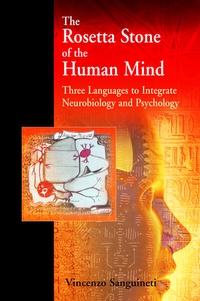
The study of the brain-mind complex has been hampered by the dichotomy between objective biological neuroscience and subjective psychological science, based on speculative topographic models and psychodynamics formulations. These antithetical avenues of research have evolved into a polarization of neuroscience, which is partly responsible for the failure to unravel the transformation of neural events into mental images: how matter becomes imagination, and vice versa. The Rosetta Stone of the Human Mind: Three Languages to Integrate Neurobiology and Psychology presents a new theoretical model "translating" between biological neuroscience principles and psychological science, using a third language: nonlinear physics and mathematics. Simultaneous use of the two approaches can enrich understanding of the neural and mental realms, and add new dimensions to our perception of neuropsychological events. Awareness and application of these perspectives can help in getting a deeper theoretical grasp on major mental events, better understanding single minds, and a more integrated therapeutic intervention.
Reviews / Votes
From the reviews: "The brain can be studied and described on many levels, from the recording of a single cell to the subjective experience of complex behaviors. This book explores and integrates these different levels of study and communication to provide a novel survey of the human mind. . The intended readers include neuroscientists, psychologists, psychiatrists, and anyone else interested in the human mind. . There are a good number of figures and illustrations. . is a story well worth reading with enticing case studies as the finale." (Christopher J. Graver, Doody's Review Service, August, 2008) "Dr. Sanguineti writes in his introduction to The Rosetta Stone of the Human Mind: Three Languages to Integrate Neurobiology and Psychology that, "...this book has to be taken for what it really is: an admittedly naive exercise in the integration of the different approaches used to probe the mystery of the mind" (p. xxiii). Put less humbly, the book is a cogent set of working papers that synthesize physics and mathematics, neurobiology and psychology as each relates to understanding the concepts such as consciousness, the unconscious, knowledge representation, and emotion." "Among the most powerful demonstrations of this position is a retelling of the mythof Psyche as an illustration, "...which represents the creative expression of inner mental states in ways that are otherwise equaled by modern, rationalistic thinking" (p. 27). Against this backdrop, Dr. Sanguineti demonstrates the inadequacy of objective science in capturing inherently subjective concepts such as ego, self, and consciousness. This call for a redirection of the science to subjective mental phenomena is a provocative suggestion. However, the gold in the book is the honest attempt, evidenced in part by the significant number of footnotes, to synthesize complex and seemingly disparate ideas. "(Jacob Kean, P.h.D., Journal of Neuropsychiatry & Clinical Studies, August 2008) "The book is a cogent set of working papers that synthesize physics and mathematics, neurobiology and psychology . . The incredible breadth of material covered in the book is akin to a lively graduate seminar and, as such, may be of interest to scholars and clinicians alike. . Dr. Sanguineti's adroit synthesis forces reflection on science and therapy of the human psyche in a way that is widely accessible and, for that reason, fills a void that exists in many current discussions of these issues." (Jacob Kean, Journal of Neuropsychiatry and Clinical Neuroscience, Vol. 20, August, 2008)More details
Other editions
Additional editions