

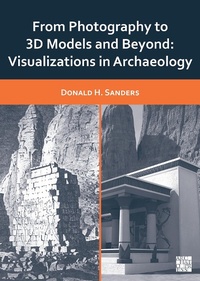
From Photography to 3D Models and Beyond: Visualizations in Archaeology
Published on 21. December 2023
200 pages
978-1-80327-619-9 (ISBN)
Description

From Photography to 3D Models and Beyond: visualizations in archaeology explores the history of visual technology and archaeology and outlines how the introduction of interactive 3D computer modelling to the discipline parallels very closely the earlier integration of photography into archaeological fieldwork. The incredible potential of interactive 3D computer graphics to provide new insight into cultural change, ancient settlement development, building function, and behavior make virtual heritage a must-use approach, but one that has not been fully grasped. This volume brings together for the first time several key aspects of the history of archaeology: how and where photographs became an indispensable part of excavations; when and for what purposes virtual reality began a similar journey into the field team's arsenal of documentation, publication, and visualization tools; how the common trajectory of both technologies provides clues for why virtual reality has not yet become as commonplace as photography for archaeological research, teaching, and data dissemination; and how new methods and technologies are poised to revolutionize our understanding of the past.
Reviews / Votes
'This publication would work well both as an introduction and as a reference tool for specialists who want to explore history and current trends of visualization in archaeology. Despite the absence of any mention of free software applications, the volume could also work as a manual for university classes...' - Alessandro Di Ludovico (2024): Bryn Mawr Classical Review 'Overall, Sanders is an effective advocate for the future of digital heritage and uses this book to contextualize the evolution of virtual approaches and what they can offer the discipline. His writing style is clear, and though there are times when he over-summarizes his work, this will be useful for those who only plan to read parts of the monograph.' - David M. Wheeler (2025), Rhea Classical ReviewMore details
Language
English
Place of publication
Oxford
United Kingdom
Publishing group
Archaeopress
Target group
Professional and scholarly
Illustrations
54 figures, 2 tables (colour throughout)
File size
96,62 MB
ISBN-13
978-1-80327-619-9 (9781803276199)
DOI
10.32028/9781803276182
Copyright in bibliographic data and cover images is held by Nielsen Book Services Limited or by the publishers or by their respective licensors: all rights reserved.
Schweitzer Classification
Other editions
Additional editions
Book
12/2023
Archaeopress
€45.00
Shipment within 3-4 weeks
Person
Donald H. Sanders is trained and educated as an archaeologist, architectural historian, and architect. He helped pioneer the discipline of virtual heritage in the early 1990s and continues to innovate in the field. His special interest is the application of nontraditional methods (including interactive 3D computer graphics and behavioral science techniques) to the study and visualization of the past, pushing the boundaries of conventional archaeological interpretation. He founded Learning Sites, Inc., in 1996, and the Institute for the Visualization of History, Inc., in 2001, to actualize these innovations by creating virtual reconstructions of the ancient world for museums, schools, scholars, and broadcast media. He has been an invited keynote speaker at venues around the world; and publications by him or about his companies have appeared in journals, newspapers, books, and magazines in over a dozen countries. Sanders is the Tartessos Prize winner in virtual heritage for 2015 and Corporate Vision Executive Award winner for 2016.
Content
Preface
Introduction
Chapter 1. How Archaeologists Learn About the Past
Excavation. One way we learn about the past
Site Visits. A second way we learn about the past
Data Dissemination. A third way we learn about the past
Summary
Chapter 2. A Brief History of Architectural Depictions
Introduction
Development of Architectural / Archaeological Illustrations
Conclusion
Chapter 3. A History of Photography for Excavations
The 1830s and 1840s
The 1850s
The 1860s
The Late 19th Century
The 20th Century
Conclusion
Chapter 4. History of Interactive 3D Computer Modeling in Archaeology
Introduction
The Emergence of 3D Computer Graphics
The 1980s
The 1990s and the Emergence of Virtual Heritage
Into the Third Millennium
Summary History of 3D Modeling in Archaeology
Parallels Between Photography in Archaeology and 3D Modeling in Archaeology
Conclusion
Chapter 5. When New Technology Replaces Old Technology
Introduction
Historical Examples
Photography and Interactive Computer Graphics
Conclusion
Chapter 6. One Future of Archaeology
Introduction
An Historical Summary
One Future for Archaeology. Building the multipast
Putting It All Together
Some Closing Thoughts
Postscript
Bibliography
Index
Introduction
Chapter 1. How Archaeologists Learn About the Past
Excavation. One way we learn about the past
Site Visits. A second way we learn about the past
Data Dissemination. A third way we learn about the past
Summary
Chapter 2. A Brief History of Architectural Depictions
Introduction
Development of Architectural / Archaeological Illustrations
Conclusion
Chapter 3. A History of Photography for Excavations
The 1830s and 1840s
The 1850s
The 1860s
The Late 19th Century
The 20th Century
Conclusion
Chapter 4. History of Interactive 3D Computer Modeling in Archaeology
Introduction
The Emergence of 3D Computer Graphics
The 1980s
The 1990s and the Emergence of Virtual Heritage
Into the Third Millennium
Summary History of 3D Modeling in Archaeology
Parallels Between Photography in Archaeology and 3D Modeling in Archaeology
Conclusion
Chapter 5. When New Technology Replaces Old Technology
Introduction
Historical Examples
Photography and Interactive Computer Graphics
Conclusion
Chapter 6. One Future of Archaeology
Introduction
An Historical Summary
One Future for Archaeology. Building the multipast
Putting It All Together
Some Closing Thoughts
Postscript
Bibliography
Index
