

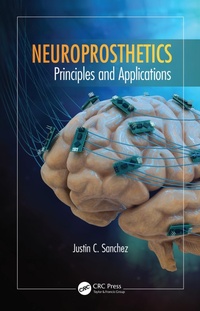
Neuroprosthetics
Principles and Applications
1st Edition
Published on 3. September 2018
256 pages
978-1-4665-5324-8 (ISBN)
Description

Master the tools of design thinking using Neuroprosthetics: Principles and Applications. Developed from successfully tested material used in an undergraduate and graduate level course taught to biomedical engineering and neuroscience students, this book focuses on the use of direct neural sensing and stimulation as a therapeutic intervention for complex disorders of the brain. It covers the theory and applications behind neuroprosthetics and explores how neuroprosthetic design thinking can enhance value for users of a direct neural interface.
The book explains the fundamentals of design thinking, introduces essential concepts from neuroscience and engineering illustrating the major components of neuroprosthetics, and presents practical applications. In addition to describing the approach of design thinking (based on facts about the user's needs, desires, habits, attitudes, and experiences with neuroprosthetics), it also examines how effectively "human centered" neuroprosthetics can address people's needs and interactions in their daily lives.
Identifying concepts and features of devices that work well with users of a direct neural interface, this book:
Outlines the signal sensing capabilities and trade-offs for common electrode designs, and determines the most appropriate electrode for any neuroprosthetic application
Specifies neurosurgical techniques and how electronics should be tailored to capture neural signals
Provides an understanding of the mechanisms of neural-electrode performance and information contained in neural signals
Provides understanding of neural decoding in neuroprosthetic applications
Describes the strategies that can be used to promote long-term therapeutic interventions for humans through the use of neuroprosthetics
The first true primary text for undergraduate and graduate students in departments of neuroscience and bioengineering that covers the theory and applications behind this science, Neuroprosthetics: Principles and Applications provides the fundamental knowledge needed to understand how electrodes translate neural activity into signals that are useable by machines and enables readers to master the tools of design thinking and apply them to any neuroprosthetic application.
The book explains the fundamentals of design thinking, introduces essential concepts from neuroscience and engineering illustrating the major components of neuroprosthetics, and presents practical applications. In addition to describing the approach of design thinking (based on facts about the user's needs, desires, habits, attitudes, and experiences with neuroprosthetics), it also examines how effectively "human centered" neuroprosthetics can address people's needs and interactions in their daily lives.
Identifying concepts and features of devices that work well with users of a direct neural interface, this book:
Outlines the signal sensing capabilities and trade-offs for common electrode designs, and determines the most appropriate electrode for any neuroprosthetic application
Specifies neurosurgical techniques and how electronics should be tailored to capture neural signals
Provides an understanding of the mechanisms of neural-electrode performance and information contained in neural signals
Provides understanding of neural decoding in neuroprosthetic applications
Describes the strategies that can be used to promote long-term therapeutic interventions for humans through the use of neuroprosthetics
The first true primary text for undergraduate and graduate students in departments of neuroscience and bioengineering that covers the theory and applications behind this science, Neuroprosthetics: Principles and Applications provides the fundamental knowledge needed to understand how electrodes translate neural activity into signals that are useable by machines and enables readers to master the tools of design thinking and apply them to any neuroprosthetic application.
More details
Series
Edition
1. Auflage
Language
English
Place of publication
Baton Rouge
United States
Publishing group
Taylor & Francis Inc
Target group
College/higher education
Illustrations
5 Tables, black and white; 115 Illustrations, black and white
File size
18,08 MB
ISBN-13
978-1-4665-5324-8 (9781466553248)
Copyright in bibliographic data and cover images is held by Nielsen Book Services Limited or by the publishers or by their respective licensors: all rights reserved.
Schweitzer Classification
Other editions
Additional editions
Book
07/2017
1st Edition
CRC Press
€91.50
Shipment within 10-20 days
Book
11/2015
1st Edition
CRC Press
€193.45
Shipment within 15-20 days
Person
Justin C. Sanchez is a neurotechnologist, neuroscientist, and neural engineer. He has served as a program manager at DARPA and before that was an associate professor of biomedical engineering and neuroscience at the University of Miami, and a faculty member of the Miami Project to Cure Paralysis. He has published more than 75 peer-reviewed papers, holds seven patents in neuroprosthetic design, and authored a book on the design of brain-machine interfaces. Dr. Sanchez's degrees include a Doctor of Philosophy, Master of Engineering, and Bachelor of Science, all from the University of Florida, Gainesville.
Content
Design Thinking for Neuroprosthetics. Interfaces to the Brain. Electronics for Recording. Surgical Techniques for Implantation and Explanation of Microelectrode Arrays. Quantifying Long-Term Electrode Performance. Neural Decoding. Principles of Stimulation. Application: Brain-Actuated Functional Electrical Stimulation for Rehabilitation. Design of Implantable Neural Interface Systems. Application: Deep Brain Stimulation for Neuropsychiatric Disorders. References.
