

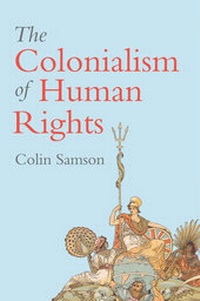
The Colonialism of Human Rights
Ongoing Hypocrisies of Western Liberalism
1st Edition
Published on 10. July 2020
256 pages
978-1-5095-2999-5 (ISBN)
Description

Do so-called universal human rights apply to indigenous, formerly enslaved and colonized peoples?
This trenchant book brings human rights into conversation with the histories and afterlives of Western colonialism and slavery. Colin Samson examines the paradox that the nations that credit themselves with formulating universal human rights were colonial powers, settler colonists and sponsors of enslavement. Samson points out that many liberal theorists supported colonialism and slavery, and how this illiberalism plays out today in selective, often racist processes of recognition and enforcement of human rights.
To reveal the continuities between colonial histories and contemporary events, Samson connects British, French and American colonial theories and practice to the notion of non-universal human rights. Vivid illustrations and case studies of racial exceptions to human rights are drawn from the afterlives of the enslaved and colonized, as well as recent events such as American police killings of black people, the treatment of Algerian harkis in France, the Windrush scandal in Britain and the militarized suppression of the Standing Rock Water Protectors movement. Advocating for reparative justice and indigenizing law, Samson argues that such events are not a failure of liberalism so much as an inbuilt racial dynamic of it.
This trenchant book brings human rights into conversation with the histories and afterlives of Western colonialism and slavery. Colin Samson examines the paradox that the nations that credit themselves with formulating universal human rights were colonial powers, settler colonists and sponsors of enslavement. Samson points out that many liberal theorists supported colonialism and slavery, and how this illiberalism plays out today in selective, often racist processes of recognition and enforcement of human rights.
To reveal the continuities between colonial histories and contemporary events, Samson connects British, French and American colonial theories and practice to the notion of non-universal human rights. Vivid illustrations and case studies of racial exceptions to human rights are drawn from the afterlives of the enslaved and colonized, as well as recent events such as American police killings of black people, the treatment of Algerian harkis in France, the Windrush scandal in Britain and the militarized suppression of the Standing Rock Water Protectors movement. Advocating for reparative justice and indigenizing law, Samson argues that such events are not a failure of liberalism so much as an inbuilt racial dynamic of it.
More details
Other editions
Additional editions
Colin Samson
The Colonialism of Human Rights: Ongoing Hypocrisies of Western Liberalism
Ongoing Hypocrisies of Western Liberalism
Book
07/2020
1st Edition
Polity Press
€24.00
Shipment within 15-20 days
Colin Samson
The Colonialism of Human Rights: Ongoing Hypocrisies of Western Liberalism
Ongoing Hypocrisies of Western Liberalism
Book
07/2020
1st Edition
Polity Press
€65.00
Shipment within 15-20 days
Person
Colin Samson is Professor of Sociology at the University of Essex
Content
Preface
Chapter 1: Non-Universal Human Rights and Rightlessness
Chapter 2: The Uneasy Present of Colonialism
Chapter 3: Slavery and Its Afterlives
Chapter 4: The Less Than Human
Chapter 5: The Impossibility of Indigenous Human Rights
Chapter 6: Decolonizing Human Rights
Bibliography
Index
Chapter 1: Non-Universal Human Rights and Rightlessness
Chapter 2: The Uneasy Present of Colonialism
Chapter 3: Slavery and Its Afterlives
Chapter 4: The Less Than Human
Chapter 5: The Impossibility of Indigenous Human Rights
Chapter 6: Decolonizing Human Rights
Bibliography
Index
