

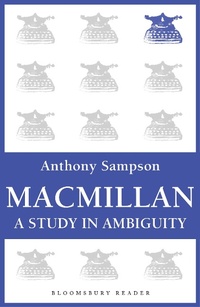
Macmillan
A Study in Ambiguity
1st Edition
Published on 17. September 2012
250 pages
978-1-4482-1006-0 (ISBN)
Description

These political biographies are intended to analyse in depth the real men lurking behind the personality cults of great contemporary statesmen. Their purpose is to explain how such political leaders as Mao Tse-Tung and Macmillan, de Gaulle and Stalin formed their political outlooks, to examine how they gained power and how they held and exercised it, and to suggest what each has come to epitomize in the eyes of his own nation and of the world at large.
The political career of Harold Macmillan culminated in one of the greatest enigmas in the politics of the last hundred years: an intellectual, sensitive, aristocratic Prime minister whose premiership is now remembered chiefly for its profligacy, scandal and vulgarity.
In the thirties Macmillan was one of the first to understand the significance of Keyne's economic theories, to apprehend the growing menace of Hitler and to accept Britain's changing place in the coming Imperial revolution. In the sixties as Prime Minister he led a regime notable for Premium Bonds, gaming saloons, "Never had it good", government scandals and a mismanagement of resources which brought England to the edge of crisis.
The political career of Harold Macmillan culminated in one of the greatest enigmas in the politics of the last hundred years: an intellectual, sensitive, aristocratic Prime minister whose premiership is now remembered chiefly for its profligacy, scandal and vulgarity.
In the thirties Macmillan was one of the first to understand the significance of Keyne's economic theories, to apprehend the growing menace of Hitler and to accept Britain's changing place in the coming Imperial revolution. In the sixties as Prime Minister he led a regime notable for Premium Bonds, gaming saloons, "Never had it good", government scandals and a mismanagement of resources which brought England to the edge of crisis.
More details
Edition
1. Auflage
Language
English
Place of publication
London
United Kingdom
Publishing group
Bloomsbury Publishing PLC
ISBN-13
978-1-4482-1006-0 (9781448210060)
Copyright in bibliographic data and cover images is held by Nielsen Book Services Limited or by the publishers or by their respective licensors: all rights reserved.
Schweitzer Classification
Person
Anthony Terrell Seward Sampson (3 August 1926 - 18 December 2004) was a British writer and journalist. He was educated at Westminster School and Christ Church, Oxford and served with the Royal Navy from 1944-47. During the 1950s he edited the magazine Drum in Johannesburg, South Africa. During this time, Sampson met and formed relationships with future leaders such as Nelson Mandela, and writers like Nadine Gordimer.
On returning to the United Kingdom he joined the editorial staff of The Observer, where he worked from 1955-66. Sampson was the author of a series of major books, starting with Anatomy of Britain (1962). His main themes were how Britain works as a state, and large corporations. He was also a founding member of the (now defunct) Social Democratic Party (SDP).
Sampson went on to write several other books about South Africa, including The Treason Cage: The Opposition On Trial In South Africa (1958), Common Sense About Africa (1960) and South Africa: Two Views Of Separate Development (1960) with S. Pienaar.
Sampson was the author of several books on Britain, which began with Anatomy of Britain (1963). In these works he focused on an explanation of the British state and the functioning of large corporations. In 1977, Sampson began contributing to Newsweek, and it was during this time that he worked as an editorial consultant to the Brandt Commission. By the 1980s, Sampson was editing The Sampson Letter, and establishing links with the ANC in exile, as the apartheid era began to draw to a close.
Sampson has narrated series for the BBC, and has held positions in various organisations including Chairman of The Society of Authors, trustee of the Guardian and Observer's Trust, and a member of the international advisory board of Independent Newspapers (South Africa).
Sampson also wrote an official biography of Mandela, entitled Mandela: The Authorised Biography (1999), which won the Alan Paton Award. Sampson wrote his autobiography, The Anatomist, before he died of a heart attack on 18 December 2004. He is survived by his wife, Sally (whom he married in 1965), and his two children.
On returning to the United Kingdom he joined the editorial staff of The Observer, where he worked from 1955-66. Sampson was the author of a series of major books, starting with Anatomy of Britain (1962). His main themes were how Britain works as a state, and large corporations. He was also a founding member of the (now defunct) Social Democratic Party (SDP).
Sampson went on to write several other books about South Africa, including The Treason Cage: The Opposition On Trial In South Africa (1958), Common Sense About Africa (1960) and South Africa: Two Views Of Separate Development (1960) with S. Pienaar.
Sampson was the author of several books on Britain, which began with Anatomy of Britain (1963). In these works he focused on an explanation of the British state and the functioning of large corporations. In 1977, Sampson began contributing to Newsweek, and it was during this time that he worked as an editorial consultant to the Brandt Commission. By the 1980s, Sampson was editing The Sampson Letter, and establishing links with the ANC in exile, as the apartheid era began to draw to a close.
Sampson has narrated series for the BBC, and has held positions in various organisations including Chairman of The Society of Authors, trustee of the Guardian and Observer's Trust, and a member of the international advisory board of Independent Newspapers (South Africa).
Sampson also wrote an official biography of Mandela, entitled Mandela: The Authorised Biography (1999), which won the Alan Paton Award. Sampson wrote his autobiography, The Anatomist, before he died of a heart attack on 18 December 2004. He is survived by his wife, Sally (whom he married in 1965), and his two children.
Content
Introduction
1 Four Macmillans
2 Stockton and Parliament
3 Rebellion
4 War
5 Opposition, 1945-51
6 Cabinet, 1951-6
7 Suez
8 Prime Minister
9 On to the Summit
10 'Never had it so good'
11 The Peak of his Power
12 Africa
13 The Purge
14 Into Europe
15 Kennedy and Disarmament
16 Departure
17 Macmillan and his Age
Footnotes
Notes
A Note on the Author
1 Four Macmillans
2 Stockton and Parliament
3 Rebellion
4 War
5 Opposition, 1945-51
6 Cabinet, 1951-6
7 Suez
8 Prime Minister
9 On to the Summit
10 'Never had it so good'
11 The Peak of his Power
12 Africa
13 The Purge
14 Into Europe
15 Kennedy and Disarmament
16 Departure
17 Macmillan and his Age
Footnotes
Notes
A Note on the Author
