

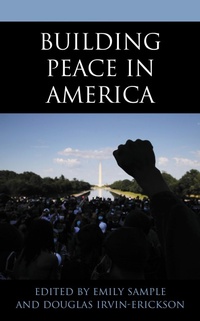
Building Peace in America
1st Edition
Published on 22. July 2020
1 pages
979-8-8818-6570-2 (ISBN)
Description

America may not be at war, but it is not at peace. Recent public and political rhetoric have revealed the escalation of a pervasive and dangerous "us versus them" ideology in the United States. This powerful book is motivated by the contributors' recognition of continuing structural violence and injustice, which are linked to long-standing systems of racism, social marginalization, xenophobia, poverty, and inequality in all forms. Calls to restore America's greatness are just the most recent iteration of dehumanizing language against minority communities. The violation of the civil and human rights of vulnerable groups presents a serious threat to American democracy. These deeply rooted and systemic inequities have no easy solutions, and the destructive nature of today's conflicts in America threaten to impede efforts to build peace, promote justice, and inspire constructive social change.
Acknowledging the complexity of building peace in the United States, this volume represents the first step in envisioning a more just, peaceful country-from the grassroots to the highest levels of leadership. The editors have brought together a diverse group of scholars, conflict resolution practitioners, civil society leaders, community peacebuilders, and faith leaders who are committed to pro-social change. Collectively, they examine how best to understand the current issues, deescalate destructive public rhetoric, undermine the "us versus them" polarity, and support those currently working for positive change. Together, the contributors share experiences and perspectives on the past, present, and future of peacebuilding; develop a vision for how we can collectively respond in our communities, campuses, and congregations; and catalyze action during this pivotal moment in America.
Acknowledging the complexity of building peace in the United States, this volume represents the first step in envisioning a more just, peaceful country-from the grassroots to the highest levels of leadership. The editors have brought together a diverse group of scholars, conflict resolution practitioners, civil society leaders, community peacebuilders, and faith leaders who are committed to pro-social change. Collectively, they examine how best to understand the current issues, deescalate destructive public rhetoric, undermine the "us versus them" polarity, and support those currently working for positive change. Together, the contributors share experiences and perspectives on the past, present, and future of peacebuilding; develop a vision for how we can collectively respond in our communities, campuses, and congregations; and catalyze action during this pivotal moment in America.
More details
Other editions
Additional editions
Emily Sample | Douglas Irvin-Erickson
Building Peace in America
Book
07/2020
Rowman & Littlefield Publishers
€55.90
Shipment within 3-4 weeks
Persons
Emily Sample is executive director of the Raphaël Lemkin Genocide Prevention Program at the Jimmy and Rosalynn Carter School for Peace and Conflict Resolution, George Mason University.
Douglas Irvin-Erickson is director of the Raphaël Lemkin Genocide Prevention Program at the Jimmy and Rosalynn Carter School for Peace and Conflict Resolution, George Mason University.
Douglas Irvin-Erickson is director of the Raphaël Lemkin Genocide Prevention Program at the Jimmy and Rosalynn Carter School for Peace and Conflict Resolution, George Mason University.
Content
Introduction: Who Builds Peace? Emily Sample
Part 1: Framing our Conversation of Peacebuilding in the United States
Chapter 1: Peacebuilding Begins at Home: A Call to U.S. Peacebuilders, Bridget Moix
Chapter 2: Social Justice as Peacebuilding in Black Churches: Where Do We Go From Here? Beverly Janet Goins
Part 2: Doing Good (?): Dialogue, Difference, and Ethical Practice
Chapter 3: What Can They Be Thinking? Fostering Dialogue Across Divides, Melinda Burrell
Chapter 4: Living Room Conversations: Identity Formation and Democracy, Jessica Shryack, Linda Taylor, Beth Raps, and Joan Blades
Chapter 5: Peacebuilding Programs in the United States: First Do No Harm, Elizabeth Hume
Part 3: Social Spaces and Social Practices of Peacebuilding
Chapter 6: Museum Education and Social Justice in Latinx Communities, Michelle Tovar
Chapter 7: Service for Peace: Working with Students and Youth to Plant the Future, Eddah Mutua
Chapter 8: Environmental In/Justice: Peacebuilding in the Anthropocene, Emily Sample
Part 4: Confronting Direct and Structural Racial Violence: The Paths Forward
Chapter 9: From Heritage Politics to Hate: Neo-Confederate Novels and White Protectionism, Danielle Christmas
Chapter 10: Legacy of Slavery: A New Approach to Reparations, Sarah Federman
Chapter 11: Confronting the Legacy of Lynching in Maryland: From Narrative Change to Racial Healing, Charles Chavis, Jr.
Chapter 12: Stop Trying to Fix Policing: Lessons Learned from the Front Lines of Black Liberation, Tony Gaskew
Part 5: In the Spirit of Self Reflection: Discussions on Gender and Nation
Chapter 13: Empowered Women Empower Women: Peacebuilding in the Age of #MeToo, Shelly Clay-Robison, Melinda Burrell, Elizabeth Hume, Deena R. Hurwitz, Emily Sample and Kate E. Temoney
Chapter 14: "We Don't Need No Stinkin' Peacebuilding...": The Paradox of Order in the Shadow of Chaos, Patricia A. Maulden
Part 1: Framing our Conversation of Peacebuilding in the United States
Chapter 1: Peacebuilding Begins at Home: A Call to U.S. Peacebuilders, Bridget Moix
Chapter 2: Social Justice as Peacebuilding in Black Churches: Where Do We Go From Here? Beverly Janet Goins
Part 2: Doing Good (?): Dialogue, Difference, and Ethical Practice
Chapter 3: What Can They Be Thinking? Fostering Dialogue Across Divides, Melinda Burrell
Chapter 4: Living Room Conversations: Identity Formation and Democracy, Jessica Shryack, Linda Taylor, Beth Raps, and Joan Blades
Chapter 5: Peacebuilding Programs in the United States: First Do No Harm, Elizabeth Hume
Part 3: Social Spaces and Social Practices of Peacebuilding
Chapter 6: Museum Education and Social Justice in Latinx Communities, Michelle Tovar
Chapter 7: Service for Peace: Working with Students and Youth to Plant the Future, Eddah Mutua
Chapter 8: Environmental In/Justice: Peacebuilding in the Anthropocene, Emily Sample
Part 4: Confronting Direct and Structural Racial Violence: The Paths Forward
Chapter 9: From Heritage Politics to Hate: Neo-Confederate Novels and White Protectionism, Danielle Christmas
Chapter 10: Legacy of Slavery: A New Approach to Reparations, Sarah Federman
Chapter 11: Confronting the Legacy of Lynching in Maryland: From Narrative Change to Racial Healing, Charles Chavis, Jr.
Chapter 12: Stop Trying to Fix Policing: Lessons Learned from the Front Lines of Black Liberation, Tony Gaskew
Part 5: In the Spirit of Self Reflection: Discussions on Gender and Nation
Chapter 13: Empowered Women Empower Women: Peacebuilding in the Age of #MeToo, Shelly Clay-Robison, Melinda Burrell, Elizabeth Hume, Deena R. Hurwitz, Emily Sample and Kate E. Temoney
Chapter 14: "We Don't Need No Stinkin' Peacebuilding...": The Paradox of Order in the Shadow of Chaos, Patricia A. Maulden
