

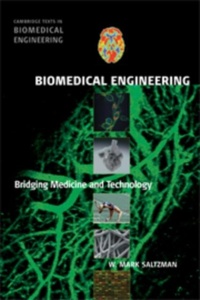
Biomedical Engineering
Bridging Medicine and Technology
Published on 3. September 2009
978-0-511-57764-2 (ISBN)
Description

This is an ideal text for an introduction to biomedical engineering. The book presents the basic science knowledge used by biomedical engineers at a level accessible to all students and illustrates the first steps in applying this knowledge to solve problems in human medicine. Biomedical engineering encompasses a range of fields of specialization including bioinstrumentation, bioimaging, biomechanics, biomaterials, and biomolecular engineering. This introduction to bioengineering assembles foundational resources from molecular and cellular biology and physiology and relates them to various sub-specialties of biomedical engineering. The first two parts of the book present basic information in molecular/cellular biology and human physiology; quantitative concepts are stressed in these sections. Comprehension of these basic life science principles provides the context in which biomedical engineers interact. The third part of the book introduces sub-specialties in biomedical engineering, and emphasizes - through examples and profiles of people in the field - the types of problems biomedical engineers solve.
This is an ideal text for an introduction to biomedical engineering. The book presents the basic science knowledge used by biomedical engineers at a level accessible to all students and illustrates the first steps in applying this knowledge to solve problems in human medicine. Biomedical engineering encompasses a range of fields of specialization including bioinstrumentation, bioimaging, biomechanics, biomaterials, and biomolecular engineering. This introduction to bioengineering assembles foundational resources from molecular and cellular biology and physiology and relates them to various sub-specialties of biomedical engineering. The first two parts of the book present basic information in molecular/cellular biology and human physiology; quantitative concepts are stressed in these sections. Comprehension of these basic life science principles provides the context in which biomedical engineers interact. The third part of the book introduces sub-specialties in biomedical engineering, and emphasizes - through examples and profiles of people in the field - the types of problems biomedical engineers solve.
This is an ideal text for an introduction to biomedical engineering. The book presents the basic science knowledge used by biomedical engineers at a level accessible to all students and illustrates the first steps in applying this knowledge to solve problems in human medicine. Biomedical engineering encompasses a range of fields of specialization including bioinstrumentation, bioimaging, biomechanics, biomaterials, and biomolecular engineering. This introduction to bioengineering assembles foundational resources from molecular and cellular biology and physiology and relates them to various sub-specialties of biomedical engineering. The first two parts of the book present basic information in molecular/cellular biology and human physiology; quantitative concepts are stressed in these sections. Comprehension of these basic life science principles provides the context in which biomedical engineers interact. The third part of the book introduces sub-specialties in biomedical engineering, and emphasizes - through examples and profiles of people in the field - the types of problems biomedical engineers solve.
Reviews / Votes
"Biomedical engineering is the newest of the engineering disciplines, so the cannon of biomedical engineering textbooks is very much a work in progress...Saltzman has written an excellent upper-level textbook on the topics of drug delivery and tissue engineering..highly recommended" - CHOICE"Biomedical engineering is the newest of the engineering disciplines, so the cannon of biomedical engineering textbooks is very much a work in progress...Saltzman has written an excellent upper-level textbook on the topics of drug delivery and tissue engineering..highly recommended" - CHOICE
More details
Series
Language
English
Place of publication
Cambridge
United Kingdom
Publishing group
Cambridge University Press
Target group
College/higher education
Professional and scholarly
Illustrations
Worked examples or Exercises; 55 Tables, unspecified; 355 Halftones, unspecified; 150 Line drawings, unspecified
File size
17,12 MB
ISBN-13
978-0-511-57764-2 (9780511577642)
Copyright in bibliographic data and cover images is held by Nielsen Book Services Limited or by the publishers or by their respective licensors: all rights reserved.
Schweitzer Classification
Other editions
Additional editions
Book
06/2009
Cambridge University Press
€68.08
Article exhausted; check for reprint
Person
W. Mark Saltzman is the Goizueta Foundation Professor of Chemical and Biomedical Engineering at Yale University. His research interests include materials for controlled drug delivery, drug delivery to the brain, and tissue engineering. He has taught at Johns Hopkins University and Cornell University and, after joining the Yale faculty in 2002, was named the first Chair of the Department of Biomedical Engineering. Professor Saltzman has published more than 150 research papers, 3 authored books, and 2 edited books, and he is an inventor on 10 patents. His many honors and awards include a Camille and Henry Dreyfus Foundation Teacher-Scholar Award (1990); the Allan C. Davis Medal as Maryland's Outstanding Young Engineer (1995); the Controlled Release Society Young Investigator Award (1996); Fellow of the American Institute of Biological and Medical Engineers (1997); the Professional Progress in Engineering Award from Iowa State University (2000); Britton Chance Distinguished Lecturer in Engineering and Medicine at the University of Pennsylvania (2000); and Distinguished Lecturer of the Biomedical Engineering Society (2004).
W. Mark Saltzman is the Goizueta Foundation Professor of Chemical and Biomedical Engineering at Yale University. His research interests include materials for controlled drug delivery, drug delivery to the brain, and tissue engineering. He has taught at Johns Hopkins University and Cornell University and, after joining the Yale faculty in 2002, was named the first Chair of the Department of Biomedical Engineering. Professor Saltzman has published more than 150 research papers, 3 authored books, and 2 edited books, and he is an inventor on 10 patents. His many honors and awards include a Camille and Henry Dreyfus Foundation Teacher-Scholar Award (1990); the Allan C. Davis Medal as Maryland's Outstanding Young Engineer (1995); the Controlled Release Society Young Investigator Award (1996); Fellow of the American Institute of Biological and Medical Engineers (1997); the Professional Progress in Engineering Award from Iowa State University (2000); Britton Chance Distinguished Lecturer in Engineering and Medicine at the University of Pennsylvania (2000); and Distinguished Lecturer of the Biomedical Engineering Society (2004).
W. Mark Saltzman is the Goizueta Foundation Professor of Chemical and Biomedical Engineering at Yale University. His research interests include materials for controlled drug delivery, drug delivery to the brain, and tissue engineering. He has taught at Johns Hopkins University and Cornell University and, after joining the Yale faculty in 2002, was named the first Chair of the Department of Biomedical Engineering. Professor Saltzman has published more than 150 research papers, 3 authored books, and 2 edited books, and he is an inventor on 10 patents. His many honors and awards include a Camille and Henry Dreyfus Foundation Teacher-Scholar Award (1990); the Allan C. Davis Medal as Maryland's Outstanding Young Engineer (1995); the Controlled Release Society Young Investigator Award (1996); Fellow of the American Institute of Biological and Medical Engineers (1997); the Professional Progress in Engineering Award from Iowa State University (2000); Britton Chance Distinguished Lecturer in Engineering and Medicine at the University of Pennsylvania (2000); and Distinguished Lecturer of the Biomedical Engineering Society (2004).
Content
1. Introduction; Part I. Molecular and Cellular Principles: 2. Biomolecular principles; 3. Biomolecular principles: nucleic acids; 4. Biomolecular principles: proteins; 5. Cellular principles; Part II. Physiological Principles: 6. Communication systems in the body; 7. Engineering balances: respiration and digestion; 8. Circulation; 9. Removal of molecules from the body; 10. Biomechanics; 11. Bioinstrumentation; 12. Bioimaging; 13. Biomolecular engineering and biotechnology; 14. Biomolecular engineering II: engineering of immunity; 15. Biomaterials and artificial organs; 16. Biomedical engineering and cancer.
