


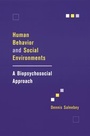
Human Behavior and Social Environments
A Biopsychosocial Approach
1st Edition
Published on 29. October 2015
459 pages
978-0-231-52886-3 (ISBN)
Description

Human behavior is a subject so vast that it would seem to defy one's ability to comfortably and confidently grasp its varieties, nuances, shapes, and dynamics. But in this wide-ranging and comprehensive survey of the contexts of human behavior, Dennis Saleebey examines the different social science approaches to understanding the way humans react to and are affected by their environment.
Using a biopsychosocial perspective, this book demonstrates that there are many paths of knowledge, many methods of inquiry, and many perspectives that can guide one's understanding of human behavior. Resilience (how we cope with trauma) and meaning-making (how we see and make sense of the world around us) provide the conceptual framework of the book. Saleebey examines a number of specific theories relevant to the biopsychosocial approach: part/whole analysis, psychodynamic theory, ecological theory, cognitive theory, and radical/critical theory. Human development is presented as a continuing interaction between individual, family, community, social institutions, and culture. Pedagogical devices to aid the student include chapter overviews, case studies, and meaning-making dialogues at the end of each chapter that pose questions for further thought.
Using a biopsychosocial perspective, this book demonstrates that there are many paths of knowledge, many methods of inquiry, and many perspectives that can guide one's understanding of human behavior. Resilience (how we cope with trauma) and meaning-making (how we see and make sense of the world around us) provide the conceptual framework of the book. Saleebey examines a number of specific theories relevant to the biopsychosocial approach: part/whole analysis, psychodynamic theory, ecological theory, cognitive theory, and radical/critical theory. Human development is presented as a continuing interaction between individual, family, community, social institutions, and culture. Pedagogical devices to aid the student include chapter overviews, case studies, and meaning-making dialogues at the end of each chapter that pose questions for further thought.
All prices
More details
Other editions
Additional editions
Book
08/2001
Columbia University Press
€99.12
Shipment within 10-20 days
Person
Dennis Saleebey is a professor at the School of Social Welfare and chair of the Ph.D. program at the University of Kansas. He is the author of The Strengths Perspective in Social Work Practice, Third Edition.
Content
Preface
Introduction
Philosophical principles
Conceptual frameworks
Integrative themes
Paradigms, postmodernism, and possibilities
M & M dialogue
Meaning-making
Self
Culture
Story, connection, ritual and myth
M & M dialogue
Strengths and Resilience
Strengths and resilience: images of altruism and humanity
Power in the people: Strengths and hope
M & M dialogue
Biopsychosocial Understanding
Human nature and the human condition
Genes and experience: The case of temperament
The brain and behavior: The biopsychosocial view
M & M dialogue
Nature and Nurture; Neurons and Narratives
Nature and nurture: How necessary are parents?
Nature
Nurture
Neurons and narratives: A biopsychosocial understanding of mental illness
M & M dialogues
Theories: Part I
The elements of theory
Part/whole analysis
Psychodynamic theory
Critique of psychodynamic theory
M & M dialogues
Theories: Part II
Ecological theory
Critique of ecological theory
Cognitive theory
Cognitive theories and the environment
Critique of cognitive approaches
Radical/critical theory
The terms and conditions of radical/critical theory
Critique of radical/critical theory
Conclusion
M & M dialogues
Families: The Variety of Us
The family and society today: What's up?
The family and community
What are families for?
The care and feeding of infants
Socialization
What is a family?
Nuclear family
A note on social class and family
Single-parent families
Extended families
Dual earner families
Remarried families
Couples
Gay and lesbian families
Family resilience
Conclusion
M & M Dialogue
Growing Up in the Community and World: Part I
A contextual model of family transition and adaptation
Becoming partners and being a couple
I love your genes
A new human being joins the family
Culture: Africentric childrearing
The early processes that make us human
Culture, again
Where's dad?
When things go awry
Being homeless
Conclusion
M & M dialogue
Growing up in the Family and Community: Part II
Middle childhood: The forgotten years
Moral development
Peers and groups
Siblings
School and family; play and work
Meaning and community
A note on ADHD
Conclusion
M & M dialogue
Growing Up in the Family and Community: Part III
Sturm and drang or "the romance of risk"
Identity formation: Gender and culture
Gender and identity
Sexuality
Risks and resiliency: The family and community
Violence and the neighborhood
Adolescents and community
Adolescents and family
Family and community and understanding and intervening
Conclusion
M & M dialogue
Coming of Age and Old Age in Family and Community
Maturity: Love, work, connection, and closure
Theories of the adult development of maturity
Borysenko
Levinson
Contextual/constructionist view
Generational differences
Some important moments in adult life
Leaving home
Boomerang babies
Love and work together
Love and mating: the coming together of body, mind and culture
Work
Becoming a citizen: family and community
Coming of (older) age in America
Successful aging
Dying and death
Conclusion
M & M dialogue
Reprise, Vision and the Final Conversation
Reprise
Spirituality
The ordinariness of everyday life
Multiculturalism
Technology
The global village
Organizations: Culture and behavior
Context
So what is the good life, anyway?
The heroic and the common
Some elements of a life worth living
Conclusion
The final M & M dialogue
Introduction
Philosophical principles
Conceptual frameworks
Integrative themes
Paradigms, postmodernism, and possibilities
M & M dialogue
Meaning-making
Self
Culture
Story, connection, ritual and myth
M & M dialogue
Strengths and Resilience
Strengths and resilience: images of altruism and humanity
Power in the people: Strengths and hope
M & M dialogue
Biopsychosocial Understanding
Human nature and the human condition
Genes and experience: The case of temperament
The brain and behavior: The biopsychosocial view
M & M dialogue
Nature and Nurture; Neurons and Narratives
Nature and nurture: How necessary are parents?
Nature
Nurture
Neurons and narratives: A biopsychosocial understanding of mental illness
M & M dialogues
Theories: Part I
The elements of theory
Part/whole analysis
Psychodynamic theory
Critique of psychodynamic theory
M & M dialogues
Theories: Part II
Ecological theory
Critique of ecological theory
Cognitive theory
Cognitive theories and the environment
Critique of cognitive approaches
Radical/critical theory
The terms and conditions of radical/critical theory
Critique of radical/critical theory
Conclusion
M & M dialogues
Families: The Variety of Us
The family and society today: What's up?
The family and community
What are families for?
The care and feeding of infants
Socialization
What is a family?
Nuclear family
A note on social class and family
Single-parent families
Extended families
Dual earner families
Remarried families
Couples
Gay and lesbian families
Family resilience
Conclusion
M & M Dialogue
Growing Up in the Community and World: Part I
A contextual model of family transition and adaptation
Becoming partners and being a couple
I love your genes
A new human being joins the family
Culture: Africentric childrearing
The early processes that make us human
Culture, again
Where's dad?
When things go awry
Being homeless
Conclusion
M & M dialogue
Growing up in the Family and Community: Part II
Middle childhood: The forgotten years
Moral development
Peers and groups
Siblings
School and family; play and work
Meaning and community
A note on ADHD
Conclusion
M & M dialogue
Growing Up in the Family and Community: Part III
Sturm and drang or "the romance of risk"
Identity formation: Gender and culture
Gender and identity
Sexuality
Risks and resiliency: The family and community
Violence and the neighborhood
Adolescents and community
Adolescents and family
Family and community and understanding and intervening
Conclusion
M & M dialogue
Coming of Age and Old Age in Family and Community
Maturity: Love, work, connection, and closure
Theories of the adult development of maturity
Borysenko
Levinson
Contextual/constructionist view
Generational differences
Some important moments in adult life
Leaving home
Boomerang babies
Love and work together
Love and mating: the coming together of body, mind and culture
Work
Becoming a citizen: family and community
Coming of (older) age in America
Successful aging
Dying and death
Conclusion
M & M dialogue
Reprise, Vision and the Final Conversation
Reprise
Spirituality
The ordinariness of everyday life
Multiculturalism
Technology
The global village
Organizations: Culture and behavior
Context
So what is the good life, anyway?
The heroic and the common
Some elements of a life worth living
Conclusion
The final M & M dialogue

