

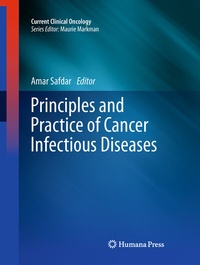
Principles and Practice of Cancer Infectious Diseases
Description

Principles and Practice of Cancer Infectious Diseases is a comprehensive and insightful work dedicated to elucidating the problem of infections in cancer patients. This essential volume reviews common and less often encountered infections, while establishing the difficulties behind preventing, diagnosing, and treating infectious diseases in cancer patients. Key sections are devoted to the presentation of clinical symptoms and the identification of major etiologic agents. A cadre of leading clinicians provide a detailed assessment of the risk factors for various infections, critical strategies in preventing and managing infections, and study of the interactions between the pathogen and host's immune function and inflammatory response. With its in-depth knowledge and concise treatment of the distinct facets of infections in cancer patients, this volume is an indispensible tool for all infectious disease specialists and clinical oncologists.
Reviews / Votes
From the book reviews:
"This book describes the prognosis, assessment of risk factors, and common infectious problems in patients with cancer, along with conditions that mimic infectious processes in patients undergoing chemotherapy. . This book will be a useful resource for infectious disease fellows, oncology clinicians, or infectious disease practitioners taking care of patients in the bone marrow transplant unit. . Overall, this is a good read." (Cezarina Mindru, Doody's Book Reviews, December, 2012)More details
Other editions
Additional editions
Content
Infections in Patients with Cancer - An Overview.- Infections in Patients Undergoing Hematopoietic Stem Cell Transplantation.- Infections in Patients with Hematologic Malignancy.- Infections in Patients with Solid-Organ Cancer.- Infections in Patients Treated with Monoclonal Antineoplastic Therapy.- Infections in Cancer Patients Undergoing Surgical Procedure.- Infections in Critically Ill Cancer Patients.- Management of Neutropenic Patients with Fever.- Controversies in Empiric Therapy for Febrile Neutropenia.- Catheter-Related Bloodstream Infections.- Treatment Strategies for Infected Indwelling Intravascular Devices.- Pneumonia and Other Lung Infections.- Noninfectious Lung Infiltrates Difficult to Distinguish from Pneumonia.- Orointestinal Mucosal Barrier Injury and Risk of Infection.- Intestinal Tract Bacterial Colonization and Host's Innate Immunity.- Neutropenic Enterocolitis and Clostridium difficile Associated Diarrhea.- Management of Hepatitis B and C Virus Reactivation in Cancer Patients.- Infections in Patients with Genitourinary Tract Cancer.- Central Nervous System Infections in Patients with Cancer.- Endocarditis in Cancer Patients - Endovascular Infections and Noninfectious Paraneoplastic Diseases.- Skin Infections and Disorders Confused with Infections in Cancer Patients.- Overview of Fungal Infections.- Diagnosis of Invasive Fungal Disease in Cancer Patients.- Invasive Candidiasis and Candidemia in Cancer Patients.- Management of Aspergillosis, Zygomycosis, and Other Clinically Relevant Mold Infections in Patient with Cancer.- Endemic Mycosis and Cryptococcal Disease.- Controversies in Management of Invasive Fungal Disease in Cancer Patients.- Fungal Drug Resistance and Pharmacologic Consideration of Dosing New Antifungal Agents.- Immunotherapy for Difficult-to-Treat Invasive Fungal Disease in Patients with Hematologic Malignancy and Stem Cell Transplantation.- Cytomegalovirus in Patients with Cancer.- Epstein-Barr virus, VaricellaZoster virus, and Human Herpes virus 6 & 8 Infections in Cancer Patients.- Respiratory Viruses.- BK, JC and Parvovirus Infections in Patients with Hematologic Malignancy.- Antiviral Drug Resistance and Implications for Prophylaxis for High Risk Cancer Population.- Management of Gram-Positive Bacterial Disease: Stapylococcus aureus, Pneumococcus, Streptococcal and Enterococcal Infections.- Management of Gram-Negative Bacterial Disease in Cancer Patients.- Listeriosis and Nocardiosis in Cancer Population.- Antimicrobial Distribution and Drug-Drug Interaction in Cancer Patients.- Mycobacterium tuberculosis Infection in Cancer Patients.- Nontuberculous Mycobacterial Infections in Cancer Patients.- Parasitic Infections in Cancer Patients: Toxoplasmosis, Strongyloidiasis and Other Parasites.- Zoonoses in Cancer Patients.- Antibiotic Stewardship Considerations for Cancer Centers
Coralia Mihu.- Controversies in Planning and Implementation of Antimicrobial Stewardship Programs.- Prevention of Drug Resistance among Common Healthcare- Associated Pathogens - Current Practice and Future Strategies.- Antibacterial, Antifungal and Antiviral Prophylaxis in High-Risk Cancer and Stem Cell Transplant Population.- Controversies in Antimicrobial Prophylaxis.- Protected Environment and Infection Control.- Travel Medicine - Prevention of Tropical and Parasitic Diseases.- Immunization - Strategies to Improve Vaccine Response in Cancer and Hematopoietic Transplant Population
