

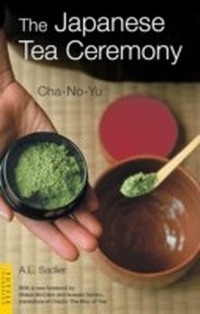
Japanese Tea Ceremony
Cha-No-Yu
1st Edition
Published on 20. December 2011
320 pages
978-1-4629-0359-7 (ISBN)
Description

The tea cermony--known as cha-no-yu, or literally "hot water for tea"--has touched nearly every aspect of Japanese life.
First published in 1933 as Cha-No-Yu, or The Japanese Tea Ceremony, this classic remains the gold standard for books on the five-centuries-old tea ceremony, which is itself "an epitome of Japanese civilization." Abundantly illustrated with drawings and photographs showing every aspect of the tea ceremony, this book takes readers on a complete tour of furniture and utensils, architecture and gardens, and numerous other features of cha-no-ya. Photos of tea bowls, teahouses and gardens reveal the exquisite artistry of the cult of tea.
The Japanese Tea Ceremony is a fascinating exploration of one of Japan's greatest arts and details the importance of the tea ceremony's history and traditions, its historical tea masters and its physical manifestations.
This book includes:
First published in 1933 as Cha-No-Yu, or The Japanese Tea Ceremony, this classic remains the gold standard for books on the five-centuries-old tea ceremony, which is itself "an epitome of Japanese civilization." Abundantly illustrated with drawings and photographs showing every aspect of the tea ceremony, this book takes readers on a complete tour of furniture and utensils, architecture and gardens, and numerous other features of cha-no-ya. Photos of tea bowls, teahouses and gardens reveal the exquisite artistry of the cult of tea.
The Japanese Tea Ceremony is a fascinating exploration of one of Japan's greatest arts and details the importance of the tea ceremony's history and traditions, its historical tea masters and its physical manifestations.
This book includes:
- Descriptions of the many disciples contained within the broader framework of tea ceremony, including art, architecture, gardening and exquisite handicrafts
- The experiences of masters of the art over the centuries
- Histories of the various schools and traditions of the art of tea
All prices
More details
Other editions
Additional editions
Book
06/2008
Tuttle Publishing
€38.56
Article exhausted; check for reprint
Person
The late A.L. Sadler was Professor of Oriental Studies at the University of Sydney for twenty-six years and thereafter Professor Emeritus. He also served as Professor of Japanese at the Royal Military College of Australia. Professor Sadler was one of the most renowned experts on Japanese history and culture, as well as a superb translator of Japanese into English. His other works include The Warrior's Code, Shogun: The Life of Tokugawa Ieyasu and Japanese Architecture: A Short History.
Content
- Intro
- Contents
- Foreword
- A Note on the Photographs
- Introduction
- Chapter One
- Origins
- The Early Use of Tea
- Kakoi and Sukiya
- The Varieties of Tearoom
- Tea Utensils
- The Roji
- The Mizuya
- Trees and Shrubs
- The Water Basin
- The Setsuin or Privy
- Times for Cha-no-yu
- Dress for Cha-no-yu
- The Guests
- Order of Meal
- The Kakemono
- Flower Arrangements for Cha-No-Yu
- Order of Tea Ceremony
- Tea for the Emperor and the Tokugawa Shoguns
- Regulations for the Sukiya of the Shogun
- The Pottery of Cha-no-yu
- The Connoisseurship of Tea Vessels
- Furuta Oribe and Kobori Enshu
- The Retired Life
- Dazai Jun on Cha-no-yu
- A Criticism of Cha-no-yu From the "Kokoro-no-s shi" Of Matsudaria Sadanobu
- Observations of Matsudaria Fumai On Cha-no-yu
- The Tea Maxims of Nambo Sokei and Rikyu
- Tea Maxims of Hosokawa Tadaoki
- The Tea Maxims of Kuroda Josui Written Up In His Mizuya
- Obiter Dicta of Kobori Enshu
- The Maxims of Kobori Enshu
- The Wall Maxims of Karasu-maru Mitsuhiro
- Wall Maxims of the Zen Priest Takuan Osho
- The Tea Maxims of Matsudaira Fumai
- The Tea Maxims of Matsudaria Naritada
- The Rules of Zuihosai Issoku
- Mass Celebrated In A Tearoom
- Chapter Two
- TEA MASTERS
- The Ten Virtues of Tea
- Ashikaga Yoshimasa Originates the Four-and-a-Half Mat Tearoom
- Takeno Sho-o
- Sho-o Divines the Intention of his Host
- Ichiro and Ikkyu
- Miyoshi Jikkyu
- Sen-no-Rikyu
- Rikyu and the Diasu
- Verses of Sen-no-rikyu
- Rikyu and Do-an
- Hosokawa Yusai
- One Version of the Death of Sen-no-rikyu
- Oda Nobunaga Entertains His Retainers
- Inaba Ittetsu
- Shibata Katsuie Obtains the Kettle Ubaguchi
- Yamashina Hechigwan
- The Dawn Cha-no-yu of Hidetsugu
- Hideyoshi's Golden Tearoom
- Hideyoshi Entertains at Osaka Castle
- Otomo Sorin and his Tea-Caddies
- Hideyoshi's Cha-no-yu In the Field
- Hideyoshi Entertains the Chinese Envoys
- Hideyoshi's Great Cha-no-yu at Kitano
- Naya Sukeuemon Profits by the Sale of Tea-Jars
- Awaguchi Zensuke Refuses the Taiko's Request
- Hino Terusuke Sells a Tea-Caddy
- Maeda Toshiie Assists Exiled Friends
- Kobayakawa Takakage Tests the Wit of his Retainers
- Furuta Oribe and the Incense
- Kuroda Josui Understands the Meaning of Cha-no-yu
- Oda Yuraku's Mistake
- Oda Yuraku's Dawn Tea
- Yabuuchi Shochi and the Incense-Burner
- Shimai Soshitsu
- Shimai Soshitsu and the Narashiba Tea-Caddy
- Soshitsu and the Korean Expedition
- Kamiya Sotan
- Kamiya Sotan Entertains Hideyoshi
- Kamiya Sotan gives away the Hakata Bunrin
- Nagai Naokatsu and Ii Naomasa
- The Tea-jars of Tokugawa Ieyasu
- Ieyasu Entertains Hideyoshi
- Tokugawa Ieyasu gives his Tea Vessels to His Son
- Gamo Ujisato
- Ishida Mitsunari
- Hosokawa Tadaoki
- Tadaoki Sells his Tea Vessels
- Watanabe Soan
- Kamibayashi Chikuan
- The Case of Kanzaki Chikugoku
- Todo Takatora's Golden Tea Kettle
- Kato Kiyomasa and the Broken Tea-Bowl
- Asano Nagamasa
- Nabeshima Naoshige's Kakemono
- Hidetada's Escape
- Date Masamune
- Katagiri Sadaaki
- Tokugawa Yorinobu
- Tokugawa Yorinobu Conceals a Mistake by His Cleverness
- Tokugawa Yorinobu And the Lantern of Kobori Enshu
- Honor Done to a Tea Master
- Itakura Shigemune Grinds his own Tea
- Tachibana Muneshige
- The Simple Tea of Doi Toshikatsu
- Ii Naotaka Returns a Famous Tea-caddy
- Even Kobori Enshu Is Not Infallible
- Matsuura Shigenobu
- Iemitsu and the Nagasaki Bugyo
- Hotta Masamori
- Mori Hidemoto Entertains Iemitsu
- Abe Tadaaki And The Jar
- Inaba Masanori
- Tokogawa Mitsukuni
- Tokugawa Mitsukuni and Ii Naozumi
- Ii Naomasa and Hideyoshi
- Ii Naotaka
- Sakai Tadakiyo and the Kokura Paper
- Gamo Satonaga's Tearoom
- Kano Tann'yu
- Hon-ami Koetsu
- Yoshino
- Kuriyama Daizen Pays his Friend's Debt with a Flower Vase
- An Imperial Tearoom
- The Kwampaku Konoe Iehiro
- Sen Sotan
- Yamada Sohen
- Otaka Gengo uses Cha-no-yu to Spy on Kira Kozuke-no-suke
- Yokogawa Kampei
- Concerning Kira Kozuke-no-suke Yoshinaka
- Matsuura Masashi Makes "Night Attack" Tea-spoon
- Sen Sosa III
- Yoshimune's Simplicity
- Hotta Masasuke's Generosity
- Makino Sadaharu's Generosity
- Matsudaira Nankai
- Matsudaira Fumai
- Kobori Masamine
- Akimoto Suzutomo Rebukes his Retainer For Giving Too Little For a Tea-bowl
- Shibayama Motoaki
- Kawakami Fuhaku
- Imai Sosen
- Mine Genwa Buys a Plum Tree
- Doi Toyotaka
- Hijikata Nui-No-Suke
- Yanagida Shogen and The Frog
- The Kwanryo's Brazier
- Yanagisawa Gien and Akishino Yohei
- Yodoya Tatsugoro
- Kawachiya Tarobei
- Tokugawa Ienari
- Katsushika Gombei and Cha-No-Yu
- Ii Naosuke
- Shibata Zeshin
- Chapter Three
- Schools of Tea
- The Master of the House of Ura Sen-ke
- Some Characteristic Names Of Tearooms
- Program Of A Cha-No-Yu Party
- Kaiseki
- Interval
- Usu-cha
- Examples of Rikyu's Menus for Kaiseki Taken From the Nambo Roku
- Books Consulted
- Index

