

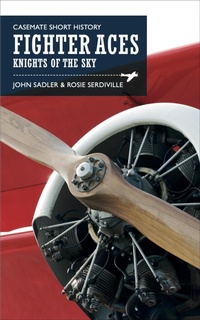
Fighter Aces
Knights of the Skies
Published on 10. January 2020
160 pages
978-1-61200-483-9 (ISBN)
Description

A readable and entertaining introduction to aerial combat in the series that "would be excellent for someone with an early interest in military history" (
Army Rumour Service).
Just over a decade after the first successful powered flight, fearless pioneers were flying over the battlefields of France in flimsy biplanes. Though the infantry in their muddy trenches might see aerial combat as glorious and chivalric, the reality was very different and undeniably deadly: new Royal Flying Corps subalterns in 1917 had a life expectancy of eleven days.
In 1915 the term "ace" was coined to denote a pilot adept at downing enemy aircraft, and top aces like the Red Baron, René Fonck, and Billy Bishop became household names. The idea of the ace continued after the 1918 Armistice, but as the size of air forces increased, the prominence of the ace diminished. But still, the pilots who swirled and danced in Hurricanes and Spitfires over southern England in 1940 were, and remain, feted as "the Few" who stood between Britain and invasion. Flying aircraft advanced beyond the wildest dreams of Great War pilots, the "top" fighter aces of World War II would accrue hundreds of kills, though their life expectancy was still measured in weeks, not years.
World War II cemented the vital role of air power, and postwar innovation gave fighter pilots jet-powered fighters, enabling them to pursue duels over huge areas above modern battlefields. This entertaining introduction explores the history and cult of the fighter ace from the first pilots through late twentieth-century conflicts, which leads to discussion of whether the era of the fighter ace is at an end.
Just over a decade after the first successful powered flight, fearless pioneers were flying over the battlefields of France in flimsy biplanes. Though the infantry in their muddy trenches might see aerial combat as glorious and chivalric, the reality was very different and undeniably deadly: new Royal Flying Corps subalterns in 1917 had a life expectancy of eleven days.
In 1915 the term "ace" was coined to denote a pilot adept at downing enemy aircraft, and top aces like the Red Baron, René Fonck, and Billy Bishop became household names. The idea of the ace continued after the 1918 Armistice, but as the size of air forces increased, the prominence of the ace diminished. But still, the pilots who swirled and danced in Hurricanes and Spitfires over southern England in 1940 were, and remain, feted as "the Few" who stood between Britain and invasion. Flying aircraft advanced beyond the wildest dreams of Great War pilots, the "top" fighter aces of World War II would accrue hundreds of kills, though their life expectancy was still measured in weeks, not years.
World War II cemented the vital role of air power, and postwar innovation gave fighter pilots jet-powered fighters, enabling them to pursue duels over huge areas above modern battlefields. This entertaining introduction explores the history and cult of the fighter ace from the first pilots through late twentieth-century conflicts, which leads to discussion of whether the era of the fighter ace is at an end.
More details
Other editions
Additional editions
Book
07/2017
Casemate Publishers
€29.89
Article exhausted; check different version
Persons
John Sadler's main specialty is in military history, as an accomplished author, lecturer, battlefield tour guide, heritage professional and historical interpreter. He is a visiting lecturer at the University of Sunderland Centre For Lifelong Learning since 1998. He lives in the North East of England.
Content
- Intro
- Title
- Copyright
- Dedication
- CONTENTS
- Prologue
- Timeline
- Aces of Aces
- Introduction: Tumult in the Clouds
- Chapter 1: Above Flanders Fields (1914-16)
- Chapter 2: Bloody April (1917-18)
- Chapter 3: Their Finest Hour (1939-41)
- Chapter 4: War Without Pity (1941-45)
- Chapter 5: MiG Alley, Desert Skies and Stormy Seas (post-1945)
- Postscript: The Last Aces?
- Sources
