

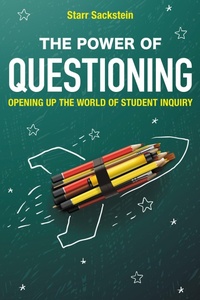
The Power of Questioning
Opening Up the World of Student Inquiry
1st Edition
Published on 18. December 2015
74 pages
979-8-216-26431-6 (ISBN)
Description

Teaching and learning cannot happen without questions. Inquiry is the offspring of curiosity and creativity. Questions are incredibly powerful tools that open the world up. In the age of Google, the way we teach needs to change and students need to be reconnected with their early childhood curiosity. Let's put that control back into kids' hands by teaching them to question better. The Power of Questioning will help you to make students partners in their own learning.
More details
Edition
1. Auflage
Language
English
Place of publication
United States
Publishing group
Bloomsbury Publishing Plc
ISBN-13
979-8-216-26431-6 (9798216264316)
Copyright in bibliographic data and cover images is held by Nielsen Book Services Limited or by the publishers or by their respective licensors: all rights reserved.
Schweitzer Classification
Other editions
Additional editions

Book
12/2015
Rowman & Littlefield Publishers
€62.80
Shipment within 10-20 days
Person
Starr Sackstein, Nationally Board certified teacher puts students in charge of the learning. Author, blogger and constant learner, Sackstein is invested in creating a world where questions don't have to be answered, they just need to be explored with the understanding that anything is possible.
Content
Dedication
Foreword-Mark Barnes
Acknowledgments
Introduction
Chapter 1: Setting the Stage for Inquiry and Self-Exploration
Letting Go of Control
Creating a Culture of Learning
Learning is More than Being Right
Empowering Students Through Learning Conversations
Chapter 2: Understanding Bloom's Taxonomy When Teaching Questioning Skills
What is Bloom's Taxonomy?
How can Bloom's Taxonomy be used as a Framework for Teaching Questioning?
Chapter 2 Additional Resources
Chapter 3: Dissecting Questions
How Can We Break Apart Questions for a Deeper Understanding of What is Being Asked?
Why Should Students be Able to Dissect Questions to Further Learning?
How Can These Skills be Applied to Classes Across Content to Deepen Learning?
Chapter 4: Building Questions
Conceiving Questions to Map Authentic Learning
Opened/Closed Questions for Surveying Material vs. Acquiring Depth of Knowledge
Building Questions for Investigative Reporting - Fishbowl Activity
Journalism in Context
Chapter 5: Applying Questioning Skills to Content Learning
Deeper Learning Happens When Students are Questioning Content
Using Search Engines to Apply Questioning for Content
Socratic Seminars as a Classroom Study
Using Google Classroom to Elicit Discussion
Chapter 6: Discovering Self Through Questioning
The Questions People Ask About Themselves and Their Environments
What Do the Questions We Ask Say About Who We Are?
How Can We Harness Interest to Engage Students?
Using Reflection Questions to Dig Deeper into Ourselves and Learning
Chapter 7: Encouraging Continued Exploration and Conversation
Where Does the Research Generate?
Teaching Students to Question the Sources They Find
Chapter 7 Additional Resources
Final Thoughts
About the Author
Foreword-Mark Barnes
Acknowledgments
Introduction
Chapter 1: Setting the Stage for Inquiry and Self-Exploration
Letting Go of Control
Creating a Culture of Learning
Learning is More than Being Right
Empowering Students Through Learning Conversations
Chapter 2: Understanding Bloom's Taxonomy When Teaching Questioning Skills
What is Bloom's Taxonomy?
How can Bloom's Taxonomy be used as a Framework for Teaching Questioning?
Chapter 2 Additional Resources
Chapter 3: Dissecting Questions
How Can We Break Apart Questions for a Deeper Understanding of What is Being Asked?
Why Should Students be Able to Dissect Questions to Further Learning?
How Can These Skills be Applied to Classes Across Content to Deepen Learning?
Chapter 4: Building Questions
Conceiving Questions to Map Authentic Learning
Opened/Closed Questions for Surveying Material vs. Acquiring Depth of Knowledge
Building Questions for Investigative Reporting - Fishbowl Activity
Journalism in Context
Chapter 5: Applying Questioning Skills to Content Learning
Deeper Learning Happens When Students are Questioning Content
Using Search Engines to Apply Questioning for Content
Socratic Seminars as a Classroom Study
Using Google Classroom to Elicit Discussion
Chapter 6: Discovering Self Through Questioning
The Questions People Ask About Themselves and Their Environments
What Do the Questions We Ask Say About Who We Are?
How Can We Harness Interest to Engage Students?
Using Reflection Questions to Dig Deeper into Ourselves and Learning
Chapter 7: Encouraging Continued Exploration and Conversation
Where Does the Research Generate?
Teaching Students to Question the Sources They Find
Chapter 7 Additional Resources
Final Thoughts
About the Author
