

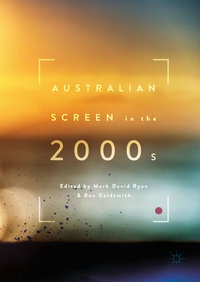
Australian Screen in the 2000s
Description

This book provides coverage of the diversity of Australian film and television production between 2000 and 2015. In this period, Australian film and television have been transformed by new international engagements, the emergence of major new talents and a movement away with earlier films' preoccupation with what it means to be Australian. With original contributions from leading scholars in the field, the collection contains chapters on particular genres (horror, blockbusters and comedy), Indigenous Australian film and television, women's filmmaking, queer cinema, representations of history, Australian characters in non-Australian films and films about Australians in Asia, as well as chapters on sound in Australian cinema and the distribution of screen content. The book is both scholarly and accessible to the general reader. It will be of particular relevance to students and scholars of Anglophone film and television, as well as to anyone with an interest in Australian culture andcreativity.
More details
Other editions
Additional editions
Persons
Mark David Ryan is Senior Lecturer in Film, Screen and Animation at the Queensland University of Technology, Australia. He is co-editor (with Ben Goldsmith and Geoff Lealand) of the Directory of World Cinema: Australia and New Zealand 2 . He is currently the President of the Screen Studies Association of Australia and Aotearoa/New Zealand (SSAAAZ).
Ben Goldsmith is an Independent Scholar. He has previously worked for the University of the Sunshine Coast, Queensland University of Technology, the University of Queensland and the Australian Film, Television and Radio School. He has published widely on Australian screen and is co-editor of the first and second editions of the Directory of World Cinema: Australia and New Zealand .
Content
1. Australian Screen in the 2000s: An Introduction.- 2. Picking up the Pieces: Contemporary Australian Cinema and the Representation of Australian Film History.- 3. Australian Blockbuster Movies.- 4. UnAustralians: Australian Characters in Non-Australian Films.- 5. Abroad: Production Tracks and Narrative Trajectories in Films about Australians in Asia.- 6. Haunted Art House: The Babadook and International Art Cinema Horror.- 7. Gender Matters: Gender Policy and the Rewriting of the Mother-Daughter Narrative in Contemporary Australian Women's Filmmaking.- 8. The Laughter and the Tears: Comedy, Melodrama and the Shift towards Empathy for Mental Illness on Screen.- 9. "It was the Summer When Everything Changed.": Coming of Age Queer in Australian Cinema.- 10. Administering Sonic Shock in Samson and Delilah .- 11. Australian Indigenous Screen in the 2000s: Crossing into the Mainstream.- 12. Carving out an Australian Sensory Cinema.- 13. White Male History: The Genreand Gender of The Proposition .- 14. Rake : Australianising HBO-Style Television?.- 15. Eulogies for the Video Store: Remembering the Practices and Objects of the Rental Era.- 16. Feature Film Diversity on Australian Cinema Screens: Implications for Cultural Diversity Studies Using Big Data.
