

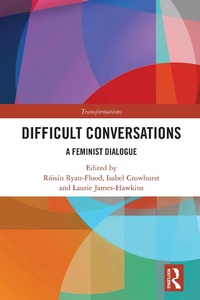
Difficult Conversations
A Feminist Dialogue
1st Edition
Published on 1. February 2023
278 pages
978-1-000-85856-3 (ISBN)
Description

This book explores 'difficult conversations' in feminist theory as an integral part of social and theoretical transformations.
Focusing on intersectionality within feminist theory, the book critically addresses questions of power and difference as a central feminist concern. It presents ethical, political, social, and emotional dilemmas while negotiating difficult conversations, particularly in terms of sexuality, class, 'race', ethnicity and cross-identification between the researcher and researched. Topics covered include challenging cultural relativism; queer marginalisation; research and affect; and feminism and the digital realm.
This book is aimed primarily at students, lecturers and researchers interested in epistemology, research methodology, gender, identity, and social theory. The interdisciplinary nature of the book is aimed at reaching the broadest possible audience, including those engaged with feminist theory, anthropology, social policy, sociology, psychology and geography.
Focusing on intersectionality within feminist theory, the book critically addresses questions of power and difference as a central feminist concern. It presents ethical, political, social, and emotional dilemmas while negotiating difficult conversations, particularly in terms of sexuality, class, 'race', ethnicity and cross-identification between the researcher and researched. Topics covered include challenging cultural relativism; queer marginalisation; research and affect; and feminism and the digital realm.
This book is aimed primarily at students, lecturers and researchers interested in epistemology, research methodology, gender, identity, and social theory. The interdisciplinary nature of the book is aimed at reaching the broadest possible audience, including those engaged with feminist theory, anthropology, social policy, sociology, psychology and geography.
More details
Series
Edition
1. Auflage
Language
English
Place of publication
London
United Kingdom
Publishing group
Taylor & Francis Ltd
Target group
Professional and scholarly
Illustrations
1 Tables, black and white; 12 Halftones, black and white; 12 Illustrations, black and white
ISBN-13
978-1-000-85856-3 (9781000858563)
Copyright in bibliographic data and cover images is held by Nielsen Book Services Limited or by the publishers or by their respective licensors: all rights reserved.
Schweitzer Classification
Other editions
Additional editions
Roisin Ryan-Flood | Isabel Crowhurst | Laurie James-Hawkins
Difficult Conversations
A Feminist Dialogue
Book
10/2024
1st Edition
Routledge
€63.50
Shipment within 15-20 days
Roisin Ryan-Flood | Isabel Crowhurst | Laurie James-Hawkins
Difficult Conversations
A Feminist Dialogue
Book
03/2023
1st Edition
Routledge
€185.70
Shipment within 15-20 days
Persons
Roisin Ryan-Flood is Professor of Sociology and Director of the Centre for Intimate and Sexual Citizenship (CISC) at the University of Essex. Her research interests include gender, sexuality, kinship, digital intimacies and feminist epistemology. She is the author of Lesbian Motherhood: Gender, Sexuality and Citizenship (2009), and co-editor of Secrecy and Silence in the Research Process (2010), Transnationalising Reproduction: Third Party Conception in a Globalised World (2018), and Queering Methodology: Lessons and Dilemmas from Lesbian Lives (2022). She is also co-editor of the journal Sexualities: Studies in Culture and Society.
Isabel Crowhurst is Reader in Sociology at the University of Essex. Her work explores the construction of social norms around sexual practices and intimate lives. Her recent books include The Tenacity of Couple Norm (with Sasha Roseneil, Tone Hellesund, Ana Cristina Santos and Mariya Stoilova), and Third Sector Organizations in Sex Work and Prostitution (with Susan Dewey and Chimaraoke Izugbara).
Laurie James-Hawkins is Senior Lecturer in Sociology and Deputy Director of the Centre for Intimate and Sexual Citizenship (CISC) at the University of Essex. She is a sociologist of health and gender, and her research interests include reproductive health, contraception, abortion, gender and sexuality among emerging adults. She has published widely on these topics. In recent years Dr. James-Hawkins has been studying sexual consent among university student populations.
Isabel Crowhurst is Reader in Sociology at the University of Essex. Her work explores the construction of social norms around sexual practices and intimate lives. Her recent books include The Tenacity of Couple Norm (with Sasha Roseneil, Tone Hellesund, Ana Cristina Santos and Mariya Stoilova), and Third Sector Organizations in Sex Work and Prostitution (with Susan Dewey and Chimaraoke Izugbara).
Laurie James-Hawkins is Senior Lecturer in Sociology and Deputy Director of the Centre for Intimate and Sexual Citizenship (CISC) at the University of Essex. She is a sociologist of health and gender, and her research interests include reproductive health, contraception, abortion, gender and sexuality among emerging adults. She has published widely on these topics. In recent years Dr. James-Hawkins has been studying sexual consent among university student populations.
Content
Introduction
SECTION 1: DIFFICULT KNOWLEDGE
SECTION 1: DIFFICULT KNOWLEDGE
1. The gender wars and difficult conversations about trans: An interview with Meg-John Barker
2. Facing uneasiness in feminist research: the case of female genital cutting
3. Feminism and race in academia: An interview with Sandya Hewamanne
4. But you're not defending sugar, are you?
SECTION 2: GENDER, POWER AND INTIMACY
5. Difficult research effects/affects: an intersectional-discursive-material-affective look at racialised sexualisation in public advertising
6. Calling out and piling on: deliberation and difficult conversations in feminist digital social space
7. Interviewing with intimacy: negotiating vulnerability and trust in difficult conversations
8. Coexisting with uncomfortable reflexivity: feminist fieldwork abroad during the pandemic
SECTION 3: GENDER, SEXUALITY AND EMBODIMENT
9. Sexing in the cities: sex, desire and sexual health of black township women who love women
10. Researching sex: gender, taboos and revealing the intimate
11. Building a community of trust: participatory applied theatre workshop techniques for difficult conversations on consent
12. Women's experiences of marital rape in Turkey: ethics, voice and difficult conversations
SECTION 4: BOUNDED KNOWLEDGE
13. Lost for words: difficult conversations about ethics, reflexivity and research governance
14. Gender studies, academic purity and political relevance
15. The feminist classroom in a neoliberal university
16. Focus groups and the 'insider researcher'; difficult conversations and intersectional complexities
17. Queering the academy
SECTION 1: DIFFICULT KNOWLEDGE
SECTION 1: DIFFICULT KNOWLEDGE
1. The gender wars and difficult conversations about trans: An interview with Meg-John Barker
2. Facing uneasiness in feminist research: the case of female genital cutting
3. Feminism and race in academia: An interview with Sandya Hewamanne
4. But you're not defending sugar, are you?
SECTION 2: GENDER, POWER AND INTIMACY
5. Difficult research effects/affects: an intersectional-discursive-material-affective look at racialised sexualisation in public advertising
6. Calling out and piling on: deliberation and difficult conversations in feminist digital social space
7. Interviewing with intimacy: negotiating vulnerability and trust in difficult conversations
8. Coexisting with uncomfortable reflexivity: feminist fieldwork abroad during the pandemic
SECTION 3: GENDER, SEXUALITY AND EMBODIMENT
9. Sexing in the cities: sex, desire and sexual health of black township women who love women
10. Researching sex: gender, taboos and revealing the intimate
11. Building a community of trust: participatory applied theatre workshop techniques for difficult conversations on consent
12. Women's experiences of marital rape in Turkey: ethics, voice and difficult conversations
SECTION 4: BOUNDED KNOWLEDGE
13. Lost for words: difficult conversations about ethics, reflexivity and research governance
14. Gender studies, academic purity and political relevance
15. The feminist classroom in a neoliberal university
16. Focus groups and the 'insider researcher'; difficult conversations and intersectional complexities
17. Queering the academy
