

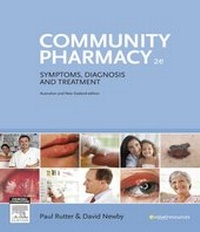
Community Pharmacy - E-Book
Description

Now in a new edition - the leading Australian community pharmacy guide, covering common conditions seen by community pharmacists throughout Australia and New Zealand.
Fully revised and now in its second edition, Community Pharmacy: Symptoms, Diagnosis and Treatment 2e is an essential pharmacy resource.
Ideal for both pharmacy students and practicing pharmacists, Community Pharmacy provides a guide to differential diagnosis of symptoms commonly seen by community pharmacists throughout Australia and New Zealand.
Organised by body system, Community Pharmacy provides symptom-specific pharmaceutical questions and algorithms for the purposes of differential diagnosis.
More than 12 new treatment medicines have been added to this new edition, along with eight new case studies.
All conditions, products and recommendations have been revised to reflect current local drug scheduling and clinical practice, and the book's evidence base has been updated in line with sources including the National Prescribing Service, Australian Prescriber, Australian Medicines Handbook, the Therapeutic Guidelines and Pharmaceutical Society of Australia guidelines.
Community Pharmacy: Symptoms, Diagnosis and Treatment 2nd edition incorporates evidence-based practice into every chapter, and addresses current issues like alternative treatments and complementary therapies, weight loss products and pre-quit nicotine use.
This full-colour pharmacy text also offers students and instructors additional web-based resources through Elsevier's Evolve online platform including additional images for dermatology and ophthalmology, additional case studies and an additional chapter on Evidence-Based Practice.
This new edition also has the added benefit of providing online activities for practicing pharmacists undertaking essential Continuing Professional Development. These activities have been accredited for 10 hours of Group 2 CPD (or 20 CPD credits) suitable for inclusion in an individual pharmacist's CPD plan and have been accredited by the Australian Pharmacy Council.
• covers the most common conditions seen in community pharmacies • evidence base for over-the-counter (OTC) recommendations for each condition • provides symptom-specific questions and algorithms for the purposes of differential diagnosis • discusses prevalence and epidemiology of each condition • practical prescribing summary tables • Hints and tips boxes covering product use advice • self-assessment - multiple choice questions, review questions and case studies • full-colour throughout, with colour photographs of important conditions • Helpful abbreviations • Glossary of terms • Useful websites • Online Evolve resources for students and instructors • Online activities for Continuing Professional Development (CPD)
More details
Other editions
Additional editions

Content
- Front cover
- Inside front cover
- Community Pharmacy
- Copyright page
- Table of Contents
- Preface
- Preface to the UK edition
- Introduction
- Communication skills
- Approaches to differential diagnosis
- Clinical decision making
- Key steps in the process
- 1. Formulating a diagnosis based on the patient and the initial presenting complaint
- 2. Asking questions
- Nature of the pain
- Location of the pain
- Severity of pain
- 3. Confirming facts
- Product-based requests
- Documentation
- How to use this book
- Key features of each chapter
- Self-assessment questions
- Elements included under each condition
- Arriving at a differential diagnosis
- Primer for differential diagnosis
- Trigger points indicative of referral
- Evidence-based non-prescription medicines and practical prescribing and product selection
- Hints and tips boxes
- References, further reading and web sites
- Acknowledgements
- UK acknowledgements
- Useful websites
- 1 Respiratory system
- In this chapter
- Background
- General overview of the anatomy of the respiratory tract
- Upper respiratory tract
- Nasal cavity
- Pharynx
- Larynx (voice box)
- Lower respiratory tract
- Trachea and bronchi
- Lungs
- History taking and physical exam
- Cough
- Background
- Prevalence and epidemiology
- Aetiology
- Arriving at a differential diagnosis
- Clinical features of acute viral cough
- Conditions to eliminate
- Acute cough
- Laryngotracheobronchitis (croup)
- Upper airways cough syndrome
- Chronic cough
- Chronic obstructive pulmonary disease (COPD)
- Asthma
- Medicine-induced cough or wheeze
- Rare causes of cough
- Productive coughs
- Heart failure
- Bronchiectasis
- Tuberculosis
- Pneumonia
- Carcinoma of the lung
- Legionnaire's disease
- Non-productive coughs
- Gastro-oesophageal reflux disease
- Lung abscess
- Spontaneous pneumothorax (collapsed lung)
- Evidence base for non-prescription medicines
- Expectorants
- Mucolytics
- Summary
- Cough suppressants (antitussives)
- Pholcodine
- Dextromethorphan
- Dihydrocodeine
- Antihistamines
- Demulcents
- Summary
- Combination cough mixtures
- Cough medicine for children
- Practical prescribing and product selection
- Cough expectorants
- Guaifenesin
- Mucolytics (bromhexine)
- Cough suppressants
- Pholcodine
- Dextromethorphan
- Dihydrocodeine
- Codeine
- Antihistamines
- Demulcents
- References
- Further reading
- Web sites
- The common cold
- Background
- Prevalence and epidemiology
- Aetiology
- Arriving at a differential diagnosis
- Clinical features of the common cold
- Conditions to eliminate
- Influenza
- Rhinitis
- Acute rhinosinusitis
- Otitis media
- Evidence base for non-prescription medicines
- Antihistamines
- Systemic and topical sympathomimetics
- Multi-ingredient preparations
- Alternative therapies
- Zinc lozenges
- Vitamin C
- Echinacea
- Vapour inhalation
- Saline sprays
- General summary
- Practical prescribing and product selection
- Antihistamines
- Sympathomimetics
- Systemic sympathomimetics
- Phenylephrine
- Pseudoephedrine
- Topical sympathomimetics
- Ephedrine and phenylephrine
- Oxymetazoline, xylometazoline and tramazoline
- References
- Further reading
- Web sites
- Sore throat
- Background
- Prevalence and epidemiology
- Aetiology
- Arriving at a differential diagnosis
- Clinical features of sore throat
- Conditions to eliminate
- Streptococcal sore throat
- Glandular fever (infectious mononucleosis)
- Trauma-related sore throat
- Medicine-induced sore throat
- Laryngeal and tonsillar carcinoma
- Evidence base for non-prescription medicines
- Local anaesthetics
- Antibacterial, antifungal, and antiviral agents
- Antiinflammatories
- Analgesia
- Aspirin and salt water gargles
- Practical prescribing and product selection
- Local anaesthetics (lignocaine, benzocaine)
- Lignocaine
- Benzocaine
- Antiinflammatories (benzydamine and flurbiprofen)
- Benzydamine
- Flurbiprofen
- References
- Further reading
- Web sites
- Rhinitis
- Background
- Prevalence and epidemiology
- Aetiology
- Arriving at a differential diagnosis
- Clinical features of intermittent allergic rhinitis
- Conditions to eliminate
- Persistent allergic rhinitis
- Infective rhinitis
- Vasomotor rhinitis (intrinsic rhinitis)
- Non allergic rhinitis with eosinophillia syndrome (NARES)
- Rhinitis of pregnancy
- Rhinitis medicamentosa and drug-induced rhinitis
- Nasal blockage
- Nasal foreign body
- Evidence base for non-prescription medicines
- Allergen avoidance
- Medicines
- Systemic therapy: antihistamines
- Topical therapy
- Intranasal medicine
- Corticosteroids
- Antihistamines
- Mast cell stabilisers
- Anticholinergics
- Decongestants
- Ocular medicine
- Mast cell stabilisers (sodium cromoglycate, lodoxamide)
- Antihistamines (levocabastine, antazoline, pheniramine, azelastine, ketotifen)
- Sympathomimetics (naphazoline, tetrahydrozoline)
- Summary
- Practical prescribing and product selection
- Systemic antihistamines (cetirizine, levocetirizine, loratadine, desloratadine and fexofenadine)
- Cetirizine
- Levocetirizine
- Loratadine
- Desloratadine
- Fexofenadine
- Nasal corticosteroids (beclomethasone, fluticasone, budesonide, triamcinolone)
- Beclomethasone
- Fluticasone
- Budesonide
- Triamcinolone
- Nasal antihistamines
- Azelastine
- Levocabastine
- Ocular antihistamines
- Antazoline and pheniramine
- Azelastine, ketotifen, levocabastine
- Mast cell stabilisers
- Ocular and nasal sodium cromoglycate
- Lodoxamide eye drops
- Sympathomimetics
- Ocular sympathomimetics
- Naphazoline
- Phenylephrine
- Tetrahydrozoline
- Complementary therapies
- References
- Further reading
- Web sites
- Self-assessment questions
- Case studies
- Answers to multiple choice questions
- 2 Ophthalmology
- In this chapter
- Background
- General overview of eye anatomy
- The eyelids
- The sclera and cornea
- The iris, pupil and ciliary body
- The lens
- The retina
- History taking and the eye exam
- Red eye
- Background
- Prevalence and epidemiology
- Aetiology
- Arriving at a differential diagnosis
- Clinical features of conjunctivitis
- Conditions to eliminate
- Episcleritis
- Scleritis
- Keratitis (corneal ulcer)
- Uveitis
- Subconjunctival haemorrhage
- Acute closed-angle glaucoma
- Evidence base for non-prescription medicines
- Viral conjunctivitis
- Bacterial conjunctivitis
- Allergic conjunctivitis
- Practical prescribing and product selection
- Products for bacterial conjunctivitis
- Chloramphenicol eye drops and ointment
- Propamidine and dibromopropamidine isethionate
- Sulfacetamide
- Products for allergic conjunctivitis
- Antihistamines (levocabastine, azelastine, ketotifen, antazoline, pheniramine)
- Mast cell stabilisers (sodium cromoglycate and lodoxamide)
- Sympathomimetics
- Naphazoline
- Phenylephrine
- Tetrahydrozoline
- References
- Further reading
- Web sites
- Eyelid disorders
- Background
- Prevalence and epidemiology
- Aetiology
- Arriving at a differential diagnosis
- Clinical features of blepharitis
- Clinical features of styes
- Conditions to eliminate for blepharitis and styes
- Contact or irritant dermatitis
- Blepharitis and styes unresponsive to therapy
- Orbital cellulitis
- Chalazion
- Entropion
- Ectropion
- Basal cell carcinoma
- Evidence base for non-prescription medicines
- Practical prescribing and product selection
- Blepharitis
- Styes
- Further reading
- Web sites
- Dry eye (keratoconjunctivitis sicca)
- Background
- Prevalence and epidemiology
- Aetiology
- Arriving at a differential diagnosis
- Clinical features of dry eye
- Conditions to eliminate
- Blepharitis
- Sjögren's syndrome
- Bell's palsy
- Medicine-induced dry eye
- Ectropion
- Rosacea
- Evidence base for non-prescription medicines
- Summary
- Practical prescribing and product selection
- Hypromellose and carmellose
- Polyvinyl alcohol
- Carbomer 980
- Wool fats
- Lecithin
- References
- Further reading
- Web sites
- Self-assessment questions
- Multiple choice questions
- Case studies
- Answers to multiple choice questions
- 3 Otic conditions
- In this chapter
- Background
- General overview of ear anatomy
- History taking and physical exam
- Ear wax impaction
- Background
- Prevalence and epidemiology
- Aetiology
- Arriving at a differential diagnosis
- Clinical features of ear wax impaction
- Conditions to eliminate
- Trauma to the ear canal
- Foreign bodies
- Evidence base for non-prescription medicines
- Summary
- Practical prescribing and product selection
- Cerumenolytics
- Dichlorobenzene with chlorbutol
- Carbamide peroxide
- Docusate
- Sodium bicarbonate
- Sodium chloride spray
- Complementary therapies
- References
- Further reading
- Web sites
- Otitis externa
- Background
- Prevalence and epidemiology
- Aetiology
- Arriving at a differential diagnosis
- Clinical features of otitis externa
- Conditions to eliminate
- Perichondritis
- Trauma
- Otalgia (earache)
- Malignant tumours
- Dermatitis
- Evidence base for non-prescription medicines
- Practical prescribing and product selection
- Acetic acid plus isopropyl alcohol
- Propylene glycol diacetate
- Glycerol plus isopropyl alcohol
- References
- Further reading
- Web sites
- Self-assessment questions
- Multiple choice questions
- Case studies
- Answers to multiple choice questions
- 4 Central nervous system
- In this chapter
- Background
- General overview of CNS anatomy
- History taking
- Headache
- Background
- Headache classification
- Prevalence and epidemiology
- Aetiology
- Arriving at a differential diagnosis
- Clinical features of headache
- Tension-type headache
- Migraine
- Headache with aura (classic migraine)
- Headache without aura (common migraine)
- Cluster headache
- Conditions to eliminate
- Rhinosinusitis
- Eye strain
- Medication overuse headache
- Glaucoma
- Meningitis
- Subarachnoid haemorrhage
- Temporal arteritis
- Conditions causing raised intracranial pressure
- Trigeminal neuralgia
- Depression
- Evidence base for non-prescription medicines
- Metoclopramide and paracetamol
- Prochlorperazine
- Summary
- Practical prescribing and product selection
- Metoclopramide plus paracetamol
- Prochlorperazine
- Complementary therapies
- References
- Further reading
- Web sites
- Insomnia
- Background
- Prevalence and epidemiology
- Aetiology
- Arriving at a differential diagnosis
- Clinical features of insomnia
- Conditions to eliminate
- Insomnia in children
- Medicine-induced insomnia
- Underlying medical conditions
- Depression
- Evidence base for non-prescription medicines
- Sleep hygiene
- Medicines
- Diphenhydramine
- Doxylamine
- Summary
- Complementary therapies
- Practical prescribing and product selection
- Diphenhydramine
- Doxylamine
- References
- Further reading
- Web sites
- Self-assessment questions
- Multiple choice questions
- Case studies
- Answers to multiple choice questions
- 5 Women's health
- In this chapter
- Background
- History taking
- Cystitis
- Background
- Prevalence and epidemiology
- Aetiology
- Arriving at a differential diagnosis
- Clinical features of acute uncomplicated cystitis
- Conditions to eliminate
- Pyelonephritis
- Vaginitis
- Chemical vaginitis
- Sexually transmitted infections
- Medicine-induced cystitis
- Oestrogen deficiency
- Evidence base for non-prescription medicines
- Alkalinising agents
- Hexamine hippurate
- Cranberry juice
- Practical prescribing and product selection
- Urinary alkalinisers
- Hexamine hippurate
- References
- Further reading
- Web sites
- Vaginal discharge
- Background
- Prevalence and epidemiology
- Aetiology
- Arriving at a differential diagnosis
- Clinical features of thrush
- Conditions to eliminate
- Bacterial vaginosis
- Trichomoniasis
- Cystitis
- Recurrent thrush
- Atrophic vaginitis
- Medicine-induced thrush
- Diabetes
- Pregnancy
- Chemical and mechanical irritants
- Evidence base for non-prescription medicines
- Practical prescribing and product selection
- Topical imidazoles (clotrimazole, butoconazole, miconazole)
- Fluconazole
- Nystatin
- References
- Further reading
- Web sites
- Primary dysmenorrhoea (period pain)
- Background
- Prevalence and epidemiology
- Aetiology
- Arriving at a differential diagnosis
- Clinical features of PD
- Conditions to eliminate
- Secondary dysmenorrhoea (e.g. Endometriosis)
- Dysfunctional uterine bleeding
- Pelvic inflammatory disease
- Endometrial carcinoma
- Evidence base for non-prescription medicines
- Non-steroidal antiinflammatories
- Simple and compound analgesics
- Combined oral contraceptives
- Non-drug treatments
- Practical prescribing and product selection
- Ibuprofen
- Diclofenac
- Mefenamic acid
- Naproxen
- Codeine + paracetamol ± doxylamine
- References
- Further reading
- Web sites
- Premenstrual syndrome
- Background
- Prevalence and epidemiology
- Aetiology
- Arriving at a differential diagnosis
- Clinical features of PMS
- Conditions to eliminate
- Primary dysmenorrhoea
- Mental health disorders
- Evidence base for non-prescription medicines
- Practical prescribing and product selection
- Vitamin B6 (pyridoxine)
- Calcium
- Heavy menstrual bleeding (menorrhagia)
- Background
- Prevalence and epidemiology
- Aetiology
- Arriving at a differential diagnosis
- Clinical features of HMB
- Conditions to eliminate
- Medicine-induced menstrual bleeding
- Endometrial and cervical carcinomas
- Evidence base for non-prescription medicines
- Practical prescribing and product selection
- Mefenamic acid
- References
- Further reading
- Web sites
- Self-assessment questions
- Multiple choice questions
- Case studies
- Answers to multiple choice questions
- 6 Gastroenterology
- In this chapter
- Background
- General overview of the anatomy of the GI tract
- Oral cavity
- Stomach
- Liver
- Gall bladder
- Pancreas
- Small intestine
- Large intestine
- History taking and the physical exam
- Conditions affecting the oral cavity
- Background
- The physical exam
- Mouth ulcers
- Background
- Prevalence and epidemiology
- Aetiology
- Arriving at a differential diagnosis
- Clinical features of minor aphthous ulcers
- Conditions to eliminate
- Major aphthous ulcers
- Herpetiform ulcers
- Trauma
- Oral thrush
- Herpes simplex
- Medicine-induced ulcers
- Squamous cell carcinoma
- Erythema multiforme
- Behçet's syndrome
- Hand, foot and mouth disease
- Evidence base for non-prescription medicines
- Triamcinolone acetonide 0.1% in Orabase
- Antibacterial agents (e.g. chlorhexidine)
- Products containing anaesthetic or analgesics
- Choline salicylate
- Protectants
- Practical prescribing and product selection
- Triamcinolone acetonide 0.1% in Orabase (Triamcinolone 0.1% in Orabase)
- Choline salicylate
- Local anaesthetics (lignocaine and benzocaine)
- Antibacterial agents (e.g. chlorhexidine)
- Orabase protective paste
- References
- Further reading
- Web sites
- Oral candidiasis (thrush)
- Background
- Prevalence and epidemiology
- Aetiology
- Arriving at a differential diagnosis
- Clinical features of oral thrush
- Conditions to eliminate
- Leukoplakia
- Mouth ulcers and squamous cell carcinoma
- Lichen planus
- Evidence base for non-prescription medicines
- Practical prescribing and product selection
- Miconazole gel
- Nystatin drops
- References
- Further reading
- Web sites
- Gingivitis
- Background
- Prevalence and epidemiology
- Aetiology
- Arriving at a differential diagnosis
- Clinical features of gingivitis
- Conditions to eliminate
- Periodontitis
- Spontaneous bleeding
- Medicine-induced gum bleeding/hypertrophy
- Evidence base for non-prescription medicines
- Practical prescribing and product selection
- Chlorhexidine gluconate
- Povidone-iodine
- Cetylpyridinium
- Sodium perborate
- Hydrogen peroxide oral cleanser
- References
- Further reading
- Web sites
- Dyspepsia
- Background
- Prevalence and epidemiology
- Aetiology
- Arriving at a differential diagnosis
- Clinical features of dyspepsia
- Conditions to eliminate
- Peptic ulceration
- Medicine-induced dyspepsia
- Irritable bowel syndrome
- Gastric carcinoma
- Oesophageal carcinoma
- Atypical angina
- Evidence base for non-prescription medicines
- Antacids
- Alginates
- H2 antagonists
- Proton pump inhibitors
- Summary
- Practical prescribing and product selection
- Antacids
- Alginates
- H2 antagonists
- Famotidine
- Ranitidine
- Proton Pump Inhibitors
- References
- Further reading
- Web sites
- Diarrhoea
- Background
- Prevalence and epidemiology
- Aetiology
- Arriving at a differential diagnosis
- Clinical features of acute diarrhoea
- Conditions to eliminate
- Giardiasis
- Irritable bowel syndrome
- Medicine-induced diarrhoea
- Ulcerative colitis and Crohn's disease
- Malabsorption syndromes
- Faecal impaction
- Colorectal cancer
- Evidence base for non-prescription medicines
- Oral rehydration therapy
- Rice-based ORT
- Other electrolyte solutions and soft drinks
- Loperamide
- Diphenoxylate
- Adsorbants (kaolin, pectin, chalk)
- Codeine
- Rotavirus vaccine
- Summary
- Practical prescribing and product selection
- ORT
- Loperamide
- Diphenoxylate
- References
- Further reading
- Web sites
- Constipation
- Background
- Prevalence and epidemiology
- Aetiology
- Arriving at a differential diagnosis
- Clinical features of constipation
- Conditions to eliminate
- Medicine-induced constipation
- Irritable bowel syndrome
- Pregnancy
- Functional causes in children
- Depression
- Colorectal cancer
- Hypothyroidism
- Evidence base for non-prescription medicines
- Summary
- Practical prescribing and product selection
- Bulk-forming laxatives (e.g. ispaghula husk, psyllium, and sterculia)
- Ispaghula husk
- Psyllium
- Sterculia
- Stimulant laxatives (e.g. bisacodyl, glycerol, senna, sodium picosulfate)
- Bisacodyl
- Glycerol suppositories
- Senna
- Sodium picosulfate (Dulcolax SP)
- Osmotic laxatives (e.g. Lactulose, magnesium salts, sorbitol, macragols)
- Lactulose
- Magnesium salts (e.g. Epsom Salts)
- Sodium citrate
- Sorbitol
- Macrogols
- Stool softeners (liquid paraffin, docusate sodium, poloxamer)
- Liquid paraffin
- Docusate sodium
- Poloxamer
- References
- Further reading
- Web sites
- Irritable bowel syndrome
- Background
- Prevalence and epidemiology
- Aetiology
- Arriving at a differential diagnosis
- Clinical features of IBS
- Conditions to eliminate
- Constipation and diarrhoea
- Evidence base for non-prescription medicines
- Hyoscine
- Antispasmodics (peppermint oil)
- Summary
- Alternative treatments
- Practical prescribing and product selection
- Hyoscine butylbromide
- Peppermint oil
- References
- Further reading
- Web sites
- Haemorrhoids
- Background
- Prevalence and epidemiology
- Aetiology
- Arriving at a differential diagnosis
- Clinical features of haemorrhoids
- Conditions to eliminate
- Dermatitis
- Medicines
- Conditions causing rectal bleeding
- Anal fissure
- Ulcerative colitis and Crohn's disease
- Upper GI bleeds
- Colorectal cancer
- Evidence base for non-prescription medicines
- Diet
- Pharmacological interventions
- Anaesthetics (lignocaine, benzocaine and cinchocaine)
- Astringents (zinc, hamamelis extract, allantoin, aluminium acetate)
- Antiinflammatories (hydrocortisone)
- Protectorants (e.g. shark liver oil)
- Other agents
- Summary
- Practical prescribing and product selection
- References
- Further reading
- Web sites
- Abdominal pain
- Background
- Prevalence and epidemiology
- Aetiology
- Arriving at a differential diagnosis
- Conditions affecting the upper abdomen
- Left upper quadrant pain
- Dyspepsia/gastritis
- Splenic enlargement or rupture
- Right upper quadrant pain
- Acute cholecystitis and cholelithiasis
- Hepatitis
- Ulcers
- Pain affecting both right and left upper quadrants
- Acute Pancreatitis
- Renal colic
- Myocardial ischaemia
- Herpes zoster (shingles)
- Conditions affecting the lower abdomen
- Irritable bowel syndrome
- Diverticulitis
- Intestinal obstruction
- Appendicitis
- Conditions affecting women
- Diffuse abdominal pain
- Gastroenteritis
- Peritonitis
- Evidence base for non-prescription medicines and practical prescribing and product selection
- Further reading
- Websites
- Self-assessment questions
- Multiple choice questions
- Case studies
- Answers to multiple choice questions
- 7 Dermatology
- In this chapter
- Background
- General overview of skin anatomy
- The epidermis
- The dermis
- The hair
- Sebaceous glands
- Sweat glands
- History taking
- Physical examination
- Hyperproliferative disorders
- Background
- Psoriasis
- Background
- Prevalence and epidemiology
- Aetiology
- Arriving at a differential diagnosis
- Clinical features of plaque psoriasis
- Clinical features of scalp psoriasis
- Conditions to eliminate for plaque psoriasis
- Pustular psoriasis
- Seborrhoeic psoriasis (also known as flexural psoriasis)
- Guttate psoriasis (also known as rain-drop psoriasis)
- Erythrodermic psoriasis
- Tinea corporis
- Lichen planus
- Pityriasis rosacea
- Medicine that can trigger or aggravate psoriasis
- Conditions to eliminate for scalp psoriasis
- Seborrhoeic dermatitis
- Tinea capitis (fungal infection of the scalp)
- Evidence base for non-prescription medicines
- Emollients
- Keratolytics
- Coal tar
- Dithranol
- Practical prescribing and product selection
- Emollients
- Tar-based products
- Dithranol
- References
- Further reading
- Web sites
- Dandruff (pityriasis capitis)
- Background
- Prevalence and epidemiology
- Aetiology
- Arriving at a differential diagnosis
- Clinical features of dandruff
- Conditions to eliminate
- Seborrhoeic dermatitis
- Contact dermatitis
- Tinea capitis
- Evidence base for non-prescription medicines
- Coal tar
- Selenium sulfide
- Zinc pyrithione
- Piroctone olamine
- Ciclopirox olamine
- Imidazoles (ketoconazole, miconazole)
- Practical prescribing and product selection
- Coal tar products
- Selenium sulfide
- Zinc pyrithione
- Piroctone olamine
- Ciclopirox olamine
- Ketoconazole
- Miconazole
- References
- Further reading
- Seborrhoeic dermatitis
- Background
- Prevalence and epidemiology
- Aetiology
- Arriving at a differential diagnosis
- Clinical features of seborrhoeic dermatitis
- Conditions to eliminate
- Atopic dermatitis
- Psoriasis
- Pityriasis versicolor (meaning bran-like scaly rash of various colour)
- Evidence base for non-prescription medicines
- Practical prescribing and product selection
- Cradle Cap Lotion
- References
- Further reading
- Web sites
- Fungal infections
- Background
- Prevalence and epidemiology
- Aetiology
- Arriving at a differential diagnosis
- Clinical features of tinea infections
- Athlete's foot
- Tinea corporis
- Tinea cruris
- Conditions to eliminate
- Tinea faciei
- Tinea manuum
- Psoriasis
- Dermatitis - allergic and contact forms
- Evidence base for non-prescription medicines
- Allylamines
- Benzoic acid
- Imidazoles
- Tolnaftate
- Undecenoates
- Summary
- Practical prescribing and product selection
- Imidazoles (clotrimazole, econazole, miconazole, ketoconazole, bifonazole)
- Bifonazole
- Clotrimazole
- Econazole
- Ketoconazole
- Miconazole
- Terbinafine
- Tolnaftate
- Undecenoates
- Benzoic acid (e.g. Whitfield's ointment, Benzoic Acid Compound Ointment APF)
- References
- Further reading
- Web sites
- Fungal nail infection (onychomycosis)
- Background
- Prevalence and epidemiololgy
- Aetiology
- Arriving at a differential diagnosis
- Clinical features of distal subungual onychomycosis (DSO)
- Other conditions to eliminate
- Evidence base for non-prescription medicines
- Practical prescribing and product selection
- Miconazole tincture
- Amorolfine
- References
- Further reading
- Web sites
- Hair loss
- Background
- Prevalence and epidemiology
- Aetiology
- Arriving at a differential diagnosis
- Clinical features of androgenetic alopecia
- Conditions to eliminate
- Telogen effluvium
- Post-partum
- Stress
- Nutritional factors
- Underlying endocrine disorder
- Fungal scalp infection (tinea capitis)
- Alopecia areata
- Traction alopecia
- Medicine-induced causes
- Trichotillomania
- Evidence base for non-prescription medicines
- Summary
- Practical prescribing and product selection
- Minoxidil
- References
- Further reading
- Web sites
- Warts
- Background
- Prevalence and epidemiology
- Aetiology
- Arriving at a differential diagnosis
- Clinical features of warts
- Common warts
- Plantar warts
- Conditions to eliminate
- Plane warts (flat warts or verruca plana)
- Molluscum contagiosum
- Corns
- Seborrhoeic keratoses (Seborrhoeic warts
- Basal cell papillomas)
- Basal cell carcinoma
- Evidence base for non-prescription medicines
- Summary
- Practical prescribing and product selection
- Salicylic acid products
- Glutaraldehyde
- Podophyllum resin
- Home cryotherapy
- References
- Further reading
- Web sites
- Corns and calluses
- Background
- Prevalence and epidemiology
- Aetiology
- Arriving at a differential diagnosis
- Clinical features of corns
- Clinical features of calluses
- Conditions to eliminate
- Plantar warts
- Bunions
- Evidence base for non-prescription medicines
- Practical prescribing and product selection
- References
- Further reading
- Web sites
- Scabies
- Background
- Prevalence and epidemiology
- Aetiology
- Arriving at a differential diagnosis
- Clinical features of scabies
- Conditions to eliminate
- Allergic contact dermatitis
- Dermatitis herpetiformis
- Dishydrotic eczema (Pompholyx)
- Insect bites
- Evidence base for non-prescription medicines
- Summary
- Practical prescribing and product selection
- Permethrin
- Benzyl benzoate
- Crotamiton
- References
- Further reading
- Web sites
- Acne vulgaris
- Background
- Prevalence and epidemiology
- Aetiology
- Arriving at a differential diagnosis
- Clinical features of mild acne vulgaris
- Conditions to eliminate
- Rosacea
- Medicines causing acne-like skin eruptions
- Perioral dermatitis
- Polycystic ovary syndrome
- Evidence base for non-prescription medicines
- Benzoyl peroxide
- Salicylic acid and sulfur
- Azelaic acid
- Complementary and alternative treatments
- Summary
- Practical prescribing and product selection
- Benzoyl peroxide
- Azelaic acid
- References
- Further reading
- Web sites
- Cold sores
- Background
- Prevalence and epidemiology
- Aetiology
- Arriving at a differential diagnosis
- Clinical features of cold sores
- Conditions to eliminate
- Impetigo
- Angular cheilitis
- Evidence base for non-prescription medicines
- Summary
- Practical prescribing and product selection
- Aciclovir
- Hydrocolloid patch
- Idoxuridine and lignocaine
- Povidone-iodine
- References
- Further reading
- Web sites
- Eczema and dermatitis
- Background
- Prevalence and epidemiology
- Aetiology
- Arriving at a differential diagnosis
- Clinical features of ACD and ICD
- Conditions to eliminate
- Discoid dermatitis
- Dishydrotic eczema (pompholyx)
- Fungal infections
- Psoriasis
- Urticaria
- Evidence base for non-prescription medicines
- Emollients
- Steroids
- Practical prescribing and product selection
- Emollients
- Hydrocortisone
- Clobetasone
- References
- Further reading
- Web sites
- Sunburn and sun protection
- Background
- Prevalence and epidemiology
- Aetiology
- Arriving at a differential diagnosis
- Clinical features of malignant melanomas
- Evidence base for non-prescription medicines
- Practical prescribing and product selection
- Chemical sunscreens
- Physical sunscreens
- Further reading
- Web sites
- Bites and stings
- Background
- Prevalence and epidemiology
- Aetiology
- Evidence base for non-prescription medicines
- Practical prescribing and product selection
- Local anaesthetics
- Bufexamac
- Hydrocortisone
- Antihistamines (e.g promethazine, dexchlorpheniramine)
- Aluminium sulfate
- References
- Web sites
- Self-assessment questions
- Multiple choice questions
- Case studies
- Answers to multiple choice questions
- 8 Musculoskeletal conditions
- In this chapter
- Background
- General overview of musculoskeletal anatomy
- History taking
- Acute low back pain
- Background
- Prevalence and epidemiology
- Aetiology
- Arriving at a differential diagnosis
- Clinical features of acute low back pain
- Conditions to eliminate
- Causes of low back pain not related to back pathophysiology
- Sciatica
- Malignancy
- Infection
- Chronic causes of low back pain
- Osteoarthritis
- Inflammatory arthropathies
- Evidence base for non-prescription medicines
- Conservative treatment
- Analgesics (paracetamol, NSAIDs, e.g. aspirin, ibuprofen)
- Compound analgesics
- Codeine/dihydrocodeine
- Antihistamines (doxylamine)
- Caffeine
- Topical therapy
- NSAIDs
- Rubefacients
- Capsaicin
- Enzymes
- Summary on topical products
- Complementary therapies
- Herbal remedies
- Acupuncture
- Massage therapy
- Superficial heat and cold
- Glucosamine
- Chondroitin
- Copper
- Arnica
- Summary
- Practical prescribing and product selection
- Paracetamol
- Aspirin
- Non-steroidal antiinflammatories (ibuprofen, diclofenac, mefenamic acid, naproxen)
- Topical NSAIDs (e.g. ibuprofen, piroxicam, diclofenac, benzydamine, ketoprofen)
- Rubefacients
- References
- Further reading
- Web sites
- Activity-related/sports-related soft tissue injuries
- Background
- Prevalence and epidemiology
- Aetiology
- Arriving at a differential diagnosis
- Clinical features of soft tissue injury
- Shoulder-specific conditions
- Rotator cuff syndrome
- Frozen shoulder
- Elbow-specific conditions
- Knee-specific conditions
- Ligament damage
- Runner's knee (chondromalacia)
- Ankle- and foot-specific conditions
- Ankle sprains
- Achilles tendon injuries
- Plantar fasciitis
- Common muscle strains
- Thigh strains
- Conditions to eliminate
- Delayed onset muscle soreness
- Shin splint syndrome
- Bursitis
- Stress fractures
- Gout
- Carpal tunnel syndrome
- Repetitive strain injury
- Drug-induced myopathy
- Evidence base for non-prescription medicines and practical prescribing and product selection
- References
- Further reading
- Web sites
- Self-assessment questions
- Multiple choice questions
- Case studies
- Answers to multiple choice questions
- 9 Paediatrics
- In this chapter
- Background
- History taking
- Head lice
- Background
- Prevalence and epidemiology
- Aetiology
- Arriving at a differential diagnosis
- Clinical features of head lice
- Conditions to eliminate
- Dandruff
- Seborrhoeic dermatitis
- White piedra
- Evidence base for non-prescription medicines
- Practical prescribing and product selection
- Permethrin
- Pyrethrins with piperonyl butoxide
- Maldison
- Dimethicone
- References
- Further reading
- Web sites
- Threadworm (Enterobius vermicularis)
- Background
- Prevalence and epidemiology
- Aetiology
- Arriving at a differential diagnosis
- Clinical features of threadworm
- Conditions to eliminate
- Other worm infections
- Contact irritant dermatitis
- Evidence base for non-prescription medicines
- Practical prescribing and product selection
- Mebendazole
- Pyrantel
- References
- Further reading
- Web sites
- Colic
- Background
- Prevalence and epidemiology
- Aetiology
- Arriving at a differential diagnosis
- Clinical features of colic
- Conditions to eliminate
- Acute infection
- Intolerance to cow's milk protein
- Gastro-oesophageal reflux disease (GORD)
- Evidence base for non-prescription medicines
- Practical prescribing and product selection
- Simethicone
- References
- Further reading
- Web sites
- Atopic dermatitis
- Background
- Prevalence and epidemiology
- Aetiology
- Arriving at a differential diagnosis
- Clinical features of atopic dermatitis
- Conditions to eliminate
- Seborrhoeic dermatitis
- Psoriasis
- Herpes simplex complications
- Evidence base for non-prescription medicines
- Avoiding irritants
- Emollients
- Antihistamines
- Corticosteroids
- Practical prescribing and product selection
- Emollients
- Sedating antihistamines
- Dexchlorpheniramine
- Trimeprazine
- Promethazine
- References
- Further reading
- Web sites
- Fever
- Background
- Prevalence and epidemiology
- Aetiology
- Arriving at a differential diagnosis
- Clinical features of fever
- Conditions to eliminate
- Upper respiratory tract infections
- Roseola infantum (sixth disease)
- Glandular fever
- Urinary tract infection
- Medicine-induced fever
- Meningitis
- Pneumonia
- Evidence base for non-prescription medicines
- Practical prescribing and product selection
- Paracetamol
- Ibuprofen
- References
- Further reading
- Web sites
- Infectious childhood conditions
- Background
- Meningitis
- Glandular fever
- Chicken pox
- Molluscum contagiosum
- Impetigo
- Measles
- German measles (rubella)
- Mumps
- Web sites
- Nappy rash
- Background
- Prevalence and epidemiology
- Aetiology
- Arriving at a differential diagnosis
- Clinical features of irritant nappy rash
- Conditions to eliminate
- Secondary infections
- Seborrhoeic dermatitis
- Psoriasiform nappy eruptions
- Evidence base for non-prescription medicines
- Practical prescribing and product selection
- References
- Further reading
- Web sites
- Self-assessment questions
- Multiple choice questions
- Case studies
- Answers to multiple choice questions
- 10 Specific product requests
- In this chapter
- Background
- Motion sickness
- Prevalence and epidemiology
- Aetiology
- Evidence base for non-prescription medicines
- Practical prescribing and product selection
- Antihistamines
- Dimenhydrinate
- Pheniramine
- Promethazine
- Hyoscine hydrobromide
- Ginger
- References
- Further reading
- Web sites
- Emergency hormonal contraception
- Background
- Aetiology
- Evidence base for non-prescription medicines
- Practical prescribing and product selection
- Assessing patient suitability
- Levonorgestrel EHC
- References
- Further reading
- Web sites
- Nicotine replacement therapy
- Background
- Prevalence and epidemiology
- Aetiology
- Evidence base for non-prescription medicines
- Practical prescribing and product selection
- Nicorette
- Gum
- Inhalation cartridge
- Microtabs
- Patches
- Nicabate
- Patches
- Lozenges
- Gums
- QuitX
- Nicotinell
- Further reading
- Web sites
- Weight loss
- Background
- Prevalence and epidemiology
- Aetiology
- Evidence base for non-prescription medicines
- Practical prescribing and product selection
- Orlistat
- Further reading
- Web sites
- Potential medicines for re-classification
- Self-assessment questions
- Multiple choice questions
- Case studies
- Answers to multiple choice questions
- Evidence Based Pharmacy Practice
- In this chapter
- What is evidence based practice?
- Myths about evidence based practice
- Evidence based practice is 'cookbook' medicine
- There is no evidence for non-prescription medicines and CAM
- It is too hard to find the evidence
- What is good evidence?
- What is 'bias'?
- Locating the evidence
- Formulating your question
- Identifying appropriate sources
- Other sources of information
- Searching appropriate sources
- Evaluating the quality of the evidence
- Judging the quality of a systematic review
- Judging the quality of a randomised controlled trial
- Method of randomisation
- Method of blinding
- Follow up of participants
- Registration or publication of the trial protocol
- Interpreting the evidence
- Size of the effect in the study
- Surrogate, clinical and patient relevant outcomes
- Continuous versus dichotomous outcomes
- Statistical versus clinical significance
- Can I apply the results to my patients?
- What were the patients like in the study?
- What did they compare the drug to?
- How was the new drug used?
- Developing an evidence based personal formulary
- Selecting a 'p-drug'
- Defining the patient problem and specifying the therapeutic objective
- Making an inventory of possible treatments
- Selecting your p-drug based on criteria
- Having a back-up 'p-drug'
- References
- Further reading
- Websites
- Medicines information centres
- Australia
- New Zealand
- Answers to case study questions
- Chapter 1
- Case study 1.3
- Case study 1.4
- Chapter 2
- Case study 2.2
- Case study 2.3
- Chapter 3
- Case Study 3.1
- Case Study 3.2
- Chapter 4
- Case study 4.2
- Case study 4.3
- Case study 4.4
- Chapter 5
- Case Study 5.3
- Chapter 6
- Case study 6.3
- Case study 6.4
- Chapter 7
- Case study 7.3
- Case study 7.4
- Chapter 8
- Case study 8.2
- Case study 8.3
- Chapter 9
- Case study 9.2
- Case study 9.3
- Chapter 10
- Case study 10.1
- Case study 10.2
- Abbreviations
- Glossary of terms
- Index
- A
- B
- C
- D
- E
- F
- G
- H
- I
- J
- K
- L
- M
- N
- O
- P
- R
- S
- T
- U
- V
- W
- X
- Z

