

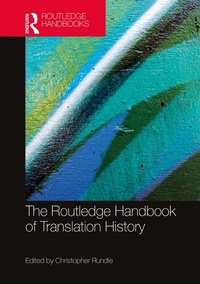
The Routledge Handbook of Translation History
1st Edition
Published on 30. September 2021
548 pages
978-1-317-27607-4 (ISBN)
Description

The Routledge Handbook of Translation History presents the first comprehensive, state-of-the-art overview of this multi-faceted disciplinary area and serves both as an introduction to carrying out research into translation and interpreting history and as a key point of reference for some of its main theoretical and methodological issues, interdisciplinary approaches, and research themes.
The Handbook brings together 30 eminent international scholars from a wide range of disciplinary backgrounds, offering examples of the most innovative research while representing a wide range of approaches, themes, and cultural contexts. The Handbook is divided into four sections: the first looks at some key methodological and theoretical approaches; the second examines some of the key research areas that have developed an interdisciplinary dialogue with translation history; the third looks at translation history from the perspective of specific cultural and religious perspectives; and the fourth offers a selection of case studies on some of the key topics to have emerged in translation and interpreting history over the past 20 years.
This Handbook is an indispensable resource for students and researchers of translation and interpreting history, translation theory, and related areas.
The Handbook brings together 30 eminent international scholars from a wide range of disciplinary backgrounds, offering examples of the most innovative research while representing a wide range of approaches, themes, and cultural contexts. The Handbook is divided into four sections: the first looks at some key methodological and theoretical approaches; the second examines some of the key research areas that have developed an interdisciplinary dialogue with translation history; the third looks at translation history from the perspective of specific cultural and religious perspectives; and the fourth offers a selection of case studies on some of the key topics to have emerged in translation and interpreting history over the past 20 years.
This Handbook is an indispensable resource for students and researchers of translation and interpreting history, translation theory, and related areas.
Reviews / Votes
'The Routledge Handbook of Translation History is a valuable intervention into the field of Translation Studies. The wide-ranging essays show how translation informs history as much as it is itself an historical event, shaped by shifting practices and specific contexts, along with the indispensable role of translators and interpreters as agents in forging the historicity of translation.'Vicente L. Rafael, University of Washington, Seattle, USA
More details
Series
Edition
1. Auflage
Language
English
Place of publication
London
United Kingdom
Publishing group
Taylor & Francis Ltd
Target group
College/higher education
Professional and scholarly
Illustrations
7 Tables, black and white; 1 Line drawings, black and white; 2 Halftones, black and white; 3 Illustrations, black and white
ISBN-13
978-1-317-27607-4 (9781317276074)
Copyright in bibliographic data and cover images is held by Nielsen Book Services Limited or by the publishers or by their respective licensors: all rights reserved.
Schweitzer Classification
Other editions
Additional editions
Christopher Rundle
The Routledge Handbook of Translation History
Book
10/2024
1st Edition
Routledge
€70.50
Shipment within 10-20 days
Christopher Rundle
The Routledge Handbook of Translation History
Book
09/2021
1st Edition
Routledge
€342.20
Shipment within 10-20 days
Person
Christopher Rundle is Associate Professor in Translation Studies at the Department of Interpreting and Translation, University of Bologna, Italy; and Research Fellow in Translation and Italian Studies at the School of Arts and Languages, University of Manchester, UK.
Content
List of Figures and Tables
Acknowledgements
List of Contributors
Introduction: the Historiography of Translation and Interpreting
PART 1
Methods and Theories
1. About the History of Translation Studies as a Discipline
2, Methodological Issues Related to the History of Interpreting
3. The Use of Corpora and other Electronic Tools in Translation History
4. Narratology and Narrative Theory
5. National Histories of Translation
6. Conceptual Tools in Translation History
7. A Science of the Times? Descriptive Translation Studies and History
8. Pierre Bourdieu
PART II
Interdisciplinary Approaches
9. Comparative Literature and Translation History
10. The Translation State: Linguistic Governmentality as Language Politics in Early Modern France
11. History of Philosophy and Translation
12. The Historical Mis-interpretation of Signed Language Interpreting
13. Book History and Translation History
14. The Philosophy of History and Translation
PART III
Cultures and Religions
15. In Search of Translation: Why was Hon'yaku not the Term of Choice in Premodern Japan?
16. The Task of Jewish Translation Revisited
17. Translation in Christian Tradition
18. Translation, Discursive Violence, and Aryanism in Early Indian Nationalism
19. Universal Wisdom, Islamic Law: Translation Discourse in Classical Arabic
20. The Development of Interpretation in the Context of Estonia's Evolving Statehood
21. Literary Translation and Nation-Building in Post-Independence Tanzania
PART IV
Key Themes
22. Feminists of All Languages Unite: Translation as Political Practice in the 1970s or a Historical View of Feminist Translation
23. Translating the Classics
24. Soldiers, Interpreters, Fixers, and Spies. A Finnish Military Interpreter Embodying the Finnish-German Brotherhood-in-Arms in 1941-1944
25. Translation and Transnational History in the Eighteenth Century
26. Travel Writing and Translation History
27. Researching the History of Audiovisual Translation
28. The International Institute of Intellectual Cooperation: Translation Policies in the Interwar Period (1925-1946)
29. Translation under Fascism and Nazism
30. Literary Translation as an Instrument of Censorship in Soviet Russia. The Institutionalisation of the Soviet translator
Index
Acknowledgements
List of Contributors
Introduction: the Historiography of Translation and Interpreting
PART 1
Methods and Theories
1. About the History of Translation Studies as a Discipline
2, Methodological Issues Related to the History of Interpreting
3. The Use of Corpora and other Electronic Tools in Translation History
4. Narratology and Narrative Theory
5. National Histories of Translation
6. Conceptual Tools in Translation History
7. A Science of the Times? Descriptive Translation Studies and History
8. Pierre Bourdieu
PART II
Interdisciplinary Approaches
9. Comparative Literature and Translation History
10. The Translation State: Linguistic Governmentality as Language Politics in Early Modern France
11. History of Philosophy and Translation
12. The Historical Mis-interpretation of Signed Language Interpreting
13. Book History and Translation History
14. The Philosophy of History and Translation
PART III
Cultures and Religions
15. In Search of Translation: Why was Hon'yaku not the Term of Choice in Premodern Japan?
16. The Task of Jewish Translation Revisited
17. Translation in Christian Tradition
18. Translation, Discursive Violence, and Aryanism in Early Indian Nationalism
19. Universal Wisdom, Islamic Law: Translation Discourse in Classical Arabic
20. The Development of Interpretation in the Context of Estonia's Evolving Statehood
21. Literary Translation and Nation-Building in Post-Independence Tanzania
PART IV
Key Themes
22. Feminists of All Languages Unite: Translation as Political Practice in the 1970s or a Historical View of Feminist Translation
23. Translating the Classics
24. Soldiers, Interpreters, Fixers, and Spies. A Finnish Military Interpreter Embodying the Finnish-German Brotherhood-in-Arms in 1941-1944
25. Translation and Transnational History in the Eighteenth Century
26. Travel Writing and Translation History
27. Researching the History of Audiovisual Translation
28. The International Institute of Intellectual Cooperation: Translation Policies in the Interwar Period (1925-1946)
29. Translation under Fascism and Nazism
30. Literary Translation as an Instrument of Censorship in Soviet Russia. The Institutionalisation of the Soviet translator
Index
