

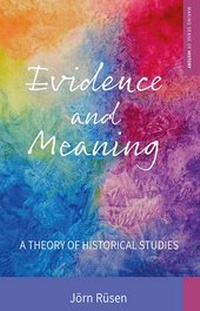
Evidence and Meaning
A Theory of Historical Studies
1st Edition
Published on 1. May 2017
266 pages
978-1-78533-539-6 (ISBN)
Description

As one of the premier historical thinkers of his generation, Joern Ruesen has made enormous contributions to the methods and theoretical framework of history as it is practiced today. In Evidence and Meaning, Ruesen surveys the seismic changes that have shaped the historical profession over the last half-century, while offering a clear, economical account of his theory of history. To traditional historiography Ruesen brings theoretical insights from philosophy, narrative theory, cultural studies, and the social sciences, developing an intricate but robust model of "historical thinking" as both a cognitive discipline and a cultural practice-one that is susceptible neither to naive empiricism nor radical relativism.
Reviews / Votes
"The English translation of Joern Ruesen's Historik is a major event in the global community of practitioners of the philosophy, methodology, logic or, broadly speaking, theory of history. Now ideas of universal value speak the universal koine...it is hard to find in all of academia a more suitable book for introducing in an orderly manner the metatheoretical results of 150 years of debates on the nature of history." * Journal of the Philosophy of History"This book is the late aggregate of numerous ground-breaking texts on the theory of history that Ruesen has published since the end of the 1960s. Ruesen has, in this book, pooled and consolidated many approaches to thinking about the theory of history... Reading and discussing Ruesen's book... could be, for all history teacher students, one leg in their journeys to becoming routined teachers and something that they will gratefully remember after many years of professional practice." * Public History Weekly
"Ruesen succeeds overall to fulfill the claim of a comprehensive fundamental synthesis. The openness and time-bound nature of a work should be understood as an invitation to develop further the theory of historiography. Ruesen himself has offered, and not only with this book, an important contribution." * H-Soz-Kult
More details
Series
Language
English
Place of publication
Oxford
United Kingdom
Target group
Professional and scholarly
Illustrations
Bibliography; Index
ISBN-13
978-1-78533-539-6 (9781785335396)
DOI
10.3167/9781785335389
Copyright in bibliographic data and cover images is held by Nielsen Book Services Limited or by the publishers or by their respective licensors: all rights reserved.
Schweitzer Classification
Other editions
Additional editions
Book
10/2019
1st Edition
Berghahn Books
€41.70
Shipment within 3-4 weeks
Book
05/2017
1st Edition
Berghahn Books
€147.20
Shipment within 3-4 weeks
Person
Joern Ruesen is Professor Emeritus of General History and Historical Culture at Witten/Herdecke University. He has also taught at the Universities of Berlin, Bochum and Bielefeld and was Director of the Institute for Advanced Study at Essen. His books and articles have been translated into twenty different languages. Dr. Ruesen is the Founding Editor of the Berghahn Books series Making Sense of History.
Content
Preface
Introduction
Chapter 1. What is Metahistory?
Chapter 2. The Foundation of Historical Thinking
How Does History come into the World?
The Elemental Forms in the Forming of Historical Meaning
An Aside: Contingency and Freedom
Experiencing Crisis and the Forming of Historical Meaning: A Typology
Chapter 3. History as Academic Discipline
Historical Meaning and Academic Study
Method and Truth
The Criteria for Truth in Historical Thinking
Academia: Intercultural Validity or Culturally Specific Relativity?
Disciplinary Matrix I: The Five Factor System
Disciplinary Matrix II: The Schema of Five Practices
Disciplinary Matrix III: The Three Levels of Forming Historical Meaning
Chapter 4. A Systematic Approach: Categories, Theories, Concepts
What is the Issue?
'History' as Concept of Meaning: A Look at Content and Form
Teleology and Reconstruction
A Problem Unresolved: The Natural World
Means of Access I: The Categorical Dimensions of the Historical
Means of Access II: The Realm of Experience Revealed
Means of Access III: The Realm of Interpretation Revealed
Means of Access IV: The Realm of Orientation Revealed
Interpretation in Context: Historical Theories
Comprehending the Matter: Historical Concepts
What is Historical Explanation?
Chapter 5. Methodology: The Rules of the Historical Method
The Methodological Character of Historical Knowledge
The Unity of the Historical Method
Heuristrics
Criticism
Interpretation
From Interpretation to Representation
Chapter 6. Topics: How We Write History
The Waywardness of Writing
Imagination, Fiction, Experience
Orders of Historiographical Representation: The Range of Possibilities
Typology of Historical Narrative I: Droysen, Nietzsche, White
Typology of Historical Narrative II: Classifying the Formation of Historical Meaning into Four Types
Typology of Historical Narrative III: Meaning and Rationality
Chapter 7. The Basis of Historical Culture
Historical Culture as Societal Practice
Historical Consciousness and Memory
Five Dimensions of Historical Culture
Orientation and Criticism: The Purpose of Historical Studies
The Role of Value Freedom
Chapter 8. Practical History: Learning, Understanding, Humanity
The Theoretical Foundation of History Didactics
Standards of Historical Judgement: Understanding and Morality
Politics of Memory and Historical Identity
Overcoming Ethnocentrism through Historical Humanism
Final Reflections: Finding Reason Between Meaning and Meaninglessness
Meaning and Meaninglessness
Once Again: The Limitations of Science
Bibliography
Index
Introduction
Chapter 1. What is Metahistory?
Chapter 2. The Foundation of Historical Thinking
How Does History come into the World?
The Elemental Forms in the Forming of Historical Meaning
An Aside: Contingency and Freedom
Experiencing Crisis and the Forming of Historical Meaning: A Typology
Chapter 3. History as Academic Discipline
Historical Meaning and Academic Study
Method and Truth
The Criteria for Truth in Historical Thinking
Academia: Intercultural Validity or Culturally Specific Relativity?
Disciplinary Matrix I: The Five Factor System
Disciplinary Matrix II: The Schema of Five Practices
Disciplinary Matrix III: The Three Levels of Forming Historical Meaning
Chapter 4. A Systematic Approach: Categories, Theories, Concepts
What is the Issue?
'History' as Concept of Meaning: A Look at Content and Form
Teleology and Reconstruction
A Problem Unresolved: The Natural World
Means of Access I: The Categorical Dimensions of the Historical
Means of Access II: The Realm of Experience Revealed
Means of Access III: The Realm of Interpretation Revealed
Means of Access IV: The Realm of Orientation Revealed
Interpretation in Context: Historical Theories
Comprehending the Matter: Historical Concepts
What is Historical Explanation?
Chapter 5. Methodology: The Rules of the Historical Method
The Methodological Character of Historical Knowledge
The Unity of the Historical Method
Heuristrics
Criticism
Interpretation
From Interpretation to Representation
Chapter 6. Topics: How We Write History
The Waywardness of Writing
Imagination, Fiction, Experience
Orders of Historiographical Representation: The Range of Possibilities
Typology of Historical Narrative I: Droysen, Nietzsche, White
Typology of Historical Narrative II: Classifying the Formation of Historical Meaning into Four Types
Typology of Historical Narrative III: Meaning and Rationality
Chapter 7. The Basis of Historical Culture
Historical Culture as Societal Practice
Historical Consciousness and Memory
Five Dimensions of Historical Culture
Orientation and Criticism: The Purpose of Historical Studies
The Role of Value Freedom
Chapter 8. Practical History: Learning, Understanding, Humanity
The Theoretical Foundation of History Didactics
Standards of Historical Judgement: Understanding and Morality
Politics of Memory and Historical Identity
Overcoming Ethnocentrism through Historical Humanism
Final Reflections: Finding Reason Between Meaning and Meaninglessness
Meaning and Meaninglessness
Once Again: The Limitations of Science
Bibliography
Index
