


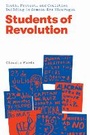
Students of Revolution
Youth, Protest, and Coalition Building in Somoza-Era Nicaragua
1st Edition
Published on 15. November 2019
277 pages
978-1-4773-1932-1 (ISBN)
Description

Students played a critical role in the Sandinista struggle in Nicaragua, helping to topple the US-backed Somoza dictatorship in 1979-one of only two successful social revolutions in Cold War Latin America. Debunking misconceptions, Students of Revolution provides new evidence that groups of college and secondary-level students were instrumental in fostering a culture of insurrection-one in which societal groups, from elite housewives to rural laborers, came to see armed revolution as not only legitimate but necessary.
Drawing on student archives, state and university records, and oral histories, Claudia Rueda reveals the tactics by which young activists deployed their age, class, and gender to craft a heroic identity that justified their political participation and to help build cross-class movements that eventually paralyzed the country. Despite living under a dictatorship that sharply curtailed expression, these students gained status as future national leaders, helping to sanctify their right to protest and generating widespread outrage while they endured the regime's repression. Students of Revolution thus highlights the aggressive young dissenters who became the vanguard of the opposition.
Drawing on student archives, state and university records, and oral histories, Claudia Rueda reveals the tactics by which young activists deployed their age, class, and gender to craft a heroic identity that justified their political participation and to help build cross-class movements that eventually paralyzed the country. Despite living under a dictatorship that sharply curtailed expression, these students gained status as future national leaders, helping to sanctify their right to protest and generating widespread outrage while they endured the regime's repression. Students of Revolution thus highlights the aggressive young dissenters who became the vanguard of the opposition.
Reviews / Votes
"As a detailed and insightful analysis of student politics during the Somoza period, Rueda's book provides an invaluable resource for scholars attempting to puzzle through the sometimes slippery political character of student politics in Nicaragua. It is a timely and informative work that makes a significant contribution to our understanding of twentieth century political history in Nicaragua and the hemisphere." (Journal of Iberian and Latin American Studies) "Joining a growing body of scholarship on student politics in Latin America during the Cold War, Rueda's book illustrates the profound impact of student activism in a small country which did not see major uprisings in 1968." (New Books in Latin American Studies) "[A] comprehensive book on how Nicaraguan students during the Somoza dictatorships...fought for political legitimacy and then used that authority to shape the society around them...Of extraordinary value are the unusual sources to which professor Rueda had access: oral histories through interviews with young students, advisers, parents, and university administrators; records in university archives; and flyers, publications, and student newspapers and correspondence." (The Americas) "Students of Revolution is an excellent book which takes on the difficult task of tracking student activism over time...Rueda keeps her focus on students while also providing the national context of the Somoza era years. The book will be of interest to a broad range of historians of Latin America's Cold War." (Journal of Social History) "Students of Revolution provides innovative research on the role of student movements in the history of revolution in Latin America during the twentieth century...Rueda's window into the fascinating history of Cold War politics and youth culture in Latin America is of special relevance for those interested in the history of social movements and politics in institutions of higher education." (History of Education Quarterly) "As a detailed and insightful analysis of student politics during the Somoza period, Rueda's book provides an invaluable resource for scholars attempting to puzzle through the sometimes slippery political character of student politics in Nicaragua. It is a timely and informative work that makes a significant contribution to our understanding of twentieth century political history in Nicaragua and the hemisphere." (Journal of Iberian and Latin American Research) "A lively history of the student movement in Nicaragua...[Students of Revolution] makes a useful contribution on the role of students in broad social struggles. Rueda shows that students, working with revolutionary organisations, campesinos, workers and unions, the Christian movement, small businesses, and other sectors, have been a driving force for social change." (Bulletin of Latin American Research)More details
Language
English
Place of publication
Austin, TX
United States
Target group
Professional and scholarly
ISBN-13
978-1-4773-1932-1 (9781477319321)
Copyright in bibliographic data and cover images is held by Nielsen Book Services Limited or by the publishers or by their respective licensors: all rights reserved.
Schweitzer Classification
Other editions
Additional editions
Book
11/2019
University of Texas Press
€64.57
Shipment within 15-20 days
Content
Acknowledgments
List of Acronyms
Introduction
Chapter 1. The Origins of Student Anti-Somoza Consciousness, 1937-1944
Chapter 2. Protest and Repression during the "Democratic Effervescence," 1944-1948
Chapter 3. Defending Student Dignity, 1950-1956
Chapter 4. "La Pequena Gran Republica," 1956-1959
Chapter 5. Reform vs. Revolution, 1960-1968
Chapter 6. Radicalizing Youth, 1966-1972
Chapter 7. Un Trabajo de Hormiga, 1970-1979
Conclusion
Notes
Bibliography
Index
List of Acronyms
Introduction
Chapter 1. The Origins of Student Anti-Somoza Consciousness, 1937-1944
Chapter 2. Protest and Repression during the "Democratic Effervescence," 1944-1948
Chapter 3. Defending Student Dignity, 1950-1956
Chapter 4. "La Pequena Gran Republica," 1956-1959
Chapter 5. Reform vs. Revolution, 1960-1968
Chapter 6. Radicalizing Youth, 1966-1972
Chapter 7. Un Trabajo de Hormiga, 1970-1979
Conclusion
Notes
Bibliography
Index
