

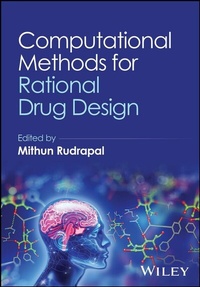
Computational Methods for Rational Drug Design
Description

Comprehensive resource covering computational tools and techniques for the development of cost-effective drugs to combat diseases, with specific disease examples
Computational Methods for Rational Drug Design covers the tools and techniques of drug design with applications to the discovery of small molecule-based therapeutics, detailing methodologies and practical applications and addressing the challenges of techniques like AI/ML and drug design for unknown receptor structures. Divided into 23 chapters, the contributors address various cutting-edge areas of therapeutic importance such as neurodegenerative disorders, cancer, multi-drug resistant bacterial infections, inflammatory diseases, and viral infections.
Edited by a highly qualified academic with significant research contributions to the field, Computational Methods for Rational Drug Design explores topics including:
- Computer-assisted methods and tools for structure- and ligand-based drug design, virtual screening and lead discovery, and ADMET and physicochemical assessments
- In silico and pharmacophore modeling, fragment-based design, de novo drug design and scaffold hopping, network-based methods and drug discovery
- Rational design of natural products, peptides, enzyme inhibitors, drugs for neurodegenerative disorders, anti-inflammatory therapeutics, antibacterials for multi-drug resistant infections, and antiviral and anticancer therapeutics
- Protac and protide strategies in drug design, intrinsically disordered proteins (IDPs) in drug discovery and lung cancer treatment through ALK receptor-targeted drug metabolism and pharmacokinetics
Helping readers seamlessly navigate the challenges of drug design, Computational Methods for Rational Drug Design is an essential reference for pharmaceutical and medicinal chemists, biochemists, pharmacologists, and phytochemists, along with molecular modeling and computational drug discovery professionals.
More details
Other editions
Additional editions
Person
Mithun Rudrapal, PhD, FIC, CChem (India) is Associate Professor at the Department of Pharmaceutical Sciences at Vignan's Foundation for Science, Technology & Research, Guntur, India. He has over a hundred publications in peer-reviewed international journals and more than a dozen books, including three with Wiley.
Content
List of Contributors xxi
Preface xxvii
1 Molecular Modeling and Drug Design 1
Monalisa Kesh, Abhirup Ghosh, and Diptanil Biswas
1.1 Introduction 1
1.2 Types of Molecular Models 4
1.3 Computational Methods in Drug Discovery 7
1.4 Potential Use and Application of AI in Drug Designing 12
1.5 Limitations of Current Methods 14
1.6 Case Studies 16
1.7 Molecular Docking 17
1.8 Conclusion and Future Works 19
References 20
2 Bioactive Small Molecules and Drug Discovery 25
Ashish Shah, Vaishali Patel, Sathiaseelan Perumal, Riddhi Dave, Neha Zachariah, Ghanshyam Parmar, and Jay Mukesh Chudasama
2.1 Introduction 25
2.2 Importance of Computational Methods in Bioactive Small-Molecules Discovery 26
2.3 Natural Products in Bioactive Small-Molecule Discovery 30
2.4 Role of Density Functional Theory (DFT) Studies in Bioactive Small-Molecule Discovery 33
2.5 Application of DFT to Bioactive Small Molecules 34
2.6 Factors Affecting the Choice of Bioactive Molecules in Drug Discovery 36
2.7 Conclusion 43
References 43
3 Novel Drug Targets for Small Molecule-based Drug Discovery 49
Raghu Ram Achar, Ipsita Panigrahi, Aditi Singh, N. Chandana, and Shivananju Nanjunda Swamy
3.1 Introduction 49
3.2 Drug Target Identification 51
3.3 Classification of Novel Drug Targets 53
3.4 Small Molecules as Drugs 57
3.5 Conclusion 60
References 65
4 Computer-assisted Methods and Tools for Structure- and Ligand-based Drug Design 69
Saurav Kumar Mishra, Sneha Roy, Tabsum Chhetri, and John J. Georrge
4.1 Introduction 69
4.2 Structure-Based Drug Discovery Concept 69
4.3 Ligand-Based Drug Discovery Concept 81
4.4 Structure- and Ligand-Based Assisted Studies 84
4.5 Advancement and Challenges in SBDD and LBDD 90
4.6 Conclusion 90
References 91
5 Virtual Screening and Lead Discovery 97
Nisha Kumari Singh, Nigam Jyoti Maiti, Manshi Mishra, Shantanu Raj, Gourav Rakshit, Rahul Ghosh, and Sharanya Roy
5.1 Introduction to Virtual Screening and Lead Discovery 97
5.2 Molecular Targets and Biomolecular Structures 99
5.3 Virtual Screening Approaches 99
5.4 Databases and Compound Collections 101
5.5 Molecular Docking 102
5.6 Pharmacophore Modeling 104
5.7 Quantitative Structure-Activity Relationship (QSAR) 105
5.8 Machine Learning and AI in Virtual Screening 107
5.9 Hit-to-Lead Optimization 109
5.10 Case Studies and Examples 112
5.11 Challenges and Future Directions 114
5.12 Ethical and Regulatory Considerations 116
5.13 Conclusion 116
References 117
6 ADMET and Physicochemical Assessments in Drug Design 123
Ulviye Acar Çevik, Aysen Isik, and Abdüllatif Karakaya
6.1 ADMET 123
6.2 Physicochemical Assessments 135
References 144
7 In Silico Modeling and Drug Design 153
Sonali S. Shinde, Sanket S. Rathod, and Sohan S. Chitlange
7.1 Introduction 153
7.2 Target Identification 154
7.3 Computer-Aided Drug Design 156
7.4 ADMET Assessment 160
7.5 Conclusion 160
References 161
8 Pharmacophore Modeling in Drug Design 167
Rahul Ghosh, Sharanya Roy, Gourav Rakshit, Nisha Kumari Singh, and Nigam Jyoti Maiti
8.1 Introduction 167
8.2 Essential Concepts in Pharmacophore Hypothesis Generation 170
8.3 Diverse Approaches to Pharmacophore Modeling 173
8.4 Application of Pharmacophore Modeling 176
8.5 Emerging Trends in Pharmacophore Model Development 180
8.6 Case Studies 183
8.7 Challenges in Pharmacophore Modeling 186
8.8 Conclusion 187
Acknowledgments 188
References 188
9 Scaffold Hopping and De Novo Drug Design 195
Shrimanti Chakraborty, Soumi Chakraborty, Biprajit Sarkar, Rahul Ghosh, Sharanya Roy, Nisha Kumari Singh, and Gourav Rakshit
9.1 Introduction 195
9.2 Scaffold Hopping 196
9.3 De Novo Drug Design 201
9.4 Results and Discussion 211
9.5 Software Tools for SH (Scaffold Hopping) and De Novo Design Selection 214
9.6 Case Study 214
9.7 Conclusion 215
References 216
10 Fragment-based Drug Design and Drug Discovery 221
André M. Oliveira and Mithun Rudrapal
10.1 Introduction 221
10.2 The Process of Finding Fragments 222
10.3 FBDD Strategies 227
10.4 Case Studies 228
10.5 Conclusion and Future Perspectives 230
References 232
11 AI/ML Approaches in Drug Design 237
Kevser Kübra Kirboga
11.1 Introduction 237
11.2 Traditional Drug Design Methods 237
11.3 AI/ML Landscape in Drug Design 239
11.4 Ethics, Reliability, and Regulatory Issues 244
11.5 Future Directions 246
11.6 Conclusion 247
References 247
12 Network-based Methods in Drug Discovery 255
Ghanshyam Parmar, Ashish Shah, Jay Mukesh Chudasama, Priya Kashav, and Vanesa James
12.1 Introduction 255
12.2 Network Pharmacology: Practical Guide 260
12.3 Ayurveda and Traditional Indian Medicine 269
12.4 Network Pharmacology in Herbal Remedies 273
12.5 Conclusion and Future Prospects 277
References 278
13 Rational Design of Natural Products for Drug Discovery 285
Ankita Kashyap, Anupam Sarma, Bhrigu Kumar Das, and Ashis Kumar Goswami
13.1 Introduction 285
13.2 Natural Products for the Development of New Drugs 286
13.3 Criteria for Selecting Natural Products for Drug Design 288
13.4 Importance of Biodiversity in Sourcing Natural Products 288
13.5 Structural Elucidation of Natural Products 289
13.6 In Silico Computational Tools for Rational Drug Discovery from Natural Sources 290
13.7 Formulation Challenges with Natural Products 298
13.8 Quality by Design (QbD) Approaches 300
13.9 Conclusion 303
References 304
14 Design of Enzyme Inhibitors in Drug Discovery 311
Koyel Kar
14.1 Introduction 311
14.2 Importance of Enzyme Inhibition as a Strategy for Modulating Enzyme Activity 312
14.3 Classification of Enzyme Inhibitors 312
14.4 Strategies Employed in the Design and Development of Enzyme Inhibitors 314
14.5 Limitations and Challenges 321
14.6 Future Directions 321
14.7 Conclusion 322
References 322
15 Rational Design of Peptides and Protein Molecules in Drug Discovery 327
Ipsa Padhy, Abanish Biswas, Chandan Nayak, and Tripti Sharma
15.1 Introduction 327
15.2 Peptides as Therapeutics 328
15.3 New Technologies for Peptide-Based Drug Discovery 344
15.4 Computational Approaches in Peptide Drug Discovery 347
15.5 Conclusion 350
References 351
16 Rational Design of Drugs for Neurodegenerative Disorders 363
Priyanka Kamaria
16.1 Introduction 363
16.2 Common Mechanism of Neurodegeneration 364
16.3 Brief Overview of Computational Methods in Drug Design 365
16.4 Parkinson's Disease as Prevalent Neurodegenerative Disorder 367
16.5 Conclusion 382
References 382
17 Rational Design of Anti-inflammatory Therapeutics 389
Kratika Singh, Anmol Gupta, Irum Siddiqui, Ashapurna Sinha, Mukesh Kumar Patwa, and Urmila Singh
17.1 Introduction 389
17.2 Navigating Inflammation and its Microenvironment 390
17.3 The Demand for Advanced Anti-inflammatory Medications 393
17.4 Natural Products Used for Anti-inflammatory Drug Development: Systematic Approach in Use of Different Animal Models for Evaluations 394
17.5 Rational Design of Anti-inflammatory Agents 394
17.6 Conclusion and Future Perspectives 397
Authors' Contribution 397
References 397
18 Rational Design of Antibacterial Agents for Multidrug-Resistant Infections 403
Sathish Kumar Konidala, Podila Naresh, Risy Namratha Jamullamudi, Kamma Harsha Sri, Richie Rashmin Bhandare, and Afzal Basha Shaik
18.1 Introduction 403
18.2 Treatment 404
18.3 Antibacterial Resistance 405
18.4 Medicinal Chemistry Strategies for the Design of Antibacterials Combating Multidrug-Resistant Bacterial Infections 408
18.5 Summary and Conclusion 418
References 418
19 Rational Design of Antiviral Therapeutics 423
Sneha Dokhale, Samiksha Garse, Shine Devarajan, Vaishnavi Thakur, and Shaunak Kolhapure
19.1 Introduction to Antiviral Therapeutics 423
19.2 Targets for Antiviral Therapeutics and Inhibition Strategies 427
19.3 Rational Strategies for Antiviral Therapeutics 431
19.4 Conclusion 437
References 438
20 Rational Design of Anticancer Therapeutics 445
Debarupa Dutta Chakraborty and Prithviraj Chakraborty
20.1 Introduction 445
20.2 Rational Design of Nanomedicine for Cancer Treatment 446
20.3 The CAPIR Cascade: A Nanomedicine Strategy for Administering Cancer Medications 447
20.4 Rational Regulation of Nanoparticle's Physicochemical Characteristics 447
20.5 Some Approaches of Rational Drug Design in Anticancer Theranostics 448
20.6 Artificial Intelligence's Progress in Anticancer Drug Development 450
20.7 Conclusion 452
References 452
21 PROTAC and ProTide Strategies in Drug Design 457
Maitreyee Mukherjee
21.1 Introduction 457
21.2 Drug Design: Past to Present 458
21.3 PROTAC Strategy in Drug Design 459
21.4 Emergence of ProTide Technology in Drug Design 465
21.5 Approaches of ProTides in Drug Development 466
21.6 Implementation of ProTides as Nucleoside Analogs 470
21.7 Conclusion 471
References 471
22 Advancing Lung Cancer Treatment Through ALK Receptor-targeted Drug Metabolism and Pharmacokinetics 477
Vivek Yadav, Shikha Goswami, Rajiv Kumar Tonk, and Mithun Rudrapal
22.1 Introduction 477
22.2 ALK Receptor and Its Role 478
22.3 Diagnostic Methods for ALK Rearranged NSCLC 479
22.4 ALK Inhibitors Drug Development 481
22.5 Drug Metabolism of Reported ALK Inhibitor 484
22.6 Resistance and Mutations 487
22.7 Conclusion 488
Conflict of Interest 488
References 489
23 Targeting Intrinsically Disordered Proteins (IDPs) in Drug Discovery: Opportunities and Challenges 493
Sridhar Vemulapalli
23.1 Introduction 493
23.2 Properties and Significance of IDPs 493
23.3 Challenges in Targeting IDPs 496
23.4 Computational Tools for IDP Analysis 499
23.5 Rational Design Approaches for IDP Inhibition 500
23.6 Case Studies 505
23.7 Future Directions 508
23.8 Conclusions 509
References 510
Index 519
List of Contributors
Raghu Ram Achar
Division of Biochemistry
School of Life Sciences
JSS Academy of Higher Education & Research
Mysuru, Karnataka
India
Department of Biotechnology
JSS Science and Technology University
Mysuru, Karnataka
India
Richie Rashmin Bhandare
Department of Pharmaceutical Sciences
College of Pharmacy and Health Sciences
Ajman University, Ajman
United Arab Emirates
Centre of Medical and Bio-allied Health
Sciences Research
Ajman University, Ajman
United Arab Emirates
Abanish Biswas
Department of Pharmaceutical Sciences
and Technology
Birla Institute of Technology
Ranchi, Jharkhand
India
Diptanil Biswas
Department of Statistical Genomics
National Institute of Biomedical Genomics
Kalyani, West Bengal
India
Ulviye Acar Çevik
Department of Pharmaceutical Chemistry
Faculty of Pharmacy
Anadolu University, Eskisehir
Turkey
Debarupa Dutta Chakraborty
Royal School of Pharmacy
The Assam Royal Global University
Guwahati, Assam
India
Prithviraj Chakraborty
Royal School of Pharmacy
The Assam Royal Global University
Guwahati, Assam
India
Shrimanti Chakraborty
Department of Pharmaceutical Sciences
and Technology
Birla Institute of Technology
Ranchi, Jharkhand
India
Soumi Chakraborty
Department of Pharmaceutical Sciences
and Technology
Birla Institute of Technology
Ranchi, Jharkhand
India
N. Chandana
Division of Biochemistry, School of Life
Sciences
JSS Academy of Higher Education & Research
Mysuru, Karnataka
India
Department of Biotechnology
JSS Science and Technology University
Mysuru, Karnataka
India
Tabsum Chhetri
Department of Bioinformatics
University of North Bengal
Darjeeling, West Bengal
India
Sohan S. Chitlange
Department of Pharmaceutical Chemistry
Dr. D. Y. Patil Institute of Pharmaceutical
Sciences and Research
Pune, Maharashtra
India
Jay Mukesh Chudasama
Department of Pharmacy
Sumandeep Vidyapeeth Deemed to be
University
Vadodara, Gujarat
India
Bhrigu Kumar Das
Pharmacology and Toxicology Laboratory
School of Pharmaceutical Sciences
Girijananda Chowdhury University, Guwahati
India
Riddhi Dave
Gujarat Arts and Science College
Ahmedabad, Gujarat
India
Shine Devarajan
School of Biotechnology and Bioinformatics
D Y Patil Deemed to be University
Navi Mumbai, Maharashtra
India
Sneha Dokhale
Department of Biotechnology
B. K. Birla College of Arts, Science &
Commerce
Kalyan, Maharashtra
India
Samiksha Garse
School of Biotechnology and Bioinformatics
D Y Patil Deemed to be University
Navi Mumbai, Maharashtra
India
John J. Georrge
Department of Bioinformatics
University of North Bengal
Darjeeling, West Bengal
India
Abhirup Ghosh
School of Biosciences and Technology
Vellore Institute of Technology
Vellore, Tamil Nadu
India
Rahul Ghosh
Department of Pharmaceutical Sciences and
Technology
Birla Institute of Technology
Ranchi, Jharkhand
India
Ashis Kumar Goswami
Department of Pharmaceutical Sciences
Faculty of Science and Engineering
Dibrugarh University
Assam
India
Shikha Goswami
Department of Pharmacology
Delhi Pharmaceutical Sciences and Research
University
New Delhi
India
Anmol Gupta
Department of Biosciences
Integral University, Lucknow
Uttar Pradesh, India
Aysen Isik
Department of Biochemistry
Faculty of Science, Selçuk University, Konya
Turkey
Vanesa James
Department of Regulatory Affairs and Quality
Assurance
LJ Institute of Pharmacy
Ahmedabad, Gujarat
India
Risy Namratha Jamullamudi
Department of Pharmacy
Koneru Lakshmaiah Education Foundation
Vaddeswaram, AP
India
Priyanka Kamaria
Department of Pharmaceutical Chemistry
KLE College of Pharmacy
Bangalore
India
Koyel Kar
Department of Pharmaceutical Chemistry
BCDA College of Pharmacy and Technology
Kolkata, West Bengal
India
Abdüllatif Karakaya
Department of Pharmaceutical Chemistry
Faculty of Pharmacy, Zonguldak Bulent Ecevit
University, Zonguldak
Turkey
Priya Kashav
Department of Pharmacy
Sumandeep Vidyapeeth Deemed to be
University
Vadodara, Gujarat
India
Ankita Kashyap
Institute of Pharmacy
Assam Medical College and Hospital
Dibrugarh
India
Monalisa Kesh
Centre for Digital Health
Indian Institute of Technology Bombay
Mumbai
India
Kevser Kübra Kırboga
Faculty of Engineering, Bioengineering
Department
Bilecik Seyh Edebali University
Bilecik
Türkiye
Shaunak Kolhapure
School of Biotechnology and Bioinformatics
D Y Patil Deemed to be University
Navi Mumbai, Maharashtra
India
Sathish Kumar Konidala
Department of Pharmaceutical Sciences
School of Biotechnology and Pharmaceutical
Sciences
Vignan's Foundation for Science, Technology
and Research
Guntur, AP
India
Nigam Jyoti Maiti
Department of Pharmaceutical Sciences and
Technology
Birla Institute of Technology
Ranchi, Jharkhand
India
Manshi Mishra
Department of Pharmaceutical Sciences and
Technology
Birla Institute of Technology
Ranchi, Jharkhand
India
Saurav Kumar Mishra
Department of Bioinformatics
University of North Bengal
Darjeeling, West Bengal
India
Maitreyee Mukherjee
Department of Pharmaceutical Technology
NSHM Knowledge Campus - Group of
Institutions
Kolkata 700053,West Bengal
India
Podila Naresh
Department of Pharmaceutical Sciences
School of Biotechnology and Pharmaceutical
Sciences
Vignan's Foundation for Science, Technology
and Research
Guntur, AP
India
Chandan Nayak
School of Pharmaceutical Education and
Research
Berhampur University
Berhampur, Odisha
India
André M. Oliveira
Department of Environment Studies
Federal Centre of Technological Education of
Minas Gerais
Contagem, Minas Gerais
Brazil
Ipsa Padhy
Department of Pharmaceutical Chemistry
School of Pharmaceutical Sciences
Siksha 'O' Anusandhan (Deemed to be University)
Bhubaneswar, Odisha
India
Ipsita Panigrahi
Division of Biochemistry
School of Life Sciences
JSS Academy of Higher Education & Research
Mysuru, Karnataka
India
Department of Biotechnology
JSS Science and Technology University
Mysuru, Karnataka
India
Ghanshyam Parmar
Department of Pharmacy
Sumandeep Vidyapeeth (Deemed to be
University)
Vadodara, Gujarat
India
Vaishali Patel
Department of Pharmaceutics
Laxminarayandev College of Pharmacy
Bharuch, Gujarat
India
Mukesh Kumar Patwa
Department of Microbiology
King George Medical University
Lucknow, Uttar Pradesh
India
Sathiaseelan Perumal
Department of Chemistry
Bishop Heber College
Tiruchirappalli, Tamil Nadu
India
Shantanu Raj
Department of Pharmaceutical Sciences and
Technology
Birla Institute of Technology
Ranchi, Jharkhand
India
Gourav Rakshit
Department of Pharmaceutical Sciences &
Technology
Birla Institute of Technology
Ranchi, Jharkhand
India
Sanket S. Rathod
Department of Pharmaceutical Chemistry
Bharati Vidyapeeth College of Pharmacy
Kolhapur, Maharashtra
India
Sharanya Roy
Department of Pharmaceutical Sciences and
Technology
Birla Institute of Technology
Ranchi, Jharkhand
India
Sneha Roy
Department of Bioinformatics
University of North Bengal
Darjeeling, West Bengal
India
Mithun Rudrapal
Department of Pharmaceutical Sciences
School of Biotechnology and Pharmaceutical
Sciences
Vignan's Foundation for Science, Technology
& Research
Guntur, Andhra Pradesh
India
Biprajit Sarkar
Department of Pharmaceutical Sciences and
Technology
Birla Institute of Technology
Ranchi, Jharkhand
India
Anupam Sarma
Advanced Drug Delivery Laboratory
School of Pharmaceutical Sciences
Girijananda Chowdhury University
Guwahati
India
Ashish Shah
Department of Pharmacy
Sumandeep Vidyapeeth Deemed to be University
Vadodara, Gujarat
India
Afzal Basha...
