

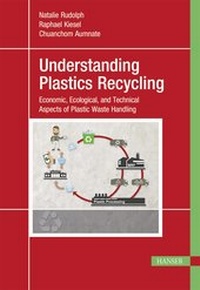
Understanding Plastics Recycling
Economic, Ecological, and Technical Aspects of Plastic Waste Handling
1st Edition
Published on 8. May 2017
136 pages
978-1-56990-677-4 (ISBN)
Description

This book shows the true and often-underestimated market potential of plastics recycling, with analysis from economic, ecological, and technical perspectives. It is aimed at both technical and non-technical readers, including decision makers in material suppliers, plastic product manufacturers, governmental agencies, educators, and anyone with a general interest in plastics recycling.
An overview of waste handling systems with a focus on the U.S. market is provided. Different methods of waste handling are compared from both economic and ecological perspectives.
Since plastic waste recycling is essential from an ecological point of view, common strategies and new approaches to both increase the recycling rate and improve recycling economically and technically are presented. This includes processing and material properties of recycled plastics.
Finally, a worldwide outlook of plastic recycling is provided with analysis of additional worldwide markets, encompassing highly developed, fast-developing, and less developed countries.
Bonus: all the data and calculations presented in the book are provided as downloadable spreadsheets for the reader's own analysis and updates.
An overview of waste handling systems with a focus on the U.S. market is provided. Different methods of waste handling are compared from both economic and ecological perspectives.
Since plastic waste recycling is essential from an ecological point of view, common strategies and new approaches to both increase the recycling rate and improve recycling economically and technically are presented. This includes processing and material properties of recycled plastics.
Finally, a worldwide outlook of plastic recycling is provided with analysis of additional worldwide markets, encompassing highly developed, fast-developing, and less developed countries.
Bonus: all the data and calculations presented in the book are provided as downloadable spreadsheets for the reader's own analysis and updates.
More details
Other editions
Additional editions
Natalie Rudolph | Raphael Kiesel | Chuanchom Aumnate
Understanding Plastics Recycling
Economic, Ecological, and Technical Aspects of Plastic Waste Handling
Book
05/2017
1st Edition
Hanser Publications
€70.00
Article exhausted; check for reprint
Persons
Dr.-Ing. Natalie Rudolph is Assistant Professor at the University of Wisconsin-Madison College of Engineering. She was previously Team Leader at the Fraunhofer Institute ICT, Germany, and Chief Engineer of the Polymer Engineering Center at the University of Wisconsin-Madison.
Raphael Kiesel, M.S. is a researcher at the Fraunhofer Institute for Production Technology, Germany. He was previously a Research Assistant at the University of Wisconsin-Madison.
Chuanchom Aumnate, Ph.D. is Research Assistant at the University of Wisconsin-Madison. She was previously a Research Assistant at the National Metal and Materials Technology Center, Thailand.
Raphael Kiesel, M.S. is a researcher at the Fraunhofer Institute for Production Technology, Germany. He was previously a Research Assistant at the University of Wisconsin-Madison.
Chuanchom Aumnate, Ph.D. is Research Assistant at the University of Wisconsin-Madison. She was previously a Research Assistant at the National Metal and Materials Technology Center, Thailand.
Content
1 - Acknowledgements [Seite 7]
2 - Foreword [Seite 9]
3 - Contents [Seite 11]
4 - Acronyms and Other Abbreviations [Seite 15]
5 - 1 All About the Waste [Seite 17]
5.1 - 1.1 Municipal Solid Waste- A Daily Companion [Seite 17]
5.2 - 1.2 Management Methods for Municipal Solid Waste [Seite 19]
5.2.1 - 1.2.1 Landfilling [Seite 20]
5.2.2 - 1.2.2 Incineration with Energy Recovery (Waste-to-Energy) [Seite 21]
5.2.3 - 1.2.3 Recycling [Seite 23]
6 - 2 Plastics-Increasing Value, Decreasing Lifetime [Seite 25]
7 - 3 Plastics Recycling-Conservation of Valuable Resources [Seite 29]
7.1 - 3.1 Plastics Recycling Methods [Seite 30]
7.1.1 - 3.1.1 Mechanical Recycling [Seite 30]
7.1.2 - 3.1.2 Chemical Recycling [Seite 31]
7.2 - 3.2 Recycling Different Types of Plastic Waste [Seite 31]
7.2.1 - 3.2.1 Preconsumer Waste [Seite 31]
7.2.1.1 - 3.2.1.1 Manufacturing Scrap [Seite 31]
7.2.1.2 - 3.2.1.2 Dilution Effect [Seite 31]
7.2.2 - 3.2.2 Postconsumer Waste [Seite 33]
7.2.2.1 - 3.2.2.1 Packaging Plastic Waste [Seite 35]
7.2.2.2 - 3.2.2.2 Building and Construction Plastic Waste [Seite 36]
7.2.2.3 - 3.2.2.3 Automotive Plastic Waste [Seite 37]
7.2.2.4 - 3.2.2.4 Agricultural Plastic Waste [Seite 37]
7.2.2.5 - 3.2.2.5 Waste from Electrical and Electronic Equipment (WEEE) [Seite 38]
7.3 - 3.3 Sorting Processes for Plastic Waste [Seite 39]
7.3.1 - 3.3.1 Manual Sorting [Seite 39]
7.3.2 - 3.3.2 Automated Sorting [Seite 39]
7.3.2.1 - 3.3.2.1 Float-and-Sink Sorting [Seite 39]
7.3.2.2 - 3.3.2.2 Froth-Flotation Sorting [Seite 40]
7.3.2.3 - 3.3.2.3 Near-Infrared Sorting [Seite 40]
7.3.2.4 - 3.3.2.4 X-Ray Fluorescence [Seite 40]
7.3.2.5 - 3.3.2.5 Laser-Aided Identification [Seite 40]
7.3.2.6 - 3.3.2.6 Marker Systems [Seite 40]
7.4 - 3.4 Plastic Degradation Mechanisms [Seite 41]
7.4.1 - 3.4.1 Mechanical Degradation [Seite 42]
7.4.2 - 3.4.2 Thermal Degradation [Seite 42]
7.4.3 - 3.4.3 Thermal Oxidative Degradation [Seite 43]
7.4.4 - 3.4.4 Effect of Degradation on Processing and Service-Life Properties [Seite 43]
7.5 - 3.5 Contaminants [Seite 51]
7.6 - 3.6 Conclusion: Technical Feasibility of Plastics Recycling [Seite 51]
8 - 4 Economic Analysis of Plastic Waste Handling [Seite 55]
8.1 - 4.1 Fundamentals of Economic Analysis [Seite 55]
8.1.1 - 4.1.1 Economic Efficiency Calculation [Seite 55]
8.1.2 - 4.1.2 Static Economic Efficiency Calculation [Seite 56]
8.1.3 - 4.1.3 Profit Comparison Method [Seite 56]
8.2 - 4.2 Economic Analysis of Landfilling [Seite 57]
8.3 - 4.3 Economic Analysis of Incineration with Energy Recovery (Waste-to-Energy Facilities) [Seite 62]
8.4 - 4.4 Economic Analysis of Plastics Recycling [Seite 66]
8.4.1 - 4.4.1 Materials Recovery Facility Costs [Seite 67]
8.4.2 - 4.4.2 Plastic Reprocessing Costs [Seite 71]
8.4.3 - 4.4.3 Revenues from Selling Recycled Plastic [Seite 74]
8.4.4 - 4.4.4 Profitability [Seite 75]
8.4.5 - 4.4.5 Oil Price as a Factor in Profitability of Plastics Recycling [Seite 75]
8.5 - 4.5 Conclusion [Seite 78]
9 - 5 Environmental Analysis of Plastic Waste Handling [Seite 83]
9.1 - 5.1 Environmental Analysis of Landfilling [Seite 83]
9.2 - 5.2 Environmental Analysis of Incineration with Energy Recovery (Waste-to-Energy Facilities) [Seite 85]
9.3 - 5.3 Environmental Analysis of Recycling [Seite 86]
9.4 - 5.4 Conclusion [Seite 88]
10 - 6 Optimization of Plastics Recycling [Seite 91]
10.1 - 6.1 Optimization I: Reduction of Sorting Processes [Seite 91]
10.2 - 6.2 Optimization II: Upcycling of Plastic Waste by Blending [Seite 94]
10.2.1 - 6.2.1 Additional Costs of LDPE-PP Recycling [Seite 97]
10.2.2 - 6.2.2 Additional Revenues of LDPE-PP Recycling [Seite 99]
10.2.3 - 6.2.3 Total Profit of Optimization II [Seite 99]
10.3 - 6.3 Optimization III: Increasing the Recycling Rate [Seite 101]
11 - 7 Plastic Waste of the World: Increasing Potential of Recycling [Seite 103]
11.1 - 7.1 Plastic Waste Handling in Europe [Seite 106]
11.2 - 7.2 Plastic Waste Handling in China [Seite 111]
11.3 - 7.3 Plastic Waste in the Future [Seite 116]
12 - 8 Appendix [Seite 119]
12.1 - 8.1 Economic Analysis of Landfilling [Seite 120]
12.2 - 8.2 Economic Analysis of WTE [Seite 123]
12.3 - 8.3 Economic Analysis of Recycling [Seite 125]
12.4 - 8.4 Optimization I: Reduction of Sorting Processes [Seite 128]
12.5 - 8.5 Optimization II: Upcycling of Plastic Waste by Blending [Seite 129]
13 - Index [Seite 131]
2 - Foreword [Seite 9]
3 - Contents [Seite 11]
4 - Acronyms and Other Abbreviations [Seite 15]
5 - 1 All About the Waste [Seite 17]
5.1 - 1.1 Municipal Solid Waste- A Daily Companion [Seite 17]
5.2 - 1.2 Management Methods for Municipal Solid Waste [Seite 19]
5.2.1 - 1.2.1 Landfilling [Seite 20]
5.2.2 - 1.2.2 Incineration with Energy Recovery (Waste-to-Energy) [Seite 21]
5.2.3 - 1.2.3 Recycling [Seite 23]
6 - 2 Plastics-Increasing Value, Decreasing Lifetime [Seite 25]
7 - 3 Plastics Recycling-Conservation of Valuable Resources [Seite 29]
7.1 - 3.1 Plastics Recycling Methods [Seite 30]
7.1.1 - 3.1.1 Mechanical Recycling [Seite 30]
7.1.2 - 3.1.2 Chemical Recycling [Seite 31]
7.2 - 3.2 Recycling Different Types of Plastic Waste [Seite 31]
7.2.1 - 3.2.1 Preconsumer Waste [Seite 31]
7.2.1.1 - 3.2.1.1 Manufacturing Scrap [Seite 31]
7.2.1.2 - 3.2.1.2 Dilution Effect [Seite 31]
7.2.2 - 3.2.2 Postconsumer Waste [Seite 33]
7.2.2.1 - 3.2.2.1 Packaging Plastic Waste [Seite 35]
7.2.2.2 - 3.2.2.2 Building and Construction Plastic Waste [Seite 36]
7.2.2.3 - 3.2.2.3 Automotive Plastic Waste [Seite 37]
7.2.2.4 - 3.2.2.4 Agricultural Plastic Waste [Seite 37]
7.2.2.5 - 3.2.2.5 Waste from Electrical and Electronic Equipment (WEEE) [Seite 38]
7.3 - 3.3 Sorting Processes for Plastic Waste [Seite 39]
7.3.1 - 3.3.1 Manual Sorting [Seite 39]
7.3.2 - 3.3.2 Automated Sorting [Seite 39]
7.3.2.1 - 3.3.2.1 Float-and-Sink Sorting [Seite 39]
7.3.2.2 - 3.3.2.2 Froth-Flotation Sorting [Seite 40]
7.3.2.3 - 3.3.2.3 Near-Infrared Sorting [Seite 40]
7.3.2.4 - 3.3.2.4 X-Ray Fluorescence [Seite 40]
7.3.2.5 - 3.3.2.5 Laser-Aided Identification [Seite 40]
7.3.2.6 - 3.3.2.6 Marker Systems [Seite 40]
7.4 - 3.4 Plastic Degradation Mechanisms [Seite 41]
7.4.1 - 3.4.1 Mechanical Degradation [Seite 42]
7.4.2 - 3.4.2 Thermal Degradation [Seite 42]
7.4.3 - 3.4.3 Thermal Oxidative Degradation [Seite 43]
7.4.4 - 3.4.4 Effect of Degradation on Processing and Service-Life Properties [Seite 43]
7.5 - 3.5 Contaminants [Seite 51]
7.6 - 3.6 Conclusion: Technical Feasibility of Plastics Recycling [Seite 51]
8 - 4 Economic Analysis of Plastic Waste Handling [Seite 55]
8.1 - 4.1 Fundamentals of Economic Analysis [Seite 55]
8.1.1 - 4.1.1 Economic Efficiency Calculation [Seite 55]
8.1.2 - 4.1.2 Static Economic Efficiency Calculation [Seite 56]
8.1.3 - 4.1.3 Profit Comparison Method [Seite 56]
8.2 - 4.2 Economic Analysis of Landfilling [Seite 57]
8.3 - 4.3 Economic Analysis of Incineration with Energy Recovery (Waste-to-Energy Facilities) [Seite 62]
8.4 - 4.4 Economic Analysis of Plastics Recycling [Seite 66]
8.4.1 - 4.4.1 Materials Recovery Facility Costs [Seite 67]
8.4.2 - 4.4.2 Plastic Reprocessing Costs [Seite 71]
8.4.3 - 4.4.3 Revenues from Selling Recycled Plastic [Seite 74]
8.4.4 - 4.4.4 Profitability [Seite 75]
8.4.5 - 4.4.5 Oil Price as a Factor in Profitability of Plastics Recycling [Seite 75]
8.5 - 4.5 Conclusion [Seite 78]
9 - 5 Environmental Analysis of Plastic Waste Handling [Seite 83]
9.1 - 5.1 Environmental Analysis of Landfilling [Seite 83]
9.2 - 5.2 Environmental Analysis of Incineration with Energy Recovery (Waste-to-Energy Facilities) [Seite 85]
9.3 - 5.3 Environmental Analysis of Recycling [Seite 86]
9.4 - 5.4 Conclusion [Seite 88]
10 - 6 Optimization of Plastics Recycling [Seite 91]
10.1 - 6.1 Optimization I: Reduction of Sorting Processes [Seite 91]
10.2 - 6.2 Optimization II: Upcycling of Plastic Waste by Blending [Seite 94]
10.2.1 - 6.2.1 Additional Costs of LDPE-PP Recycling [Seite 97]
10.2.2 - 6.2.2 Additional Revenues of LDPE-PP Recycling [Seite 99]
10.2.3 - 6.2.3 Total Profit of Optimization II [Seite 99]
10.3 - 6.3 Optimization III: Increasing the Recycling Rate [Seite 101]
11 - 7 Plastic Waste of the World: Increasing Potential of Recycling [Seite 103]
11.1 - 7.1 Plastic Waste Handling in Europe [Seite 106]
11.2 - 7.2 Plastic Waste Handling in China [Seite 111]
11.3 - 7.3 Plastic Waste in the Future [Seite 116]
12 - 8 Appendix [Seite 119]
12.1 - 8.1 Economic Analysis of Landfilling [Seite 120]
12.2 - 8.2 Economic Analysis of WTE [Seite 123]
12.3 - 8.3 Economic Analysis of Recycling [Seite 125]
12.4 - 8.4 Optimization I: Reduction of Sorting Processes [Seite 128]
12.5 - 8.5 Optimization II: Upcycling of Plastic Waste by Blending [Seite 129]
13 - Index [Seite 131]
