

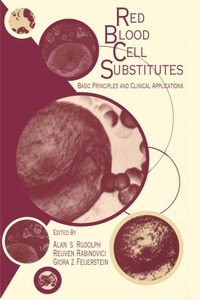
Red Blood Cell Substitutes
Basic Principles and Clinical Applications: Basic Principles and Clinical Applications
Published on 5. September 1997
504 pages
978-1-4822-6979-6 (ISBN)
Description

Presents an up-to-date treatment of research strategies, clinical and commercial developments, and regulatory and economic issues pertaining to the formulation of effective and safe red blood cell substitutes. The text examines regulatory and socioeconomic aspects of blood substitute products, and global tranfusion practices from the perspective of
More details
Language
English
Place of publication
London
United Kingdom
Publishing group
Taylor & Francis Ltd
Target group
Professional and scholarly
File size
18,42 MB
ISBN-13
978-1-4822-6979-6 (9781482269796)
Copyright in bibliographic data and cover images is held by Nielsen Book Services Limited or by the publishers or by their respective licensors: all rights reserved.
Schweitzer Classification
Other editions
Additional editions
Alan Rudolph
Red Blood Cell Substitutes
Basic Principles and Clinical Applications: Basic Principles and Clinical Applications
Book
09/1997
1st Edition
CRC Press
€403.01
Shipment within 15-20 days
Content
Utilization - economic and regulatory issues: the impact of blood substitutes on blood banking world wide; potential use of red blood cells substitutes within the military; blood substitutes - unique regulatory aspects. Fundamental principles of oxygen transport : oxygen transport, oxygen carriers, and the transfusion trigger; microcirculatory consequences of blood substitutes with haemoglobin solutions; efficacy of perfluorocarbon-based emulsion as a temporary oxygen carrier; pathophysiology of oxygen utilization in haemorrhagic shock - studies with human recombinant haemoglobin. Interactions with organ systems: immunological alterations following haemorrhagic shock - considerations for resuscitation with blood substitutes; the effect of haemoglobin-based substitutes on kidney function; interactions of haemoglobin with the central nervous system. Interactions with molecular species: interactions between haemoglobin and bacterial endotoxin In Vitro and In Vivo. Alternative strategies and indications: encapsulation of haemoglobin in liposomes; the use of blood substitutes in tumour therapy; human haemoglobin derived from transgenic swine - a starting material for 'blood substitute' formulations. Clinical development: OptroTM (recombinant human haemoglobin) - a therapeutic for the delivery of oxygen and the restoration of blood volume in the treatment of acute blood loss in trauma and surgery; production, characterization, and clinical evaluation of hemolinkTM on o-raffinose cross-linked haemoglobin-based blood substitute; hemassistTM - development and clinical profile; the clinical development of human polymerized haemoglobin; oxypureTM - development of polymerized bovine haemoglobin; febluobronTM - development of an oxygen carrying perfluobronTM - development of an oxygen carrying perfluorocarbon. Future directions: future perspective of red cells substitutes.
