

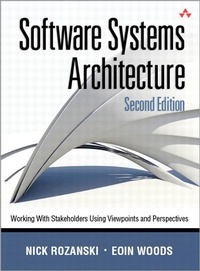
Software Systems Architecture
Working with Stakeholders Using Viewpoints and Perspectives
2nd Edition
Published on 25. October 2011
704 pages
978-0-13-290612-8 (ISBN)
Description

Software Systems Architecture, Second Edition is a highly regarded, practitioner-oriented guide to designing and implementing effective architectures for information systems. It is both a readily accessible introduction to software architecture and an invaluable handbook of well-established best practices.
With this book you will learn how to
Design and communicate an architecture that reflects and balances the different needs of its stakeholders
Focus on architecturally significant aspects of design, including frequently overlooked areas such as performance, resilience, and location
Use scenarios and patterns to drive the creation and validation of your architecture
Document your architecture as a set of related views
Reflecting new standards and developments in the field, this new edition extends and updates much of the content, and
Adds a "system context viewpoint" that documents the system's interactions with its environment
Expands the discussion of architectural principles, showing how they can be used to provide traceability and rationale for architectural decisions
Explains how agile development and architecture can work together
Positions requirements and architecture activities in the project context
Presents a new lightweight method for architectural validation
Whether you are an aspiring or practicing software architect, you will find yourself referring repeatedly to the practical advice in this book throughout the lifecycle of your projects. A supporting Web site containing further information can be found at www.viewpoints-and-perspectives.info.
With this book you will learn how to
Design and communicate an architecture that reflects and balances the different needs of its stakeholders
Focus on architecturally significant aspects of design, including frequently overlooked areas such as performance, resilience, and location
Use scenarios and patterns to drive the creation and validation of your architecture
Document your architecture as a set of related views
Reflecting new standards and developments in the field, this new edition extends and updates much of the content, and
Adds a "system context viewpoint" that documents the system's interactions with its environment
Expands the discussion of architectural principles, showing how they can be used to provide traceability and rationale for architectural decisions
Explains how agile development and architecture can work together
Positions requirements and architecture activities in the project context
Presents a new lightweight method for architectural validation
Whether you are an aspiring or practicing software architect, you will find yourself referring repeatedly to the practical advice in this book throughout the lifecycle of your projects. A supporting Web site containing further information can be found at www.viewpoints-and-perspectives.info.
More details
Edition
2nd edition
Language
English
Place of publication
Boston
United States
Publishing group
Pearson Education (US)
Target group
College/higher education
File size
11,56 MB
ISBN-13
978-0-13-290612-8 (9780132906128)
Copyright in bibliographic data and cover images is held by Nielsen Book Services Limited or by the publishers or by their respective licensors: all rights reserved.
Schweitzer Classification
Other editions
Additional editions
Nick Rozanski | Eóin Woods
Software Systems Architecture: Working With Stakeholders Using Viewpoints and Perspectives
Working With Stakeholders Using Viewpoints and Perspectives
Book
11/2011
2nd Edition
Addison Wesley
€88.99
Shipment within 10-20 days
Persons
Nick Rozanski has worked in IT since 1980 for several large and small systems integrators, including Logica, Capgemini, and Sybase, and end user organizations including Marks and Spencer and Barclays Global Investors. He has taken senior roles on a wide range of programs in finance, retail, manufacturing, and government. His technology background includes enterprise application integration, package implementation, relational database, data replication, and object-oriented software development. He is also an experienced technical instructor and certified internal project auditor.
Eoin (pronounced "Owen") Woods is a lead system architect in the equities technology group of a major European investment bank with architecture and design responsibility for a number of the organization's key systems. Prior to this, he led the application architecture group at Barclays Global Investors and has worked as a software engineer for Group Bull, Sybase, InterTrust, and Zuhlke, as well as through his own consultancy company, Artechra.
Eoin (pronounced "Owen") Woods is a lead system architect in the equities technology group of a major European investment bank with architecture and design responsibility for a number of the organization's key systems. Prior to this, he led the application architecture group at Barclays Global Investors and has worked as a software engineer for Group Bull, Sybase, InterTrust, and Zuhlke, as well as through his own consultancy company, Artechra.
Content
Chapter 1: Introduction
Chapter 2: Software Architecture Concepts
Chapter 3: Viewpoints and Views
Chapter 4: Architectural Perspectives
Chapter 5: The Role Of The Software Architect
Chapter 6: Introduction to the Software Architecture Process
Chapter 7: The Architecture Definition Process
Chapter 8: Concerns, Principles, and Decisions
Chapter 9: Identifying and Engaging Stakeholders
Chapter 10: Identifying and Using Scenarios
Chapter 11: Using Styles and Patterns
Chapter 12: Producing Architectural Models
Chapter 13: Creating the Architectural Description
Chapter 14: Evaluating the Architecture
Chapter 15: Introduction to the Viewpoint Catalog
Chapter 16: The Context Viewpoint
Chapter 17: The Functional Viewpoint
Chapter 18: The Information Viewpoint
Chapter 19: The Concurrency Viewpoint
Chapter 20: The Development Viewpoint
Chapter 21: The Deployment Viewpoint
Chapter 22: The Operational Viewpoint
Chapter 23: Achieving Consistency Across Views
Chapter 24: Introduction to the Perspective Catalo
Chapter 25: The Security Perspective
Chapter 26: The Performance and Scalability Perspective
Chapter 27: The Availability and Resilience Perspective
Chapter 28: The Evolution Perspective
Chapter 29: Other Perspectives
Chapter 30: Working As A Software Architect
Appendix: Other Viewpoint Sets
Chapter 2: Software Architecture Concepts
Chapter 3: Viewpoints and Views
Chapter 4: Architectural Perspectives
Chapter 5: The Role Of The Software Architect
Chapter 6: Introduction to the Software Architecture Process
Chapter 7: The Architecture Definition Process
Chapter 8: Concerns, Principles, and Decisions
Chapter 9: Identifying and Engaging Stakeholders
Chapter 10: Identifying and Using Scenarios
Chapter 11: Using Styles and Patterns
Chapter 12: Producing Architectural Models
Chapter 13: Creating the Architectural Description
Chapter 14: Evaluating the Architecture
Chapter 15: Introduction to the Viewpoint Catalog
Chapter 16: The Context Viewpoint
Chapter 17: The Functional Viewpoint
Chapter 18: The Information Viewpoint
Chapter 19: The Concurrency Viewpoint
Chapter 20: The Development Viewpoint
Chapter 21: The Deployment Viewpoint
Chapter 22: The Operational Viewpoint
Chapter 23: Achieving Consistency Across Views
Chapter 24: Introduction to the Perspective Catalo
Chapter 25: The Security Perspective
Chapter 26: The Performance and Scalability Perspective
Chapter 27: The Availability and Resilience Perspective
Chapter 28: The Evolution Perspective
Chapter 29: Other Perspectives
Chapter 30: Working As A Software Architect
Appendix: Other Viewpoint Sets
