

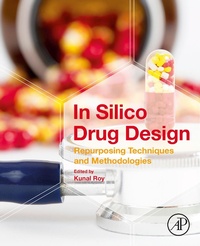
In Silico Drug Design
Repurposing Techniques and Methodologies
Published on 12. February 2019
886 pages
978-0-12-816377-1 (ISBN)
Description

In Silico Drug Design: Repurposing Techniques and Methodologies explores the application of computational tools that can be utilized for this approach. The book covers theoretical background and methodologies of chem-bioinformatic techniques and network modeling and discusses the various applied strategies to systematically retrieve, integrate and analyze datasets from diverse sources. Other topics include in silico drug design methods, computational workflows for drug repurposing, and network-based in silico screening for drug efficacy. With contributions from experts in the field and the inclusion of practical case studies, this book gives scientists, researchers and R&D professionals in the pharmaceutical industry valuable insights into drug design.
- Discusses the theoretical background and methodologies of useful techniques of cheminformatics and bioinformatics that can be applied for drug repurposing
- Offers case studies relating to the in silico modeling of FDA-approved drugs for the discovery of antifungal, anticancer, antiplatelet agents, and for drug therapies against diseases
- Covers tools and databases that can be utilized to facilitate in silico methods for drug repurposing
More details
Other editions
Additional editions
Book
02/2019
Academic Press
€177.50
Shipment within 15-20 days
Content
Section 1. Introduction1. Drug Repositioning: New Opportunities for Older Drugs2. Computational Drug Design Methods - Current and Future Perspectives
Section 2. Theoretical Background and Methodologies3. In Silico Drug Design Methods for Drug Repurposing4. Computational Drug Repurposing for Neurodegenerative Diseases5. Repurposed molecules: A New Hope in Tackling Neglected Infectious Diseases6. Molecular Docking: A Structure-Based Approach for Drug Repurposing7. Data Science Driven Drug Repurposing for Metabolic Disorders8. Data-driven Systems Level Approaches for Drug Repurposing: Combating Drug Resistance in Priority Pathogens9. In Silico Repurposing of Cell Cycle Modulators for Cancer Treatment10. Proteochemometric Modeling for Drug Repositioning11. Drug Repurposing from Transcriptome Data: Methods and Applications12. Omics-driven Knowledge Based Discovery of Anthelmintic Targets and Drugs13. Analysis of Chemical Spaces: Implications for Drug Repurposing
Section 3. Examples and Case Studies14. Drug Repurposing in Search of Anti-Infectives: Need of the Hour in the Multi-Drug Resistance Era!15. Application of In Silico Drug Repurposing in Infectious Diseases16. In Silico Modeling of FDA-approved Drugs for Discovery of Anti-candida Agents: A Drug Repurposing Approach 17. In silico Modeling of FDA-approved Drugs for Discovery of Anticancer Agents: A Drug Repurposing Approach18. Tackling Lung Cancer Drug Resistance using Integrated Drug Repurposing Strategy 19. In Silico Modeling of FDA-approved Drugs for Discovery of Anti-cancer Agents: A Drug Repurposing Approach 20. Drug Repurposing by Connectivity Mapping and Structural Modeling21. In Silico Modeling of FDA-approved Drugs for Discovery of Therapies Against Neglected Diseases: A Drug Repurposing Approach22. Ascorbic Acid is a Potential Inhibitor of Collagenases - In Silico and In Vitro Biological Studies 23. Bioinformatic Approaches for Repurposing and Repositioning Antibiotics, Antiprotozoals andAntivirals
Section 4. Tools and databases24. In Silico Databases and Tools for Drug Repurposing 25. An Overview of Computational Methods, Tools, Servers and Databases for Drug Repurposing26. In silico Drug Repurposing for MDR Bacteria: Opportunities and Challenges27. Drug Repositioning Strategies to Explore New Candidates Treating Prostate Cancer28. PDID: Database of Experimental and Putative Drug Targets in Human Proteome
